
Caregiver decision guide
A Room-by-Room Earthquake Preparedness Checklist for Seniors
Standard earthquake advice ignores the needs of older adults with mobility issues, chronic conditions, and medication requirements. This room-by-room checklist helps adult children prepare their aging parent's home — from the bedside bag to a senior-specific go-bag — so critical steps aren't missed when disaster strikes.
The earthquake problem I worry about first is not the dramatic one. It is an older parent waking up at night after the room has shaken, reaching for glasses that are not on the nightstand, stepping onto broken glass in thin slippers, and trying to find a walker that was parked across the room. A standard earthquake preparedness checklist for older adults has to start there: where the person actually is, what they can reach, what they can remember under stress, and what medical care cannot be interrupted.
For seniors, earthquake readiness is partly disaster planning and partly ordinary home safety done with less tolerance for loose ends. Falling furniture and objects account for 55% of earthquake-related injuries in a UCLA study cited by the Earthquake Country Alliance, which makes bookcases, televisions, cabinets, mirrors, and high shelves a first-order caregiver job, not a cosmetic upgrade.[1] Medication continuity deserves the same level of attention: more than 85% of older adults have at least one chronic health condition, and the Red Cross advises older adults to keep at least 30 days of medications on hand.[2]
Preparedness is also less common than families like to assume. In a 2025 PLoS One study of 398 older adults in Taiwan, fewer than 12% had prepared a disaster emergency kit or identified evacuation routes.[3] That sample should not be treated as a direct measurement of every U.S. household, but it points to a familiar caregiver gap: everyone agrees a plan is sensible, then the flashlight stays in the kitchen junk drawer and the medication list goes out of date.
What Changes When the Checklist Is for an Older Adult
The usual advice to “Drop, Cover, and Hold On” still matters, but it does not answer enough questions for someone who uses a walker, has low vision, cannot kneel safely, depends on refrigerated medication, or may not hear instructions clearly. Illinois emergency officials give a more realistic instruction for seniors who cannot reach a safe spot: “sit down or stay sitting where you are until the shaking stops.”[4] That one sentence changes the home audit. The goal is not to imagine a fast, graceful move across the room; it is to make the place where the person already sits, sleeps, cooks, and bathes less dangerous.
California aging officials also advise keeping walking aids near the older adult at all times and placing spares in multiple rooms when possible.[5] That is good guidance, but it needs a practical translation. A cane in the coat closet is not an earthquake plan. A walker folded behind a recliner is not “nearby” if the power is out and the floor is covered with fallen objects.
| Part of the home or plan | What the caregiver is checking |
|---|---|
| Bedroom | Can the parent protect their feet, see, signal, and reach a mobility aid before standing? |
| Living areas | Are the objects most likely to fall, slide, or shatter secured or moved? |
| Kitchen | Will cabinets stay closed, and are heavy items stored low enough? |
| Bathroom | Can the parent navigate after shaking without relying on balance alone? |
| Go-bag | Can the parent leave with medications, documents, glasses, hearing supplies, and personal care items? |
| Shelter-in-place supplies | Can the parent remain safely at home if roads, pharmacies, or utilities are disrupted? |
| Communication and evacuation | Do named people know who calls, who drives, who has keys, and where supplies are kept? |
Start at the Bedside
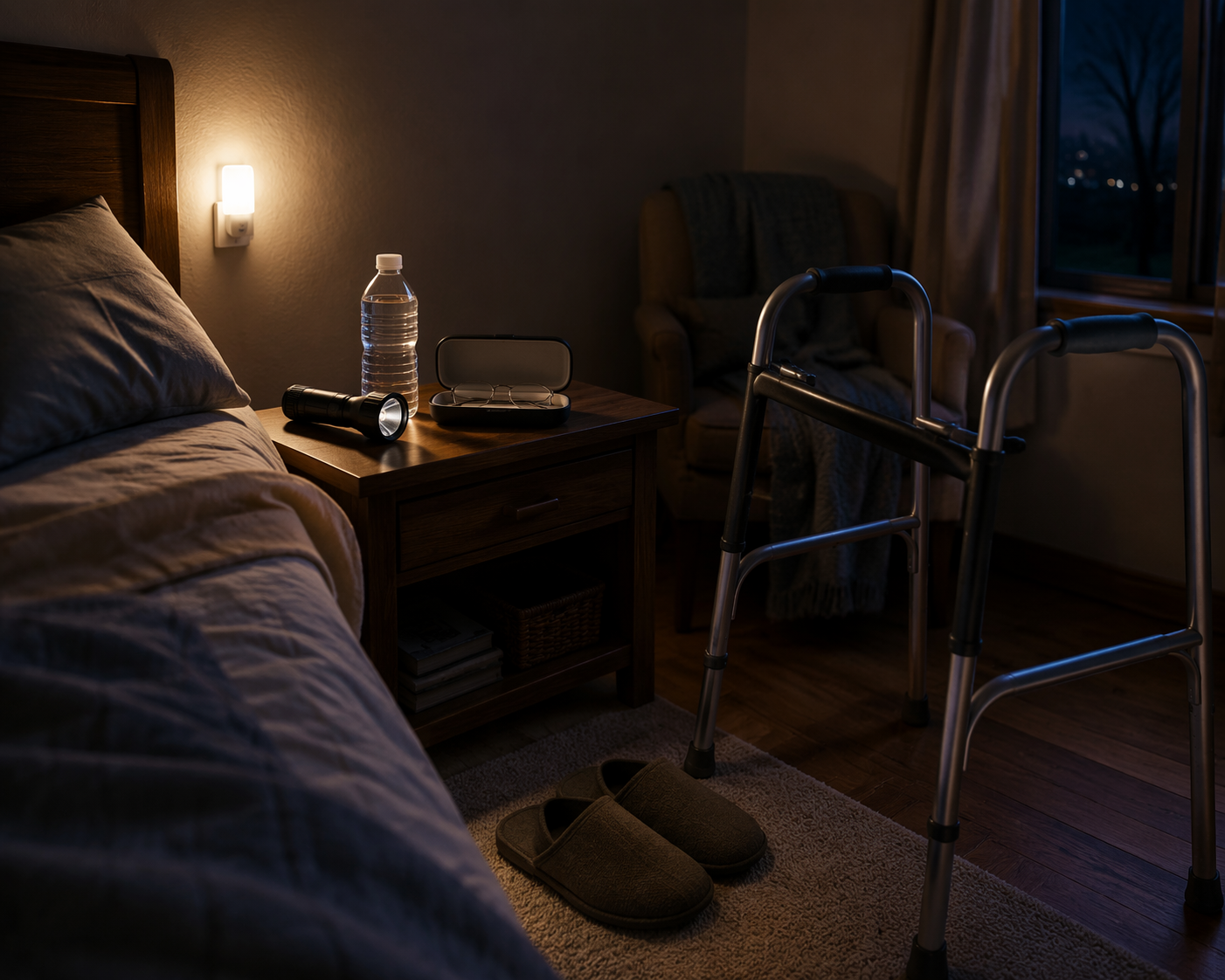
Stand where your parent’s feet touch the floor in the morning. Then imagine the room dark, the picture frame down, the lamp broken, and the phone somewhere under the blanket. The bedside setup should let your parent avoid the first preventable injury: standing up barefoot, disoriented, and unsupported.
- Place sturdy closed-toe shoes or hard-soled slippers within arm’s reach, not across the room.
- Keep a flashlight on the nightstand and a backup in a bedside or under-bed bag.
- Put spare glasses in a hard case where they can be reached without standing.
- Add a whistle, dust mask, small bottle of water, hearing aid batteries, and a written emergency contact card.
- Park the walker, cane, wheelchair, or transfer aid where the parent will reach for it instinctively.
- Move heavy lamps, framed art, mirrors, plants, and shelves away from the head of the bed.
If your parent resists a visible bag by the bed, use a low, open basket or a soft pouch tied to the bed frame. The container matters less than the reach test: can your parent touch the shoes, light, glasses, and mobility aid from the bed before standing?
This is also where fall prevention and earthquake planning overlap. If the route from bed to bathroom already has cords, throw rugs, a narrow turn around a dresser, or poor lighting, fix those before buying more emergency supplies. A broader room-by-room fall audit can sit beside this earthquake checklist, especially for pathways and nighttime navigation; our room-by-room fall prevention checklist follows the same walk-through logic.
Living Areas: Secure What Can Hit, Block, or Trap Them
The living room is where many families underestimate earthquake risk because everything looks stable on an ordinary day. A tall bookcase full of books, a television on a narrow console, a curio cabinet with glass doors, and a ceramic planter on a high shelf all behave differently when the floor moves. For an older adult who cannot dodge quickly or climb over debris, the question is not only “Will this break?” It is “Will this fall into the chair, the walker path, the doorway, or the place where help needs to enter?”
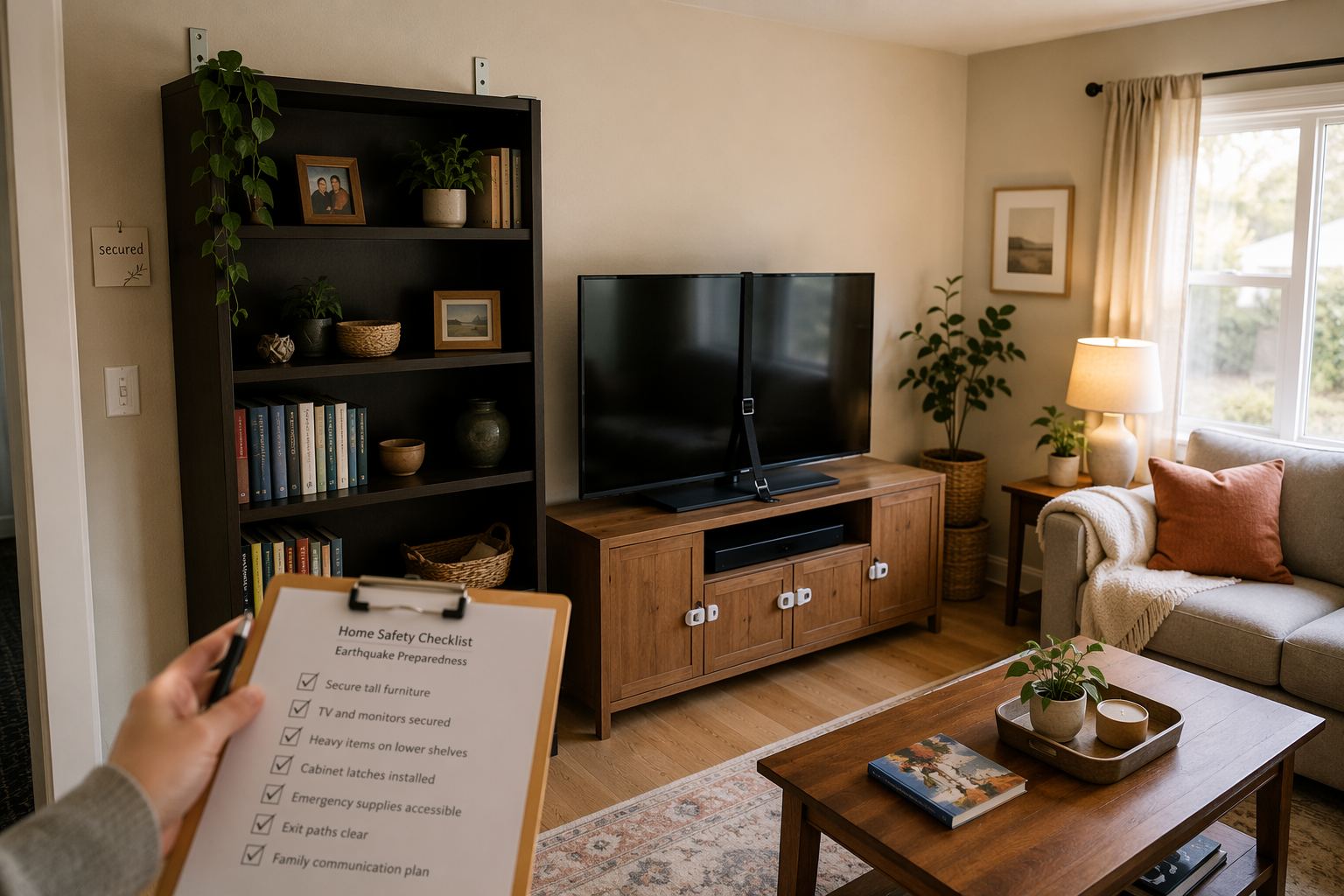
- Anchor tall bookcases, shelving units, china cabinets, and storage towers to wall studs.
- Secure flat-screen televisions with straps or mounts rated for the setup.
- Move heavy decorative objects, large books, speakers, and storage bins from high shelves to low shelves.
- Install latches on cabinets that hold glassware, dishes, tools, or heavy objects.
- Remove or relocate furniture that narrows the walker or wheelchair route to the exit.
- Check that framed pictures and mirrors are not hanging over favorite chairs, beds, or mobility-aid parking spots.
Do this audit from seated height as well as standing height. Sit in the recliner, at the kitchen table, and on the edge of the bed. Look at what could fall toward the person, what could block the route to the bathroom, and what could keep a neighbor from opening the door. A beautiful cabinet that tips into a hallway is not just broken furniture; it can become the thing that prevents help from reaching the parent.
For product choices such as furniture anchors, anti-tip straps, cabinet latches, and motion nightlights, use product-neutral home safety guidance rather than buying the first kit that looks reassuring. Our home safety products for seniors guide can help you match the device to the hazard instead of turning the room into a pile of unused hardware.
The Quick Pull Test
After you install anchors or straps, do a careful pull test in the direction the object would tip. Do not yank hard enough to damage the wall or furniture; the point is to catch the obvious failures: screws in drywall instead of studs, straps attached to flimsy backing, a latch that pops open, or a shelf that still lets heavy objects slide forward. If you are not comfortable doing this safely, hire a handyman or ask a capable neighbor. The job is small, but the consequence of doing it badly is not.
Kitchen: Keep Cabinets Closed and Heavy Things Low
The kitchen usually contains the densest collection of breakable, heavy, and sharp objects in the home. Start with the upper cabinets. Dishes, glass jars, mixing bowls, small appliances, canned goods, and cast-iron pans should not be stored where they can fall onto the floor your parent has to cross in the dark.
- Install cabinet latches on upper cabinets, especially those holding glass, dishes, or heavy pantry items.
- Move heavy appliances and cookware to waist-height or lower shelves.
- Keep a manual can opener with emergency food, not buried in a drawer that jams.
- Store water where your parent can access it without lifting a case from the floor or a high shelf.
- Put flashlights or battery lanterns in predictable places: one in the kitchen, one by the bed, and one near the main exit.
Separate kitchen shelter supplies from the go-bag. Shelf-stable food, water, pet food, paper goods, and sanitation supplies belong in the home supply area because they support staying put. The go-bag is for leaving. When the two get mixed together, the bag becomes too heavy and the home supplies become too scattered to find.
Bathroom: Assume Wet Floors, Low Light, and Rushed Decisions
Bathrooms are already high-risk rooms for falls. After shaking, they may also have broken glass, spilled toiletries, cabinet doors open, or no lighting. The bathroom check should be short and strict.
- Verify that grab bars are properly installed into studs or with appropriate anchors; towel bars do not count.
- Secure mirrors and wall cabinets so they cannot fall into the sink, toilet, or walking path.
- Use motion nightlights or battery-backed lights on the bedroom-to-bathroom route.
- Keep needed incontinence supplies, wipes, gloves, and disposal bags in both the bathroom and the go-bag.
- Remove loose rugs or replace them with safer options only if your parent can use them without catching a cane, walker, or foot.
If the bathroom has already been part of a fall-risk review, do not assume it is earthquake-ready. A grab bar helps with balance; it does not keep a wall cabinet from opening or a mirror from dropping. The CDC STEADI-style home safety approach is useful here because it keeps attention on the small environmental hazards that lead to injuries; see our CDC STEADI home fall prevention checklist if the bathroom has not been reviewed recently.
Build the Senior-Specific Go-Bag Around Medication First
A senior go-bag is not a camping bag with a pill bottle tossed in at the end. It should be built around the health items that are hardest to replace during a disruption: prescriptions, medication instructions, glasses, hearing supplies, mobility-related items, continence supplies, and medical documents. The American Association for Geriatric Psychiatry recommends that older adults have at least a two-week medication supply for disaster preparedness, while the Red Cross advises at least 30 days when possible.[6][2] If insurance refill limits make 30 days difficult, ask the prescriber and pharmacist what emergency refill options are available before there is an emergency.
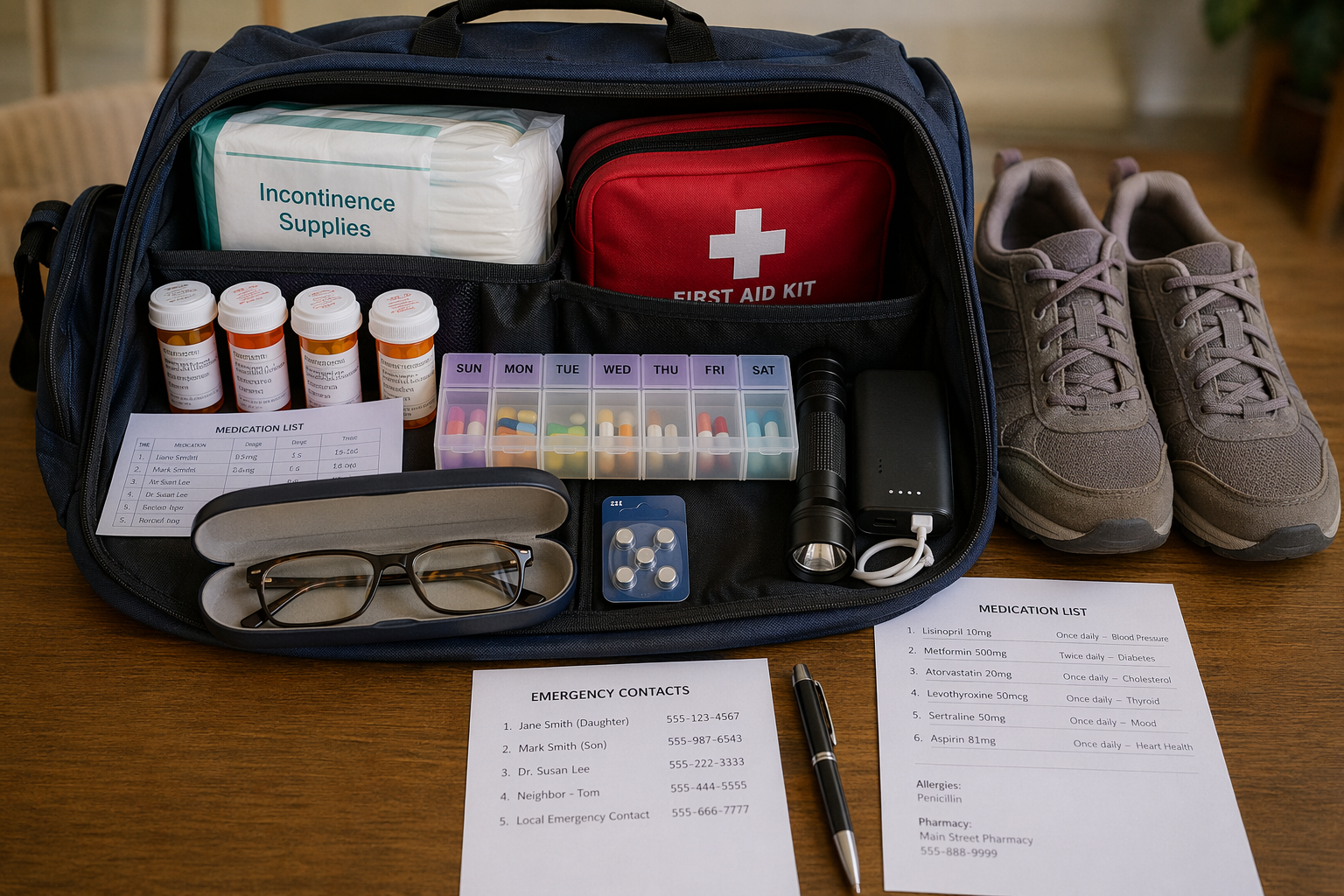
| Go-bag item | Senior-specific reason it matters |
|---|---|
| Medication supply | Protects continuity when pharmacies, roads, or caregivers are unavailable. |
| Current medication list | Helps emergency clinicians, shelters, pharmacies, and family members avoid guesswork. |
| Copies of prescriptions and prescriber contacts | Makes replacement easier if bottles are lost or refills are delayed. |
| Spare glasses | Lets the parent read labels, signs, phone screens, and instructions. |
| Hearing aid batteries or charging supplies | Keeps communication possible when instructions are verbal or chaotic. |
| Incontinence and hygiene supplies | Prevents a manageable delay from becoming a dignity and skin-health problem. |
| Portable phone charger | Supports texting, calls, medication apps, and emergency alerts. |
| Medical documents in a waterproof pouch | Keeps diagnoses, allergies, insurance details, and emergency contacts usable. |
| Comfortable walking shoes | Reduces the chance of foot injury during evacuation or after broken glass. |
| Small first aid kit and dust mask | Covers minor injuries and dusty conditions without requiring a search through the house. |
Use a rolling bag if your parent cannot safely carry a duffel. If a rolling bag is unrealistic because stairs or rubble are likely, split the contents: a small wearable pouch with medications, documents, glasses, and phone charger, plus a larger bag that a caregiver or neighbor can grab. Do not let the perfect evacuation bag become so heavy that no one takes it.
The medication list should be boringly current: drug name, dose, schedule, prescribing doctor, pharmacy, allergies, major diagnoses, insurance information, and emergency contacts. Put one copy in the go-bag, one in the home emergency binder, and one with the adult child or primary caregiver. If you need a fuller document setup, use an emergency contact binder for aging parents rather than relying on scattered portal logins and memory.
Do Not Confuse the Go-Bag With Shelter-in-Place Supplies
The go-bag should cover the first stretch away from home and be light enough to move. Shelter-in-place supplies are the larger home stock: water, shelf-stable food, sanitation items, extra batteries, pet supplies, backup lighting, and additional medical supplies. Many emergency checklists blur these into one pile, which creates two problems: the bag becomes impossible for an older adult to manage, and the home supply is not organized when staying home is safer than leaving.
- Go-bag: medications, documents, phone charger, glasses, hearing supplies, hygiene essentials, shoes, light food, water, and first aid basics.
- Shelter-in-place area: larger water and food supply, sanitation supplies, backup lighting, batteries, blankets, pet supplies, and extra medical or caregiving items.
- Bedside bag: shoes, flashlight, glasses, whistle, dust mask, hearing supplies, and contact card for the first minutes after shaking.
Communication: Name the People Before You Need Them
The Red Cross recommends that older adults have a personal support network of at least three family members, friends, or neighbors who exchange keys and know where emergency supplies are kept.[2] Three is a practical minimum because one person may be at work, one may be unreachable, and one may be dealing with their own damage.
- Choose at least three support people and write down exactly what each person can do.
- Give trusted local contacts keys, access codes, or lockbox instructions.
- Agree on a text-first protocol because texts may get through when calls do not.
- Pick one out-of-area contact who can receive updates and reduce repeated calls.
- Label where the go-bag, medication list, emergency binder, and shelter supplies are kept.
- Add a NOAA weather radio or other reliable alert method if your parent may miss phone alerts.
For adult children who live far away, this plan needs more than good intentions. Decide who physically checks the home, who calls the pharmacy, who contacts the building manager, and who can transport the parent if evacuation is required. Our long-distance caregiving guide and first-hour emergency response plan can help turn “I’ll drive over” into a sequence that works when bridges, traffic, cell service, or work obligations interfere.
Evacuation: Plan for the Parent You Have, Not the Parent a Checklist Imagines
Evacuation planning for an older adult should start with thresholds, not panic. Write down what would make the parent leave: structural damage, gas smell, fire, official evacuation order, loss of essential power for medical equipment, unsafe indoor temperature, or inability to access medications, food, water, or toileting safely. Then write down who decides, who transports, and where the parent goes.
- Identify at least two exits from the home and check whether each works with a walker, wheelchair, cane, or oxygen equipment.
- Walk the route from bed, recliner, bathroom, and kitchen to the exits.
- Confirm whether the building has elevator restrictions, stair chairs, evacuation assistance, or management procedures.
- List transportation options that can handle mobility aids, not just whoever owns a car.
- Choose destinations in order: nearby family, accessible friend or neighbor, hotel, shelter, or medical facility if health needs require it.
- Practice loading the go-bag, mobility aid, oxygen supplies, or other equipment into the likely vehicle.
A 2025 scoping review of 20 studies identified mobility assistance, medication access, communication support, and social support as core disaster preparedness needs for older populations.[7] That is exactly where many evacuation plans fail. The written route matters, but so do the person who can lift the walker into the car, the neighbor who knows the lockbox code, and the pharmacy information that travels with the parent.
A Maintenance Schedule That Catches the Embarrassing Failures
Preparedness expires quietly. Batteries corrode, shoes migrate back to the closet, a medication is discontinued, a neighbor moves, and the emergency contact list still shows an old phone number. Put the review on the calendar twice a year, ideally around daylight saving time changes if that is already when you check smoke alarms.
| Every 6 months, check | What to do |
|---|---|
| Medication list | Update prescriptions, doses, allergies, doctors, pharmacy, and insurance information. |
| Medication supply | Rotate older stock and ask the pharmacist about refill timing or emergency options. |
| Batteries and chargers | Test flashlights, lanterns, hearing aid supplies, phone chargers, and radio. |
| Bedside setup | Confirm shoes, glasses, flashlight, whistle, and mobility aid are still reachable. |
| Furniture anchors and latches | Check straps, brackets, screws, cabinet latches, and TV restraints. |
| Support network | Confirm keys, access codes, phone numbers, roles, and out-of-area contact. |
| Go-bag | Replace expired food, water, first aid items, hygiene supplies, and copies of documents. |
| Evacuation routes | Walk the routes again after furniture changes, new equipment, or a change in mobility. |
If your parent dislikes visible changes, negotiate the few items that matter most first: shoes and light at the bedside, walker within reach, anchored furniture near seating and sleeping areas, current medication list, and a named support network. Limited space and limited money are real constraints. The checklist still works when it is staged, as long as the highest-consequence gaps are not hidden under a neat-looking emergency bag.
For caregivers who like paper, add this earthquake list to a broader household binder or printable checklist system. A general free printable caregiver checklist binder can keep the earthquake plan beside fall prevention, medication records, contacts, and post-hospital or post-fall notes.
The useful version of earthquake readiness is a maintained household system: the right items placed where the parent spends time, the objects most likely to injure them secured, medication continuity protected, and named people already assigned before the shaking starts.
References
- Step 1: Secure Your Space, Earthquake Country Alliance
- Older Adults, American Red Cross
- Disaster preparedness and response among older adults: A cross-sectional study in Taiwan, PLoS One, 2025
- Earthquake Preparedness for Seniors, Illinois Emergency Management Agency and Office of Homeland Security
- Disaster Preparedness Tip Sheets, California Department of Aging
- Older Adults and Disaster Preparedness and Response, American Association for Geriatric Psychiatry
- Disaster Preparedness for the Elderly: A Scoping Review, 2025
Questions to bring to a clinician or OT
This is not medical, legal, or a family's final decision — only a framework. Bring these questions to a clinician, occupational therapist, or your local Area Agency on Aging.
Find Local HelpRelated reading
Noticed something outdated or inaccurate on this page? Flag a correction. We review every report against CDC, NIA, and AARP HomeFit guidance before updating a page.