
STEADI: intervene
Ice Cream Recall Checklist for Caregivers of Older Adults
Use this step-by-step checklist to verify whether a carton in an older adult's freezer is truly part of an ice cream recall — brand, name, size, UPC, and lot or date codes — then dispose of it safely, sanitize the freezer, and keep a multi-week watch for listeria symptoms, since confusion and balance problems in adults 65+ are signs that overlap with fall risk.
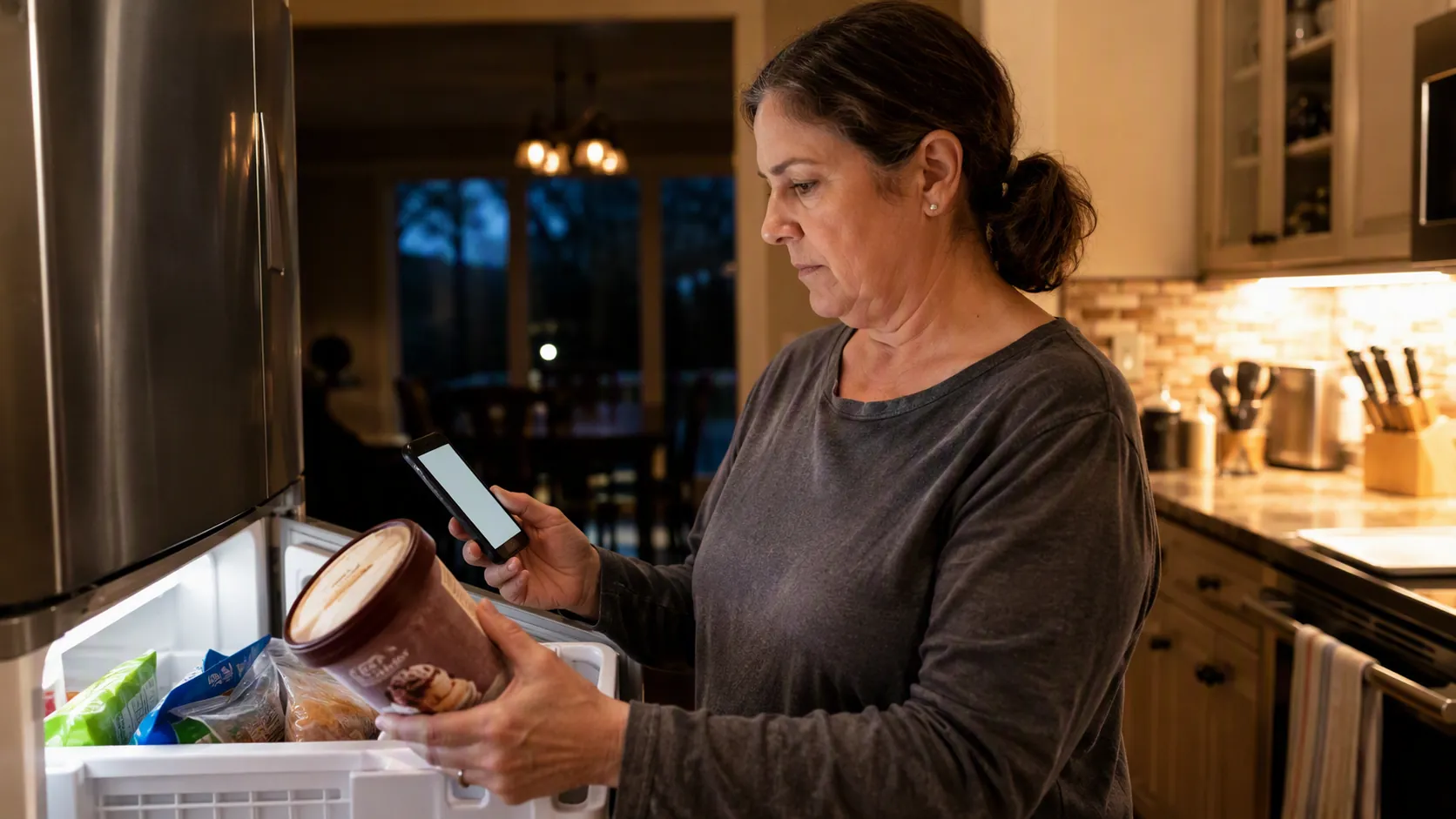
When an ice cream recall alert lands in a family text, the safest first move is not to empty the whole freezer. It is to slow the decision down enough to answer one question: does this exact carton, bar box, or multipack match the recall notice field by field?
For an older adult’s home, that exactness matters twice. A missed UPC or lot code can leave recalled food in reach. A brand-name-only match can also lead a family to throw away safe look-alike food, which is expensive, confusing, and unnecessary.
One-screen ice cream recall checklist
| Do this now | What to check or do |
|---|---|
| Pause use | Do not eat the ice cream, taste it, open it further, donate it, or feed it to pets while you are checking. |
| Match every recall field | Compare brand, product name or flavor, package size, UPC, lot code, sell-by/use-by/best-by date, and states or stores sold. |
| Decide only after the full match | If the fields do not all match the recall notice, that package has not been identified by that notice. |
| If it matches, remove it safely | Return it if the recall notice allows, or wrap/bag it securely before putting it in the trash. |
| Clean what it touched | Wash freezer surfaces, drawers, containers, counters, and hands; then sanitize food-contact surfaces as directed. |
| Watch the person afterward | For adults 65+, monitor for fever, flu-like symptoms, confusion, loss of balance, and other listeria warning signs over the following weeks. |
This article is the ice-cream-and-listeria-specific companion to the broader senior food recall response plan. Use that general plan for other foods; use the extra symptom watch here because listeria can be especially serious for older adults.
First prove whether this carton is actually recalled
A recall notice is usually written for a product category, but your decision is made on one package. The FDA tells consumers to identify affected foods by specific fields such as the brand name, product description, UPC or product code, lot number, and sell-by or use-by date; some notices also name package size, retailers, or states where the product was sold [1].
Do not stop at the brand. Large companies may sell many flavors, sizes, and production lots under the same name. A recalled vanilla bar in one package size does not automatically mean the same brand’s chocolate pint, different UPC, or different date code is included.
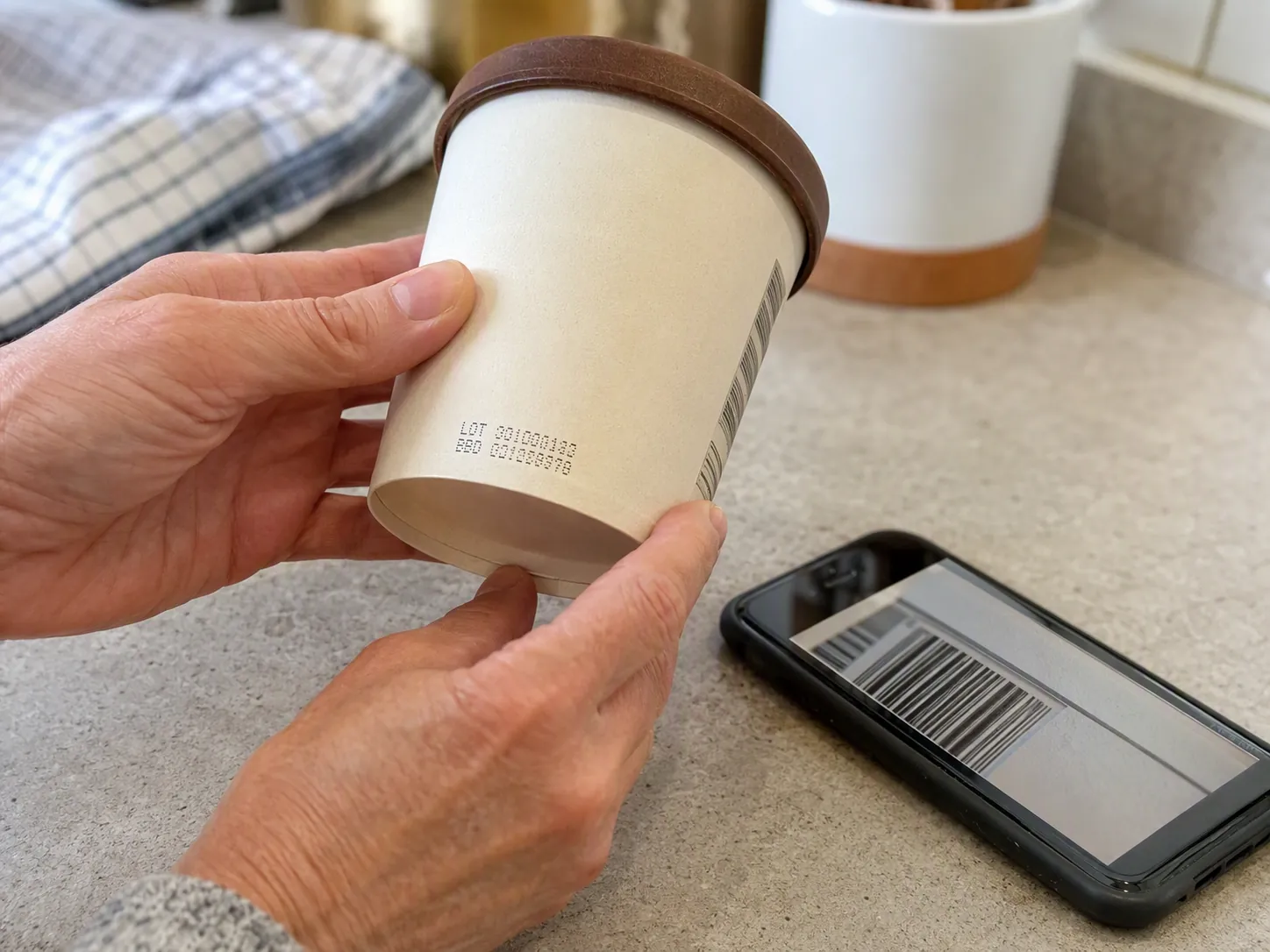
The fields to match, in a practical order
| Recall field | Where caregivers usually find it | What can go wrong |
|---|---|---|
| Brand | Front label, lid, or multipack box | A brand match alone is not enough. |
| Product name and flavor | Front panel and side panel | A similar flavor name can look close but still be a different product. |
| Package size | Net weight statement, count, or carton size | A recall may apply to bars but not pints, or to one count size but not another. |
| UPC | Barcode area, often on the side or bottom | Small digits are easy to misread from a photo. |
| Lot, date, sell-by, use-by, or best-by code | Bottom edge, lid rim, crimped seam, end flap, or printed carton panel | This is the field most likely to be skipped because it is faint, sticky, or frozen over. |
| States, stores, or distribution area | Recall notice details | A state listing supports the match, but it should not replace the package code match. |
If the print is hard to read, put the carton on a counter for just long enough to photograph the code, then put it back in the freezer or into a temporary bag while you verify. Use the phone camera zoom, not guesswork. Read the code aloud while another person checks the notice, or take two photos: one of the front label and one of the code panel.
If a family member sent only a screenshot, find the original recall page before you decide. Screenshots often cut off the UPC table, date-code range, or state list—the very fields that separate a recalled package from a safe look-alike.
Worked example: why the UPC and lot/date code are not optional
In July 2025, CBS News reported that Rich Ice Cream recalled 110,292 cases of ice cream bars sold in 23 states because of possible listeria contamination; the report described the recall as a Class II recall [6]. Those numbers sound broad, but they still do not tell you whether a particular box in a freezer is included.
The caregiver’s job in a case like that is not to react to “Rich” or “ice cream bars” alone. It is to compare the exact product name, package count or size, UPC, and printed lot or date code against the notice. If the box is a different product, different UPC, or outside the affected code range, the recall notice has not identified that box.
This is also why it helps to photograph the package before you discard it. If an older adult later develops symptoms, the clinician or local health department may ask what product was eaten, when it was eaten, and whether the code matched the recall.
If all fields match, take it out of circulation
Once the package matches the recall notice, stop treating it like food. FoodSafety.gov says recalled products should not be eaten, opened, donated, or fed to pets; if discarded, they should be wrapped or placed in a bag so people and animals cannot get to them [2]. The FDA also advises following the recall notice for return, refund, or disposal instructions [1].
- Do not taste it “just to see.” Listeria contamination is not something you can see, smell, or taste reliably.
- Do not let the older adult finish a serving while you check the details.
- Do not donate it to a neighbor, food pantry, caregiver aide, or family member.
- Do not feed it to pets or leave it loose in an indoor trash can.
- Do keep a photo of the front label, UPC, and lot/date code if there is any chance it was eaten.
If the package is unopened and the recall notice allows store return, bag it before transporting it and keep it separated from ready-to-eat groceries. If you are disposing of it at home, double-bag it or wrap it, put it directly into a secure trash container, and wash your hands afterward.
Clean the freezer surfaces it touched
Do not stop at throwing away the carton. Melted ice cream, sticky rims, and freezer condensation can leave residue on shelves, drawer fronts, scoops, bins, counters, and your hands.
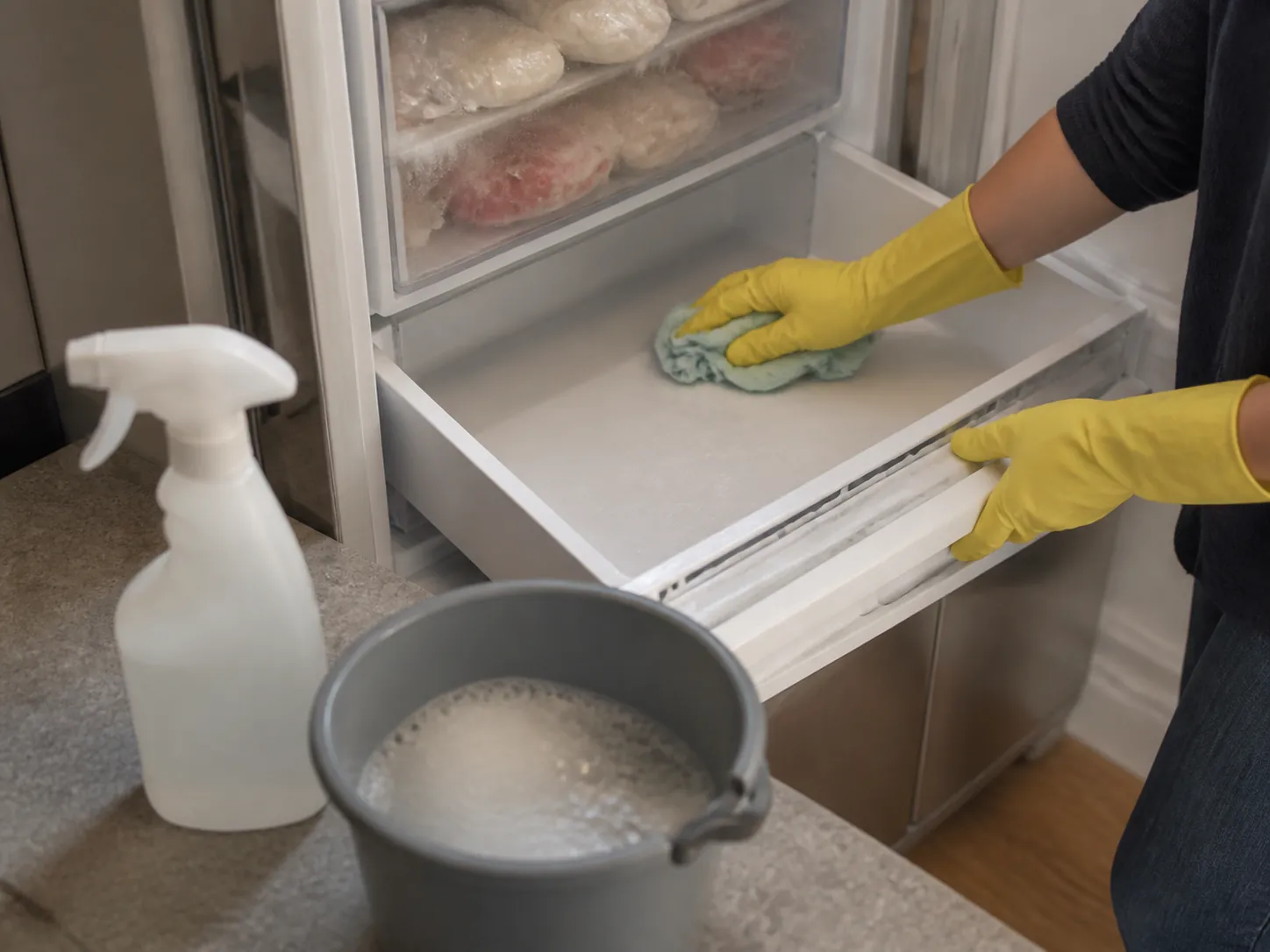
The FDA’s home cleanup guidance is practical: wash surfaces with hot, soapy water, then sanitize with a solution of 1 tablespoon liquid chlorine bleach per gallon of hot water, and wash hands with warm water and soap after handling recalled food or cleaning [1].
- Put on gloves if you have them, especially if there is melted product or torn packaging.
- Remove nearby foods long enough to see the shelf, drawer, or bin. Keep them cold while you work.
- Wash the surface with hot, soapy water first. Sanitizer works better after visible residue is removed.
- Apply the bleach solution to food-contact surfaces according to the FDA dilution: 1 tablespoon liquid chlorine bleach per gallon of hot water.
- Wash your hands, then wipe down the phone, counter, or drawer handle if they were touched during the check.
This is a good moment to make the freezer safer without turning the evening into a full kitchen project. Put frequently used foods where the older adult can reach them without bending deeply or balancing on one foot. For broader kitchen setup, see these safe cooking tips for seniors living alone.
After disposal, watch the older adult—not just the freezer
Listeria is the part of an ice cream recall that makes older-adult caregiving different from ordinary pantry cleanup. The CDC says people 65 and older are at increased risk for listeria infection; more than half of infections occur in this age group, infections in older adults are almost always serious enough to require hospitalization, and about 1 in 6 people 65 or older with listeria infection die [4].
The symptoms do not always arrive on a neat schedule. CDC guidance distinguishes intestinal illness from invasive illness: intestinal symptoms such as diarrhea and vomiting usually start within 24 hours after eating contaminated food and usually last 1 to 3 days; invasive illness usually starts within 2 weeks, but symptoms may begin as early as the same day or as late as 10 weeks after exposure [3].
For a caregiver, the important point is that “watch for symptoms” is not a one-night assignment. Put the date of possible exposure on the calendar. If the older adult ate the recalled ice cream, keep the product photos and note the last date it may have been eaten.
Symptoms that should prompt a call
The CDC lists invasive listeria symptoms that can include fever, flu-like symptoms such as muscle aches and fatigue, headache, stiff neck, confusion, loss of balance, and seizures. CDC advice is to contact a healthcare provider if someone has fever and other symptoms of possible listeriosis after eating recalled food or other food that may be contaminated with Listeria [3].
- Call a healthcare provider promptly for fever with muscle aches, unusual fatigue, headache, stiff neck, vomiting, diarrhea, confusion, loss of balance, or seizure-like symptoms after possible exposure.
- Tell the provider the product was part of an ice cream recall, when it may have been eaten, and whether you have photos of the UPC and lot/date code.
- If symptoms are severe, sudden, or frightening, use emergency services rather than waiting for a routine appointment.
The elder-setting risk is not theoretical. In a CDC investigation of a 2025 listeria outbreak linked to frozen supplement shakes—not ice cream—the agency reported 42 cases in 21 states, 41 hospitalizations, 14 deaths, a median patient age of 78, and 90% of people either living in long-term care facilities or hospitalized before they became sick [5]. That case should not be used to describe ice cream, but it does show why caregivers should take listeria exposure seriously in older adults.
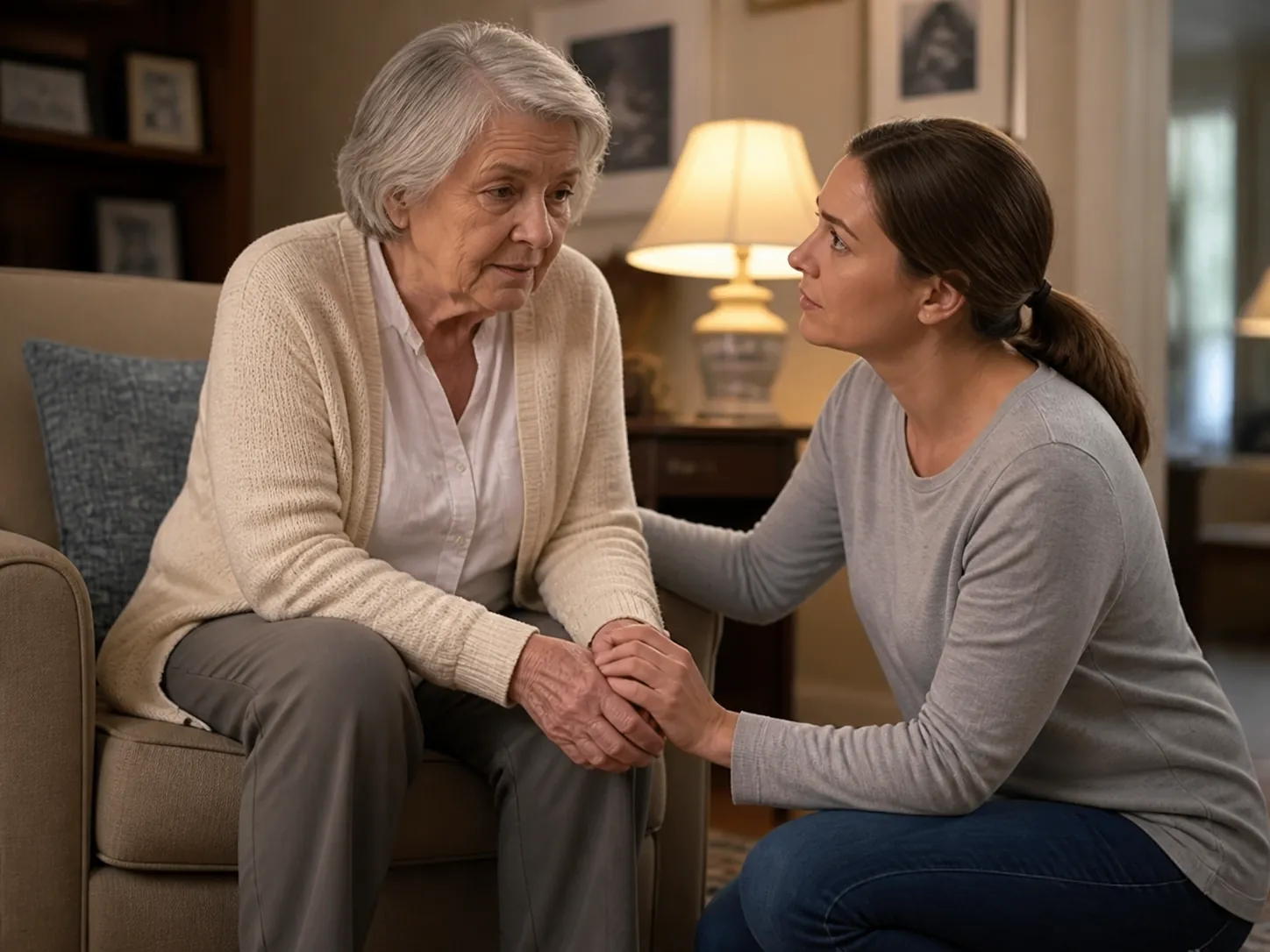
Treat confusion or balance changes as fall-warning signs too
This is where the recall checklist crosses into fall prevention. Confusion and loss of balance are listeria warning signs, and they are also the kinds of changes that make an older adult less safe in the kitchen, bathroom, hallway, or on stairs.
During the watch period, do not explain away new unsteadiness as “just tired” if there was possible exposure. Increase supervision for a few days around any symptoms, keep walkways clear, encourage sitting for shoes and clothing changes, and make night lights and assistive devices easy to reach. If confusion is new or worsening, use a broader red-flag safety checklist for elderly parents while you are arranging medical guidance.
The same temporary-fall-risk pattern appears with other foodborne illnesses: weakness, dizziness, diarrhea, dehydration, and disrupted routines can make an older adult less steady. For comparison, see the site’s guides on cyclospora treatment in older adults and cyclospora dehydration and fall risk.
What to document before you call or clean everything away
Documentation does not need to be formal. It needs to be findable when a clinician, pharmacist, retailer, or health department asks a practical question.
- Photos of the front label, UPC, lot/date code, and package size.
- A screenshot or saved link to the recall notice you used.
- Whether the older adult ate any of it, and the best estimate of when.
- Whether anyone else in the home ate it.
- The date you removed it, how you disposed of or returned it, and what surfaces you cleaned.
- Any symptoms, even if they seem vague: fever, stomach upset, muscle aches, fatigue, confusion, dizziness, or new unsteadiness.
If the older adult has a paid aide, adult day program, or family members who bring groceries, share only the needed facts: product name, recall status, disposal status, and symptoms to watch for. Avoid vague warnings like “don’t eat that brand” unless you include the exact product and code information.
A short freezer-safety note after the recall check
A recall check is also a useful time to confirm basic cold storage. AARP advises keeping the refrigerator at 40°F or below and the freezer at 0°F, and it points readers to the FoodKeeper app for food-storage guidance [7]. This does not make recalled ice cream safe again, but it helps prevent a separate food-safety problem in the same kitchen.
For plan-ahead caregiving, set up alerts from official food-safety sources, the grocery store account used for the older adult’s shopping, and pharmacy or delivery apps if they handle groceries. The same alert habit used for emergency planning—such as earthquake alerts for older adults—works best when one person is responsible for reading the alert and checking the actual package.
Health note
This article is for caregiver education and fall-prevention planning. It is not medical advice, diagnosis, or treatment. If an older adult may have eaten recalled ice cream and develops fever, flu-like symptoms, gastrointestinal illness, confusion, loss of balance, or any severe or unusual symptoms, contact a licensed healthcare professional or emergency services.
Clinical review status: no named clinician or public-health reviewer is listed for this page.
References
- Food Recalls: What You Need to Know, U.S. Food and Drug Administration.
- What Do You Do If You Have a Recalled Product?, FoodSafety.gov.
- Symptoms of Listeria Infection, Centers for Disease Control and Prevention.
- People at Increased Risk for Listeria Infection, Centers for Disease Control and Prevention.
- Investigation Update: Listeria Outbreak, Supplement Shakes, February 2025, Centers for Disease Control and Prevention, February 2025.
- Rich Ice Cream bars recalled over possible listeria risk, CBS News, July 2025.
- What Should You Do if You Eat a Recalled Food?, AARP.
Related reading
Noticed something outdated or inaccurate on this page? Flag a correction. We review every report against CDC, NIA, and AARP HomeFit guidance before updating a page.
Part of the Fall Prevention section.