
STEADI: Assess
How to Keep Seniors Safe From Falls After Storm Damage
A storm's aftermath — not the storm itself — is when older adults face the highest fall risk: darkness, wet floors, debris, and rushed cleanup can turn a damaged home into a sudden set of hazards. This room-by-room walkthrough shows caregivers and seniors what to check during return and cleanup after storm damage and what to watch for in the 72 hours if a fall happens.
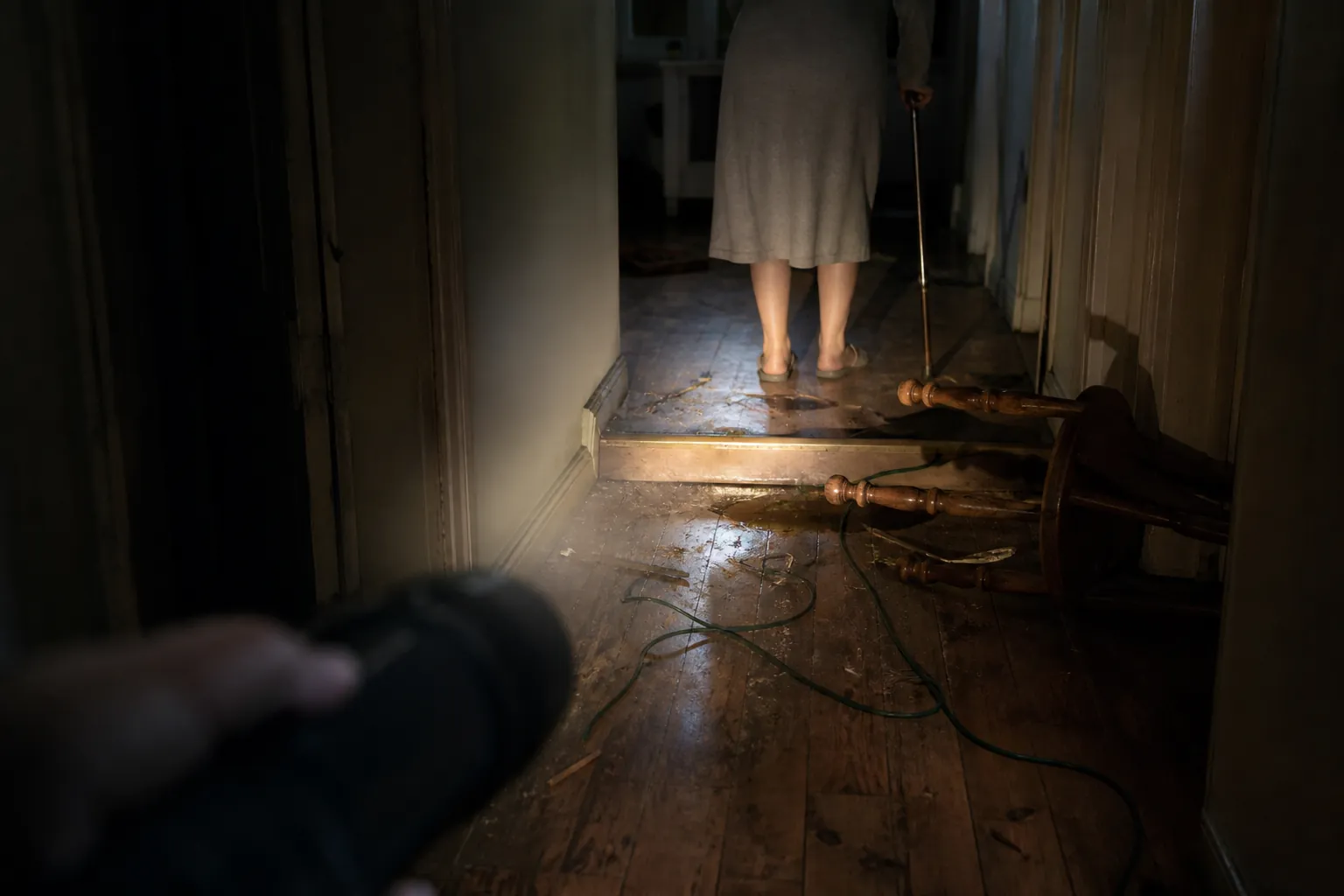
The first walk back into a storm-damaged home should not start with cleanup. It should start at the threshold, with one job: decide whether an older adult can walk through this house tonight without being asked to trust memory, balance, or luck. The rooms may look familiar, but the walking surface has changed. A rug is wet. A chair has been pushed into the hallway. A threshold has lifted. The bathroom light is out. A board with a nail in it is lying exactly where a cane or slippered foot would land.
There is a reason storm damage safety for seniors has to focus on the hours and days after the weather passes. The National Weather Service’s Atlanta office describes a Marion, Illinois tornado study in which 50% of tornado-related injuries happened during rescue, cleanup, or other post-tornado activities; nearly a third came from stepping on nails. That is one storm study, not a universal rate, but it makes the aftermath visible in a way broad warnings often do not: the injury is not always from wind. It is from the board on the floor after the wind is gone. [1]
Hurricane research points in the same direction without turning every storm into the same event. A 2021 review reported that, after Hurricane Sandy, most deaths up to one month after the storm were caused by falls; it also noted that among emergency department patients seen for hurricane-related injuries, common injuries included abrasions, lacerations, and cuts caused by falls, slips, and trips, concentrated within about three months of landfall. [2]
For an older adult, storm damage often creates the exact home hazards the CDC already identifies as fall risks: broken steps, clutter, poor lighting, and wet floors. The CDC also reports that one in four older adults falls each year and that falls are the leading cause of traumatic brain injury. [3] After a storm, the hallway, bathroom, stairs, and entry route are no longer just rooms. They are the fall-risk assessment.
CareWise Guide review note: Last verified August 3, 2026. This article is educational and is not medical, legal, financial, or emergency advice. Follow evacuation orders and local emergency instructions, and call 911 for immediate danger.
Do not let the first walk-through become the first fall
The first person through the door should be the person most able to stop, bend, lift a light, and back out. That may not be the homeowner, even if your parent knows every inch of the house. Familiarity can work against safety after storm damage because the brain expects the old route: three steps to the hall table, a clear turn into the kitchen, a dry bathroom tile. The house may no longer match that map.
If there is any question about structural damage, floodwater, downed wires, a suspected gas leak, or official access restrictions, the safest fall-prevention decision is not to enter. The National Weather Service advises inspecting damage in daylight, using flashlights instead of candles, reporting downed power lines, and shutting off gas if a leak is suspected. [1] Those are usually described as storm precautions. For a senior, they are also walking precautions: darkness, panic, fire risk, fumes, and a hurried exit all make a fall more likely.
- Enter only if local authorities say it is safe and you can leave just as safely.
- Use a flashlight, headlamp, or battery lantern. Do not use candles to inspect rooms or hallways after damage.
- Keep the older adult outside, in the car, with a neighbor, or in one known-safe room until the walking route has been checked.
- If you smell gas, hear hissing, see downed power lines, or must step through standing water near possible electrical hazards, stop the inspection and get emergency or utility help.
- If inspection has to happen at night, limit it to urgent safety checks. A full fall-risk walkthrough belongs in daylight.
This is also the moment to slow family dynamics down. A parent may say, “I just need to grab my medicine,” or “I know where the breaker is.” A safer answer is concrete, not scolding: “Let me clear the path first, then I’ll walk with you.” The goal is not to take over the house. It is to keep the first few steps from becoming the emergency.
The walking-route inspection
Treat the home as a set of routes, not a set of chores. The route from the door to a chair matters before the route to the basement. The route to the bathroom matters before the route to a keepsake box. The route to a phone, medication, eyeglasses, walker, and bed matters before sorting wet cardboard.
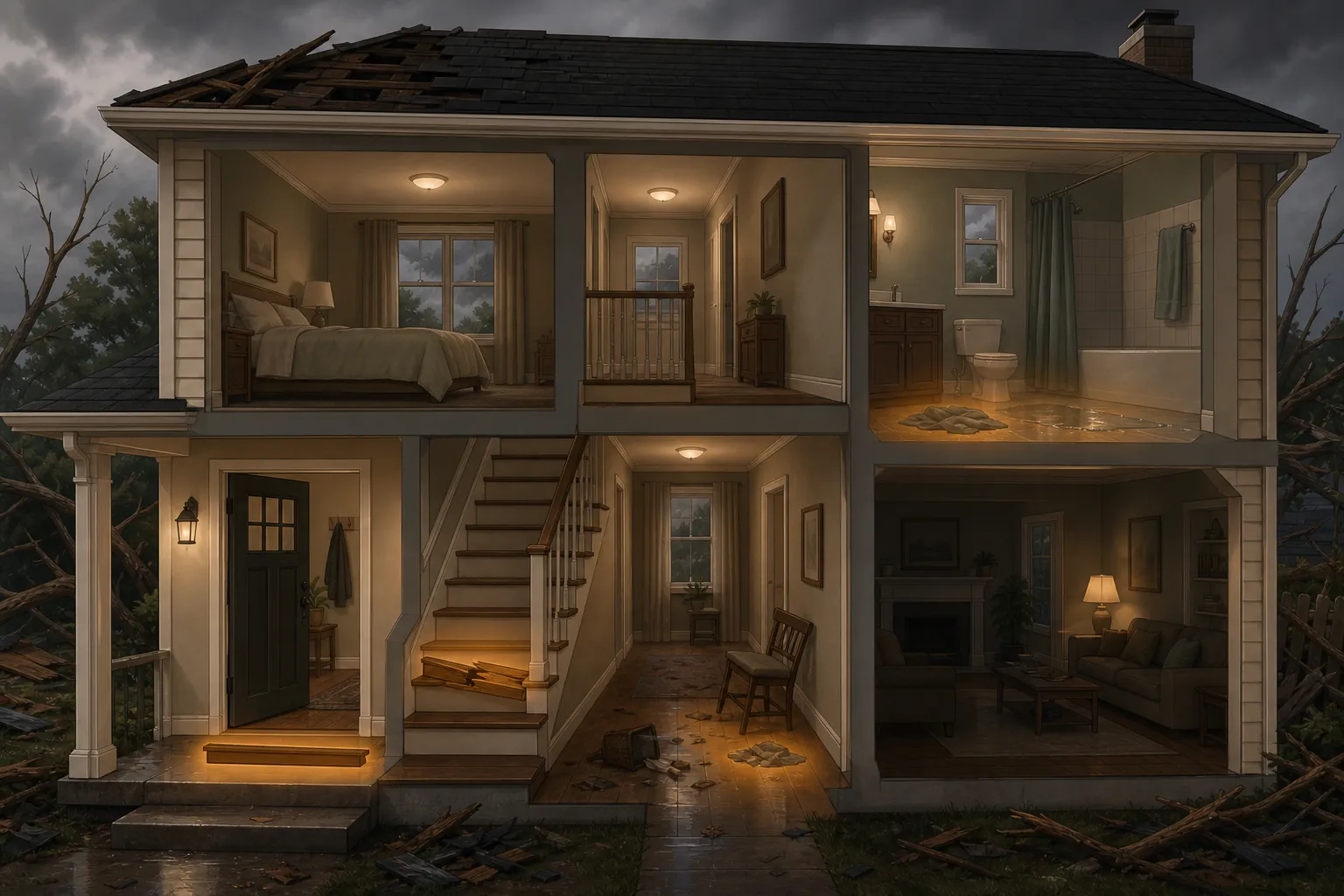
| Area | What changed after storm damage | First decision |
|---|---|---|
| Outside approach and entry | Mud, loose branches, lifted mats, broken steps, slick ramps, boards with nails | Clear or avoid the approach before the older adult walks it |
| Lighting and power | Dark hallways, dead stair lights, cords across walking paths, outages | Create a lit route before movement |
| Stairs and thresholds | Loose railings, wet treads, broken edges, raised strips, shifted rugs | Do not let a senior test stairs first |
| Living areas and hallways | Moved furniture, debris, fallen wall items, extension cords, wet flooring | Restore one wide, predictable path |
| Bathroom | Wet tile, towels on the floor, no power, unstable towel bars, medication on wet counters | Check it before nighttime use |
| Bedroom | Blocked bed path, missing lamp, wet carpet, displaced cane or walker | Set up the overnight route before fatigue |
| Kitchen | Leaks, broken glass, slippery food spills, heavy cleanup loads | Retrieve essentials; postpone cleanup |
| Cleanup route | Debris piles, standing water, nails, tools, trash bags, repeated carrying | Separate walking from hauling |
Outside approach and entry
The fall risk starts before the front door. Look at the driveway, sidewalk, porch, ramp, garage entry, and back door as if your parent has never walked there before. After wind or flooding, the safest-looking route may not be the route they usually use.
Check for mud on hard surfaces, loose gravel, branches that roll underfoot, patio furniture blown into the path, lifted doormats, damaged ramp edges, and steps that have shifted or cracked. Look especially for boards with exposed nails. The Marion tornado study cited by the National Weather Service is useful here because it names the kind of ordinary debris that injures people during cleanup: nails in boards. [1]
Do not ask an older adult to step over debris “just once.” That phrase is a warning sign. If a cane, walker, oxygen tubing, or tired legs are part of the picture, stepping over a branch or threshold is not a small request. Clear the route, choose another entrance, or wait for help.
- If the porch light is out, add temporary lighting before anyone uses the entry after dark.
- If a ramp is slick, muddy, or littered with leaves, do not assume the handrail will compensate.
- If the garage is cluttered with storm supplies, do not route the older adult through it unless you can create a clear walking lane.
- If the safest entry is not the usual entry, explain it before your parent starts walking: “The front step is loose, so we’re using the side door tonight.”
Lighting and power
Poor lighting is already a CDC-listed home fall hazard. [3] After storm damage, it becomes more dangerous because the floor is less predictable. A dark hallway is one problem; a dark hallway with a raised threshold, a damp rug, and an extension cord is another.
Build a lit route before the older adult moves through the house. Use flashlights, battery lanterns, or headlamps, not candles. [1] A phone flashlight is useful for a quick look, but it is not enough if the person holding the phone also needs to support a parent, open a door, move a walker, or watch the floor.
Place temporary lights where decisions happen: the entry threshold, the first step, the hall turn, the bathroom doorway, and the path from bed to toilet. Light the floor, not just the room. A lamp shining into someone’s eyes can make a wet patch harder to see.
Be strict about cords. Extension cords may be necessary after an outage, but they should not cross a nighttime bathroom route or run under loose rugs. If a cord must cross a path temporarily, tape is not a full solution for a senior with a walker or shuffling gait. Reroute the cord or reroute the walking path.
Stairs, steps, and thresholds
Stairs deserve a separate pause because storm damage changes both the step and the confidence people bring to it. A person who has used the same basement stairs for 30 years may not look down at every tread. After a storm, that habit is dangerous.
Before your parent uses stairs, check each tread with your eyes and, if safe, with your own foot. Look for wet wood, broken nosing, loose carpet, missing traction strips, mud, leaves, glass, and small debris that could roll. Check railings by pulling gently from the direction a falling person would grab. A rail that looks fine but moves under load should be treated as unavailable.
Thresholds are easy to underestimate. Water can swell wood, loosen metal strips, curl mats, or shift flooring just enough to catch a toe. Mark a raised threshold with bright tape only after you have decided the route is safe enough to use. Marking a hazard is not the same as fixing it.
If your parent normally reaches for a towel bar, doorframe, wall shelf, or furniture edge near a step, replace that habit with a real handhold or assisted walking. Towel bars and furniture are not grab bars; they may come loose exactly when someone loads weight onto them. For more detail on why that distinction matters, see CareWise Guide’s explanation of towel bars versus grab bars.
Living areas and hallways
Hallways are where storm cleanup quietly collides with nighttime routine. A chair pulled away from a window, a box of wet papers, a fan, a dehumidifier, or a charging cord may sit right in the path to the bathroom. Nobody means to create a trap. They are just trying to dry the house, charge a phone, and save belongings.
Clear one walking lane that is wide enough for the older adult’s real mobility needs. “Wide enough” means different things for a cane, walker, wheelchair, oxygen tubing, or a person who steadies themselves with a hand on the wall. Do not judge the route by whether a younger adult can squeeze through sideways while carrying a trash bag.
- Move displaced chairs, ottomans, plant stands, and small tables out of the route.
- Lift loose rugs and wet mats rather than asking someone to “watch that corner.”
- Keep fans, buckets, dehumidifiers, and power cords out of the bathroom path.
- Pick up small items first: glass, screws, nails, branches, wet mail, and plastic bags.
- Put a stable chair with arms near the entry if the older adult needs to sit while you inspect.
If furniture has to stay out of place overnight, say so out loud. “The recliner is in the hall tonight. The clear route is along the left wall.” This is not overexplaining. It is how you update the mental map of a house that has changed.
Bathroom
The bathroom should be checked before the first urgent trip, not during it. Wet floors are a CDC-listed home fall hazard, and bathrooms already combine hard surfaces, turning, reaching, and clothing changes. [3] Storm damage adds darkness, leaks, towels on the floor, and sometimes a rushed path from bedroom to toilet.
Dry the floor before your parent uses the room. Remove soaked bath mats and towels that can slide. Check whether the toilet area, sink, and shower entry are lit. If water is coming through the ceiling or wall, do not treat the room as safe just because the toilet still works.
Watch for improvised handholds. A towel bar, sink edge, shower door, rolling hamper, or lightweight shelf may be the first thing a person grabs when the floor feels slick. If the usual grab bar is loose, blocked, or unreachable because supplies were moved, fix that route before use. CareWise Guide also covers the specific risk of using a towel bar as a grab bar.
If the bathroom cannot be made dry, lit, and reachable, make a temporary toileting plan before nightfall. That may mean staying elsewhere, using a safer bathroom on the same level, or arranging close assistance. The worst plan is hoping no one needs the bathroom until morning.
Bedroom and the overnight route
Fatigue is part of storm damage. People have been listening for alerts, calling relatives, moving belongings, and sleeping badly. A route that seems manageable at 4 p.m. may be unsafe at 2 a.m., especially for someone getting up quickly to use the bathroom.
Set up the bedroom before the older adult is tired. Put eyeglasses, hearing aids, cane, walker, phone, medication, shoes, and a flashlight where they can be reached without bending into clutter or walking in the dark. Clear the floor on both sides of the bed if the person may get up from either side.
Do not leave storm supplies at the foot of the bed. Bottled water, batteries, chargers, towels, buckets, and paperwork tend to gather in the bedroom because it feels like a safe staging area. If they sit in the nighttime route, they are not supplies anymore; they are obstacles.
Also check whether the older adult can call for help from bed. If power or phone service is unreliable, a charged mobile phone, backup battery, medical alert device, or reachable neighbor may matter as much as a dry floor. CareWise Guide’s article on senior emergency communication during landline changes is a useful companion when storms expose gaps in the call-for-help plan.
Kitchen
The kitchen often becomes a storm command center: coolers, trash bags, wet towels, insurance papers, medications, flashlights, and spoiled food all land there. It is also full of hard flooring, sharp objects, cabinet doors, and reaching.
Do a quick safety pass before asking your parent to help. Check for broken glass, spilled liquids, food on the floor, loose cabinet contents, damaged ceiling material, and small appliances or cords placed in walking areas. If the refrigerator or freezer has leaked, assume the floor may be slick until cleaned and dried.
Retrieve essentials first: medication, safe drinking water, glasses, a phone charger, and simple food. Do not turn the first kitchen trip into a full refrigerator cleanout while an older adult stands nearby, holding a counter and waiting for a path to open.
Cleanup routes
Cleanup changes the home again every few minutes. A safe hallway can become unsafe when someone drags a branch through it, drops a wet towel, or stacks trash bags by the door. That is why the cleanup route needs its own rules.
Separate walking lanes from hauling lanes when possible. If debris must move through the same hallway your parent uses, stop senior traffic during that work, then reset the route afterward. Do not leave a half-cleared pile with the promise that everyone will remember it is there.
Mayo Clinic’s hurricane safety guidance emphasizes that injuries spike after storms during cleanup, including lacerations, puncture wounds, falls, and chainsaw injuries. It also identifies floodwater and standing water as major contributors to post-storm injury and illness, and recommends long sleeves, hard-soled closed-toe shoes, and thick gloves for cleanup. [4]
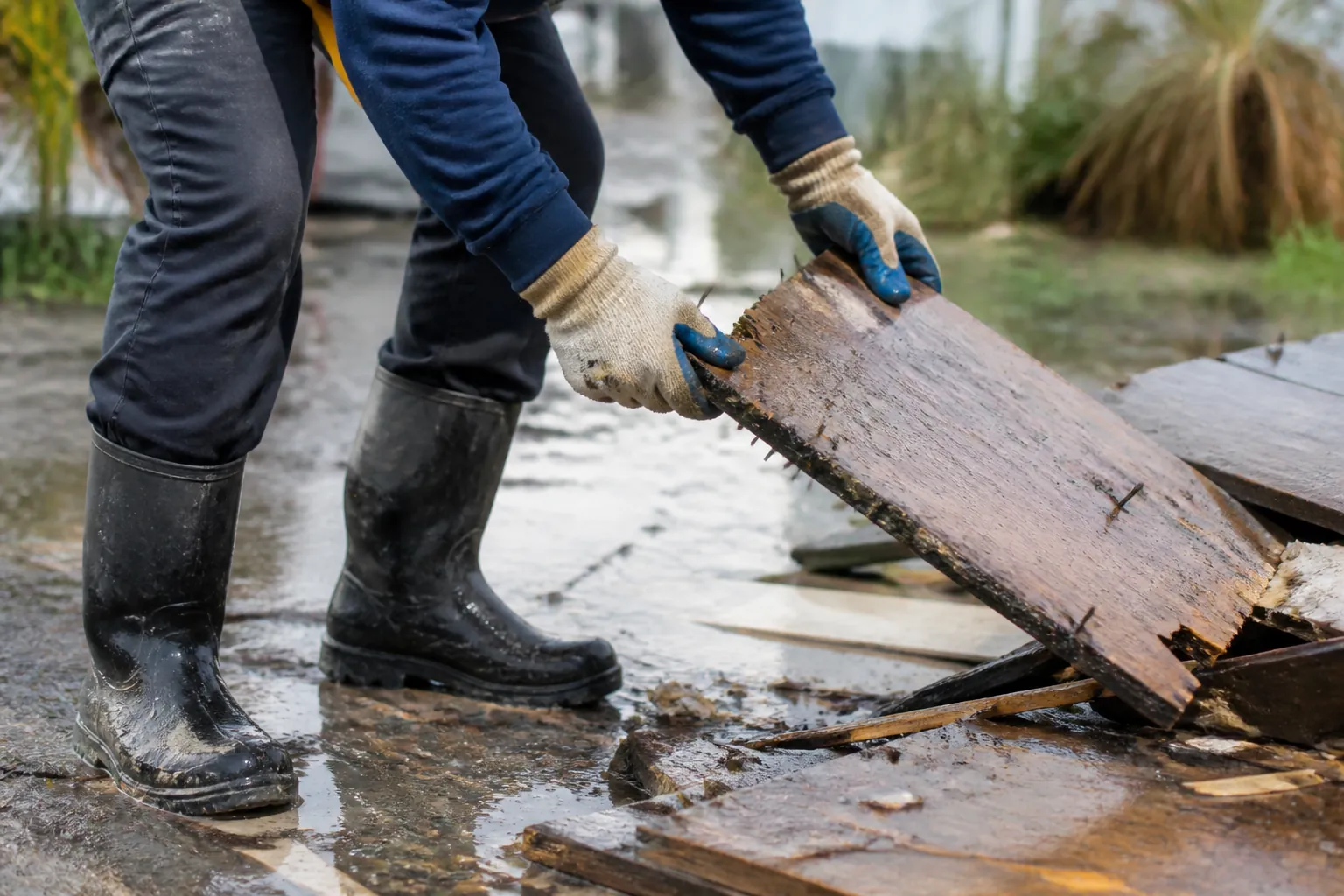
For a senior, that gear is not a signal that cleanup is now safe. It is a clue that cleanup is hazardous enough to limit who does it. A proud older adult may be able to sort mail at a dry table, call the insurance company, make a medication list, or direct you to important documents. That is different from carrying wet boards, climbing stairs with a box, or pulling soaked carpet.
How to say no to unsafe help without starting a fight
After storm damage, older adults often want to help because the house is theirs, the loss is personal, and sitting still can feel like being treated as fragile. A flat “Don’t do anything” may be emotionally satisfying for the caregiver and useless in practice. Give a real job that does not require unstable walking.
| If your parent says | Try saying | Safer role |
|---|---|---|
| I can carry that. | I need you to keep your hands free for balance. Can you tell me where this should go? | Directing placement from a chair |
| I’m just going to the basement. | The stairs changed in the storm. I’m checking each step first, then we’ll decide together. | Waiting until stairs are inspected |
| I know where everything is. | You know the house. I’m checking what the storm moved. | Identifying important items while someone else clears the path |
| Let me sweep this up. | There may be glass or nails in it. Please point out what matters, and I’ll handle the sharp pieces. | Sorting nonhazardous items at a dry table |
| I don’t want to be in the way. | You’re not in the way. I need one clear walking route before either of us does more. | Sitting in a stable chair in a safe zone |
The division of labor should match the hazards. People with better balance and protective gear handle wet debris, nails, unstable furniture, and repeated carrying. The older adult can handle decisions, phone calls, medication checks, photo review for insurance, and prioritizing what must be saved first.
Be careful with outside pressure, too. A cleanup worker, neighbor, or door-to-door contractor may make the damage feel urgent. Urgency can push a family into moving too fast, walking unsafe routes, or letting an older adult stand in a hazardous area while decisions are made. Before hiring work, call the insurer, use trusted local referrals when possible, and keep your parent physically away from active debris removal. Contractor caution matters here for one reason: rushed cleanup creates fall exposure.
If you need more hands, ask for specific help: one person to clear the entry, one to photograph damage, one to sit with the older adult, one to call family or the Area Agency on Aging through Eldercare Locator, and one to speak with insurance. Vague help turns into everyone carrying things. Specific help protects the walking route.
When the safer decision is to stay somewhere else
A house can be standing and still be unsafe for an older adult overnight. The question is not only whether the roof is intact. It is whether the person can reach the bathroom, bed, medication, food, water, phone, and exit on dry, stable, lit surfaces.
Consider another place to sleep if any essential route depends on stairs that have not been inspected, a bathroom with wet flooring, a bedroom without light, an entry blocked by debris, or a phone plan that may fail if the person falls. Staying with family, a neighbor, or in temporary lodging may be less disruptive than an emergency department trip after a nighttime fall.
If the storm is still part of an active weather pattern, plan-ahead steps matter too. CareWise Guide’s severe thunderstorm safety guide for seniors is the preparation counterpart to this post-damage walkthrough. For other room-by-room recovery formats, see the apartment fire safety checklist for seniors and guidance on assistance for seniors after wildfire.
If a fall happens anyway: watch the next 72 hours
Even a careful walkthrough cannot remove every hazard from a damaged home. If an older adult falls after a storm, do not let the cleanup schedule swallow the medical follow-up. The CDC’s fall guidance emphasizes head injury concerns, especially for people taking blood thinners, and the need to watch for delayed symptoms after a fall. [3]
Call 911 right away if the person may have hit their head and has serious symptoms, cannot get up safely, has severe pain, seems newly confused, loses consciousness, has trouble breathing, or you suspect a neck, back, hip, or other major injury. If you are unsure whether moving them is safe, do not make the storm mess the reason you rush. Clear space around them if you can do so safely and wait for emergency help.
Contact a doctor promptly after any fall that involves a head hit, new pain, dizziness, weakness, a change in walking, or blood thinner use, even if the person says they feel fine. Delayed symptoms matter. A caregiver should keep watching for changes over the next 72 hours, including worsening headache, confusion, unusual sleepiness, vomiting, new balance problems, vision changes, or behavior that is not normal for that person. [3]
Write down what happened while it is still clear: time of fall, location, lighting, footwear, surface condition, whether the person hit their head, medications, and symptoms. That information helps a clinician, and it also tells you what part of the house must be taken out of use until fixed.
After the urgent concern is handled, use the fall as a trigger for a broader prevention conversation. Medicare wellness and fall-risk discussions may help families organize questions for a clinician; CareWise Guide’s Medicare wellness fall-prevention FAQ is one place to start.
After storm damage, safety is not measured only by whether the house is still standing. It is measured by whether an older adult can move through it in light, on dry stable surfaces, without debris, improvised handholds, or rushed cleanup turning recovery into the injury event.
References
- Safety After the Storm — National Weather Service Peachtree City/Atlanta
- Perspectives on the Health Effects of Hurricanes — International Journal of Environmental Research and Public Health, 2021
- Facts About Falls — Centers for Disease Control and Prevention
- Hurricane safety series: Avoiding injuries after the storm — Mayo Clinic News Network
Related reading
Noticed something outdated or inaccurate on this page? Flag a correction. We review every report against CDC, NIA, and AARP HomeFit guidance before updating a page.
Part of the Fall Prevention section.