
STEADI: Intervene
Which Summer Safety Essentials Matter Most on a Budget
A cost-ranked summer safety guide for older adults and their caregivers. It separates the free heat- and fall-prevention steps that matter most from the low-cost fixes and paid upgrades worth doing first, so limited budgets go where they count.
If you can only do a few things this week, start with the ones that do not require a cart, a coupon code, or a new device. The summer safety essentials for seniors on a budget are not the prettiest items on a checklist. They are the boring moves that keep an older adult from getting overheated, dehydrated, rushed, or tripped: two daily check-ins, water within reach, medications out of hot places, and clear walking paths.
Heat deserves respect, but the numbers need to be handled cleanly. The CDC says heat causes more than 700 deaths per year in the United States, while USAFacts reports 1,600 heat-related deaths in 2021 and a provisional 1,714 in 2022 using a different death-certificate counting approach. Those figures point in the same serious direction, but they should not be mashed into one statistic. [1][2]
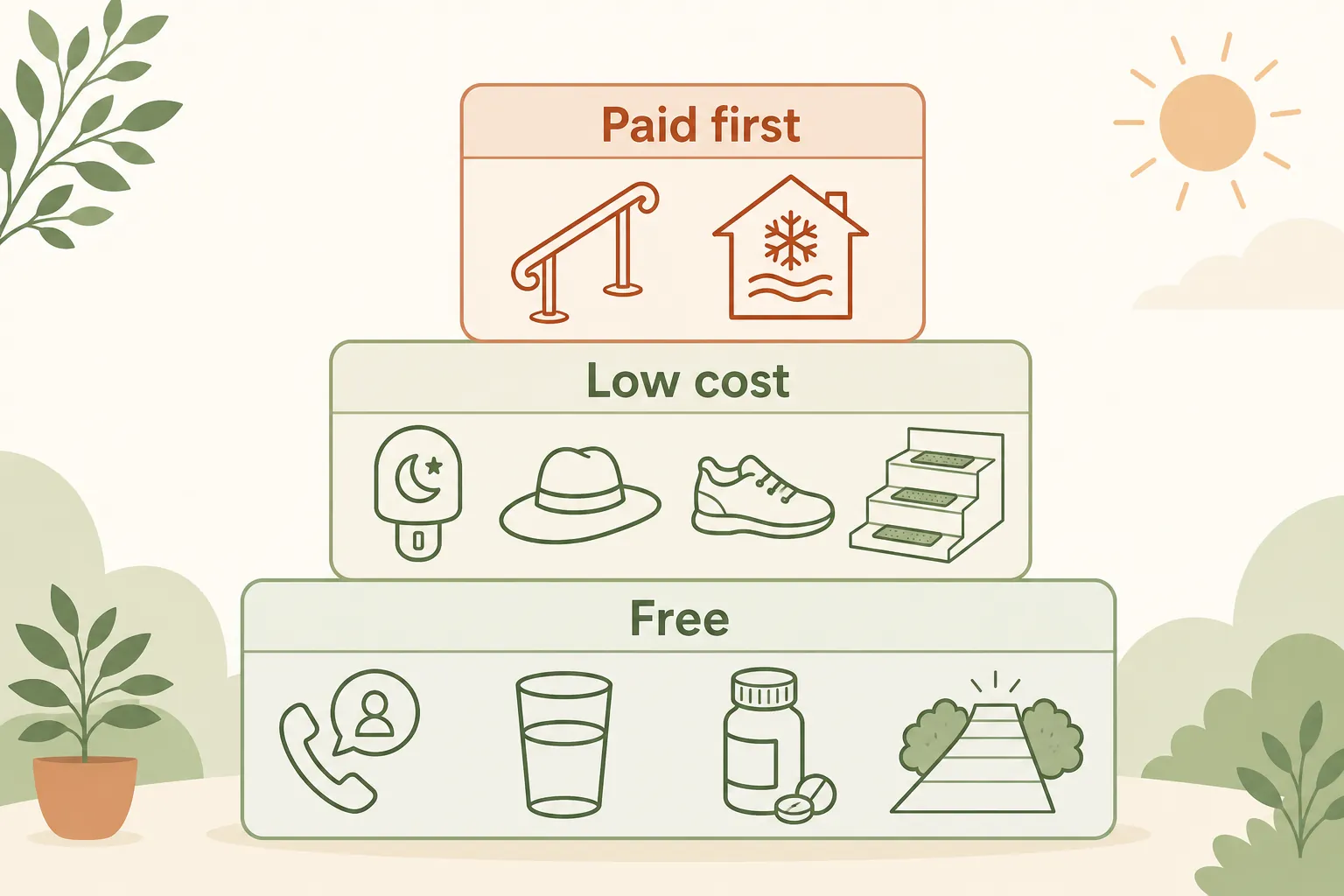
The budget order: free first, small fixes second, paid help before gadgets
| Priority tier | What belongs there | Why it comes in this order |
|---|---|---|
| Free | Twice-daily check-ins, hydration routine, cooling plan, medication heat check, cleared walkways, HeatRisk and cooling-center lookup | These reduce the situations that turn summer heat into falls, confusion, missed medicine, or delayed help. |
| Low cost | Night lights, nonslip treads, light loose clothing, wide-brim hat, sunscreen, supportive closed-toe shoes, cane or walker tip checks | These are useful reinforcements once the daily safety routine and obvious hazards are handled. |
| Paid first | Utility assistance, weatherization help, handrails, grab bars, safer entry steps | Cooling access and installed supports address repeated risk before optional equipment purchases. |
This order matters because summer problems pile up. A hot room can mean poor sleep. Poor sleep and dehydration can mean dizziness. Dizziness plus sandals with bad grip, a hose across the path, or a curled rug edge can become a fall. Treat heat safety and fall prevention as one job, not two separate seasonal chores.
Free steps to do before buying anything
Make the check-in specific
A “How are you?” call is easy to wave away. A useful summer check-in asks the questions that actually find trouble. The CDC caretaker checklist says to visit at-risk adults at least twice a day and ask whether they are drinking enough water, have access to air conditioning, know how to keep cool, and show signs of heat stress. [1]
- Morning: “What have you had to drink since you woke up? Is the coolest room still comfortable? Are today’s pills out of the sun and heat?”
- Late afternoon or evening: “Did you go outside? Any dizziness, headache, nausea, heavy sweating, confusion, or weakness? Is the path to the bathroom clear for tonight?”
- After a power outage, heat advisory, missed meal, or new medication: add an extra check-in, even if the person usually does fine alone.
Older adults are at higher heat risk in part because they are more likely to have chronic medical conditions and take medicines that affect how the body handles heat. [3] That does not mean hovering. It means the check-in has to be concrete enough to catch a problem before the older adult has to admit, “I need help.”
If symptoms already look dangerous, do not turn this article into a diagnosis tool. Use the emergency guidance in Call 911 First for These Heat Stroke Symptoms in Seniors.
Put water where it will actually be used
The CDC advises drinking more water than usual during extreme heat and not waiting until thirst kicks in. It also gives an important caveat: if a doctor has limited fluid intake or prescribed water pills, ask the doctor how much to drink in hot weather. [1]
That caveat is not fine print. Plenty of older adults are managing heart, kidney, or blood-pressure issues. The budget move is not to buy a special bottle first. It is to make the water plan visible and medically safe: a glass by the morning pills, a refill before sitting down to watch TV, and a clear instruction from the clinician if fluids are restricted.
- Keep water near the chair, bedside, and meal spot, not only in the kitchen.
- Pair drinking with routines that already happen: pills, meals, phone calls, and favorite shows.
- If the person dislikes plain water, ask the clinician whether other fluids or foods with high water content fit their medical plan.
Move medications out of hot places
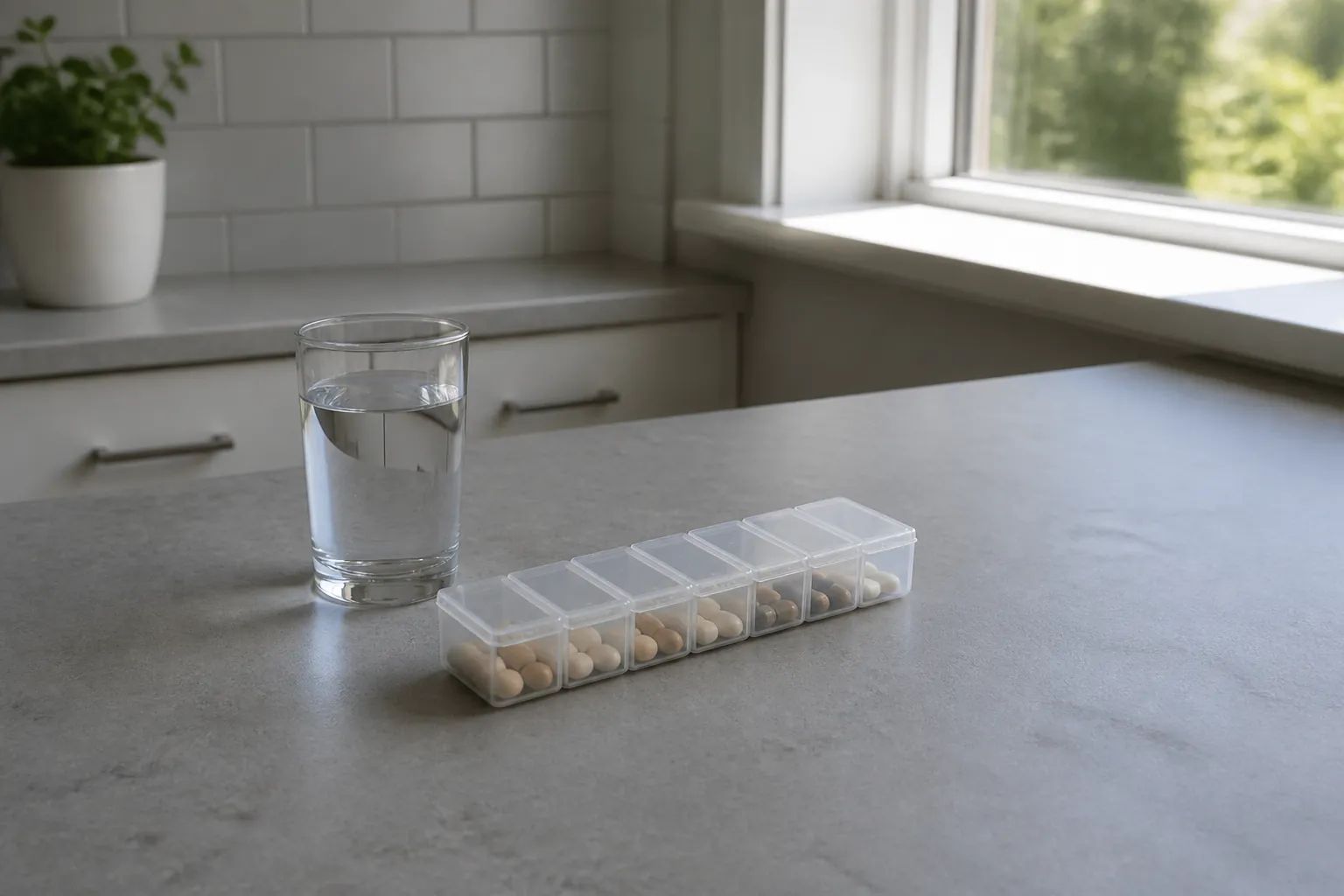
A pill organizer on a sunny windowsill is not a summer system. Neither is a mail-order prescription sitting in a mailbox or a refill left in a parked car while errands run long. Put medications in a cool, shaded, easy-to-reach place, and ask the pharmacist what to do if any medicine may have been exposed to high heat.
This is also where a caregiver should look ahead, not just tidy up. If the local pharmacy is changing hours, closing, or becoming harder to reach, use prescription continuity planning before summer heat turns a simple refill into a hot drive, a long wait, or a missed dose.
Clear the summer walkway, not just the living room
Summer fall hazards are often outside the neat indoor checklist. Home-care safety checklists commonly flag hoses across walkways, wet pool or patio surfaces, sandals with poor grip, humidity-curled rug edges, and loose gravel as seasonal hazards for older adults. [4][5]
Start at the place the person actually walks when tired: bed to bathroom, chair to kitchen, door to mailbox, porch to car. Then remove the thing that can catch a toe or force a sidestep.
- Coil the hose away from the path, even if it “has always been there.”
- Lift or tape down curled rug edges; if a rug still slides, take it out of the walking path.
- Dry wet porch, bathroom, kitchen, or patio spots instead of stepping around them.
- Sweep loose gravel from the usual route to the mailbox, trash bin, car, or garden.
- Move sandals with thin soles or poor grip away from the door so they are not the default outdoor shoes.
Do this when the apartment or house is not at its hottest if you can. Clearing a walkway while someone is overheated is exactly how a small chore becomes another risk.
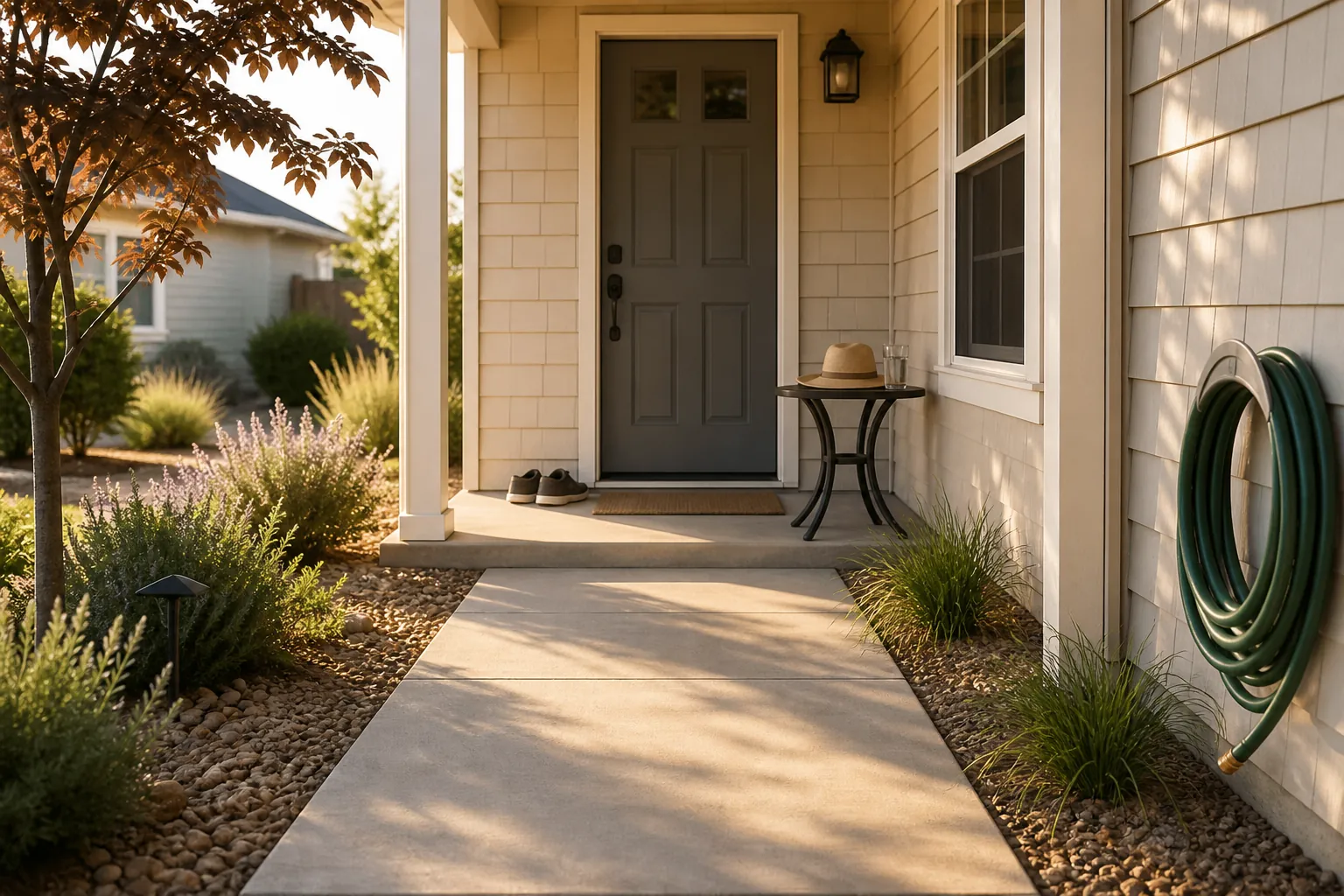
Use free heat tools before the room feels unbearable
Do not wait for the older adult to say the house is too hot. Many people understate discomfort because they do not want to be a bother, and some do not feel thirst or heat stress early enough to act. CDC heat resources include HeatRisk tools that can be checked by location, and cooling-center information is also collected through state and local sources. [1][6]
| Free resource path | How to use it | Last verified for this article |
|---|---|---|
| CDC HeatRisk tools | Check the older adult’s ZIP code or local area before planning errands, outdoor chores, or a doctor visit. | Aug. 5, 2026 |
| 2-1-1 | Call or search the local 2-1-1 service for cooling centers, transportation options, utility help, and local senior services. | Aug. 5, 2026 |
| State cooling-center locators | Confirm the exact site, hours, eligibility, transportation, and pet rules before sending someone there. | Aug. 5, 2026 |
Cooling-center lists change. A center that was open last week may not be open today, and transportation can be the real barrier. The useful call is not “There’s a center somewhere.” It is “This one is open, they can take you, and here is how you are getting there.”
For an older adult living alone, the check-in plan needs more detail than this article can carry. Use In Extreme Heat, Seniors Living Alone Can't Trust Thirst and How Seniors Living Alone Can Prevent Falls in a Heatwave for the deeper living-alone routine.
Low-cost fixes that are worth considering after the basics
Small purchases can help. They just should not distract from the free work. Buy for the exact friction point you saw, not for the feeling that a summer safety list needs more items.
| Low-cost item | When it makes sense | What to check |
|---|---|---|
| Night lights | The bedroom-to-bathroom route is dim, especially after evening fluids. | Light the path without creating glare or cords across the floor. |
| Nonslip treads or tape | A step, threshold, or ramp gets slick from rain, humidity, watering, or pool traffic. | Make sure edges are secured; loose treads become a new trip hazard. |
| Light, loose clothing | The person is wearing heavy, tight, or dark clothing indoors or outside in heat. | Choose clothes the person will actually wear and can put on without struggling. |
| Wide-brim hat and sunscreen | Outdoor time is unavoidable for appointments, gardening, errands, or waiting for rides. | Keep them by the door or bag used for outings, not buried in a closet. |
| Supportive closed-toe shoes | The default summer footwear is a loose sandal, slipper, or flip-flop. | Look for grip, fit, and ease of use; shoes that are hard to put on will sit unused. |
| Cane or walker tip replacement | Rubber tips are worn, cracked, uneven, or slippery. | Check both indoor and outdoor devices; porch and driveway use wears tips down. |
This is the tier where a caregiver can avoid a fight. Instead of announcing that the whole house is unsafe, fix the one thing both people can see: the dark hallway, the slick back step, the shoes that slide, the cane tip that has gone smooth.
Outdoor routines need their own judgment. If the real risk is a cracked sidewalk, poor lighting, or an uneven route to the store, move from the porch to neighborhood fall safety planning. If gardening or brushy walks are part of the week, add a simple tick-bite prevention routine rather than stuffing more generic “summer gear” into the budget.
Paid priorities: cooling access and installed supports come first
When there is real money to spend, spend it on the problem that repeats. A wearable device or extra fan may have a place, but they do not replace a home that can stay cool enough or a bathroom entry with a reliable grab point.
Ask about utility and weatherization help before buying equipment
For a fixed-income household, the first paid priority may be getting help paying for cooling or reducing the strain on the home. The National Council on Aging points older adults toward energy assistance benefits including LIHEAP and the Weatherization Assistance Program, and USA.gov directs households to help with energy bills and weatherization through federal and state channels. Availability, eligibility, benefit amounts, and application windows are state-specific. [7][8]
| Program or office | What to ask | Last verified for this article |
|---|---|---|
| State LIHEAP office | Whether cooling assistance, crisis assistance, or utility-bill support is available now; what documents are needed; how quickly help can arrive. | Aug. 5, 2026 |
| Weatherization Assistance Program contact | Whether the home may qualify for improvements that reduce heat gain or improve energy efficiency. | Aug. 5, 2026 |
| Local Area Agency on Aging or 2-1-1 | Whether there are local cooling funds, transportation to cooling centers, fan or AC programs, minor home repair help, or emergency case management. | Aug. 5, 2026 |
Do not assume the national page tells you what is available in your county this week. Call the state office or local aging agency, and ask the dull questions: deadline, documents, income rules, landlord permission, waitlist, and emergency options.
Install supports where hands already reach
Handrails and grab bars are not exciting purchases, which is one reason they belong high on the list. They help in the places where the same risky movement happens again and again: stepping into the tub, rising from the toilet, using porch steps, carrying groceries through the entry, or moving down a short hallway at night.
The key word is installed. A grab bar that is not anchored correctly is a false promise. If the older adult rents, ask the landlord or local aging office about permission and minor modification help before buying hardware that may sit in a bag.
- Start with the bathroom if there is any history of slipping, holding towel bars, or avoiding showers.
- Add or repair railings at the entry used most often, not the entry that looks nicest from the street.
- Fix the repeated trip point before buying a monitor that only tells someone after the fall.
When you need a more specific checklist
Some summer problems need a more specific checklist. If heat and wildfire smoke are happening together, use the heat and wildfire smoke safety checklist. If the concern is a broader storm, outage, evacuation, or supply plan, use the severe weather preparedness checklist for older adults. If a clinician has recently started a GLP-1 medication and nausea, low intake, dizziness, or weakness is showing up, read the fall-risk guidance on GLP-1 side effects in seniors.
If you are triaging money today, keep the rule simple: do the no-cost checks first, spend small money on the friction points that make heat stress and falls more likely, and put larger dollars toward cooling access and installed supports before buying equipment.
References
- Protect Yourself From the Dangers of Extreme Heat — Centers for Disease Control and Prevention
- How many people die from extreme heat in the US? — USAFacts
- Heat and Older Adults (Aged 65+) — Centers for Disease Control and Prevention
- Summer Safety Checklist for Seniors Aging in Place — Homewatch CareGivers
- Summer Outdoor Fall Prevention Tips — Right at Home
- Cooling Centers by State — National Center for Healthy Housing
- Energy Assistance Benefits — National Council on Aging
- Help with energy bills — USA.gov
Related reading
Noticed something outdated or inaccurate on this page? Flag a correction. We review every report against CDC, NIA, and AARP HomeFit guidance before updating a page.
Part of the Fall Prevention section.