
STEADI: Intervene
How to Build a Tornado Safety Plan for Seniors
Generic tornado plans don't fit older adults. Build the plan around their mobility, medication, and power needs — accessible shelter, a 30-day medicine supply, redundant alerts, and a spare-key support network.
“Go to the safest place” sounds clean on a checklist. In an older adult’s home, it can fall apart in the hallway. The safest place may be down basement stairs with one handrail, past a throw rug, away from the oxygen tubing, or too narrow for a wheelchair to turn around.
That mismatch matters. CDC analysis of the April 2011 tornado outbreak in the southeastern United States identified age 65 and older as a tornado fatality risk factor, and a July 2023 AARP/NORC survey of 1,012 adults age 50 and older found that fewer than a third had created an emergency plan.[1][2]
A tornado safety plan for seniors has to answer a narrower, more useful question: Which shelter, supplies, alerts, and helpers match this person’s body, home, medications, devices, and daily routines?
Start with the person, not the storm
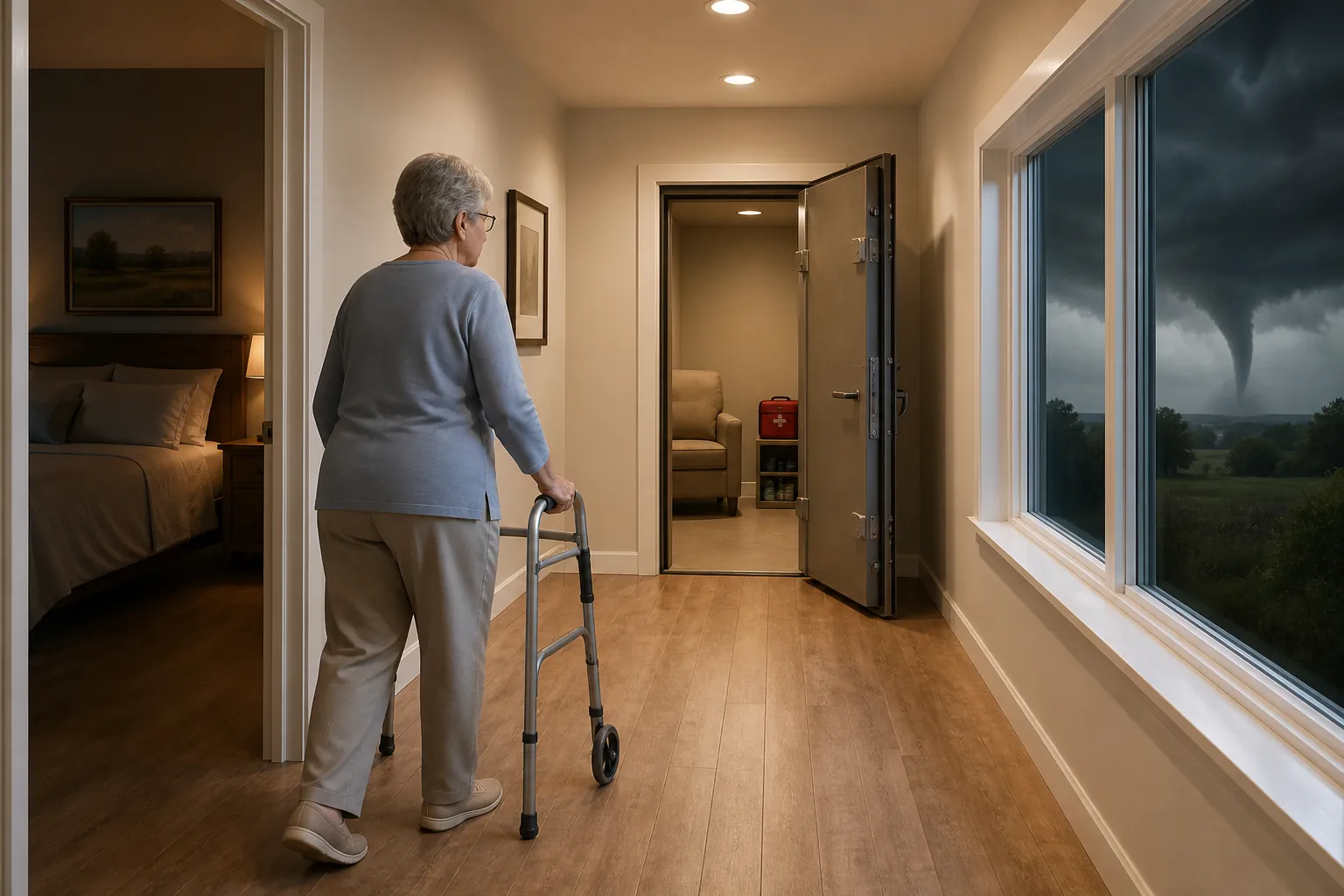
Before choosing a shelter or buying supplies, walk through the home with the older adult on an ordinary day. Watch how they actually move. Notice where the walker is parked, whether the phone is usually charged, which chair they sit in during the evening, where medications are kept, and whether they can hear an alert from the bedroom with the door closed.
This first pass is not a formality. It decides whether the plan is usable.
| Need to check | What the plan must answer |
|---|---|
| Mobility | Can the person reach the shelter with their walker, cane, wheelchair, scooter, or caregiver assistance? |
| Stairs | Is the route safe under stress, in shoes, possibly in the dark, and without rushing? |
| Hearing and vision | Will alerts be heard, seen, or felt from the places where the person spends time? |
| Daily medications | Which medications must come into the shelter, which need refrigeration, and where is the current list? |
| Power-dependent equipment | What happens to oxygen equipment, CPAP, mobility charging, refrigerated medicine, or communication devices during an outage? |
| Cognition and stress | Will the person remember the route, unlock the door for help, bring the right items, or need a named caller? |
| Pets or service animals | Where will the animal go, and can the person manage the animal without blocking movement? |
Do this assessment in the rooms where decisions will happen: bedroom, bathroom, kitchen, favorite chair, garage entry, and the proposed shelter. A plan that only lives in a binder can miss the loose cord across the hallway or the fact that the basement door sticks.
Choose the shelter the person can actually reach
Official tornado guidance generally puts the strongest protection at the top: a FEMA-criteria safe room or ICC 500 storm shelter, then a basement or storm cellar, then a small interior room without windows on the lowest level of a sturdy building.[3][4]
For an older adult, that hierarchy still matters, but reachability decides whether it works. A basement may be structurally preferable to a first-floor hallway, yet it is not the better real-world choice if the person cannot get down the stairs safely when the warning arrives. That is fall-prevention judgment applied to tornado planning: a shelter route that creates a high chance of a stair fall can turn one emergency into two.
If there is a safe room or storm shelter
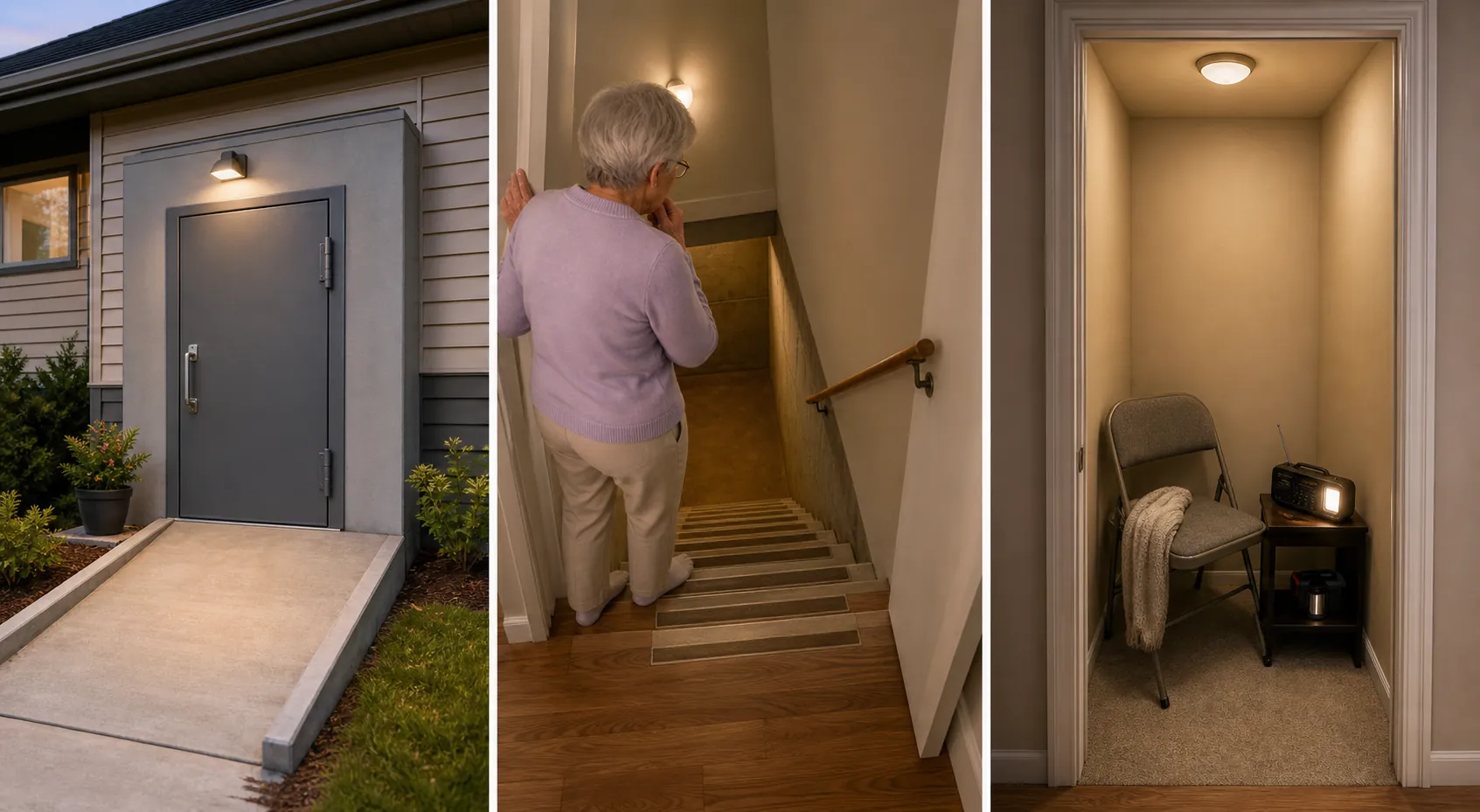
A properly built safe room or storm shelter is the cleanest answer when it is accessible. FEMA describes safe rooms as hardened structures designed to meet FEMA criteria and protect occupants from extreme winds, including tornadoes.[4]
For wheelchair users, an accessible safe room can be more realistic than a basement. United Spinal Association notes that a safe room is easier for wheelchair users to access than a basement; where no safe room exists, it points to a small interior windowless room on the lowest level as the alternative.[5]
Check the ordinary details: Is the entry level or ramped? Can the door be opened by the person who will use it? Is there turning space for the chair or walker? Is a portable oxygen unit or emergency bag already stored where it belongs? A safe room that requires someone else to move boxes out of the way is not ready.
If the basement is the planned shelter
A basement can be a strong shelter choice, but only after the route has been walked with the person’s actual mobility device. Look at the stairs as if the person is moving quickly, frightened, and maybe carrying nothing because both hands are needed.
- Clear the path from the bedroom, bathroom, kitchen, and favorite chair to the basement door.
- Remove loose rugs, cords, shoes, pet bowls, and stored items along the route.
- Check lighting at the top and bottom of the stairs, including a backup flashlight or plug-in emergency light if appropriate.
- Make sure handrails are secure and usable on the side the person naturally reaches for.
- Store a chair, blanket, radio, flashlight, water, and essential supplies in the basement so the person is not carrying a load down the stairs.
- Decide in advance when the person should move. Waiting until the last urgent message may leave too little time for safe stair use.
If those stair conditions cannot be made safer, choose another shelter option with local emergency-management guidance rather than pretending the basement plan will improve during a warning. For detailed route-proofing, use the fall-safe tornado preparedness checklist for seniors alongside this broader plan.
If the shelter is an interior room on the lowest floor
When a safe room, storm shelter, or usable basement is not available, Ready.gov advises moving to a small interior room on the lowest level, away from windows.[3] For many aging-in-place homes, that may be a hallway, bathroom, closet, or interior room.
Do not choose the room by label alone. A bathroom may be interior, but too tight for a walker. A closet may be windowless, but full of stored items that have to be moved first. A hallway may be reachable, but unsafe if glass from nearby rooms could enter or if there is nowhere for the person to sit.
The room should be kept ready enough that the older adult can enter it without rearranging furniture. If sitting on the floor is unrealistic, place a sturdy chair there or nearby. If the person uses a wheelchair, check turning space with the chair, not by guessing.
If the older adult lives in a mobile or manufactured home
This is where a plan has to be blunt. Ready.gov says mobile, manufactured, trailer, and recreational vehicles are not safe during tornadoes and high winds.[3] The plan must name another shelter before storm day: a nearby sturdy building, community storm shelter, neighbor’s safe room, public shelter, or another location approved by local emergency management.
That alternate shelter also has to pass the mobility test. A community shelter that requires a long walk across a dark parking lot may need a transportation helper. A neighbor’s basement may be strong protection but unusable for someone who cannot manage unfamiliar stairs. Write down who drives, who opens the door, what time the move happens, and what triggers leaving early.
Keep the kit small enough to use, but specific enough to matter
Emergency supplies for an older adult should not become a heavy tote that no one can lift or a closet full of expired items. The American Red Cross recommends that older adults prepare a 3-day go-kit, a 2-week stay-at-home kit, and a 1-month supply of medication kept in a child-proof container.[6]
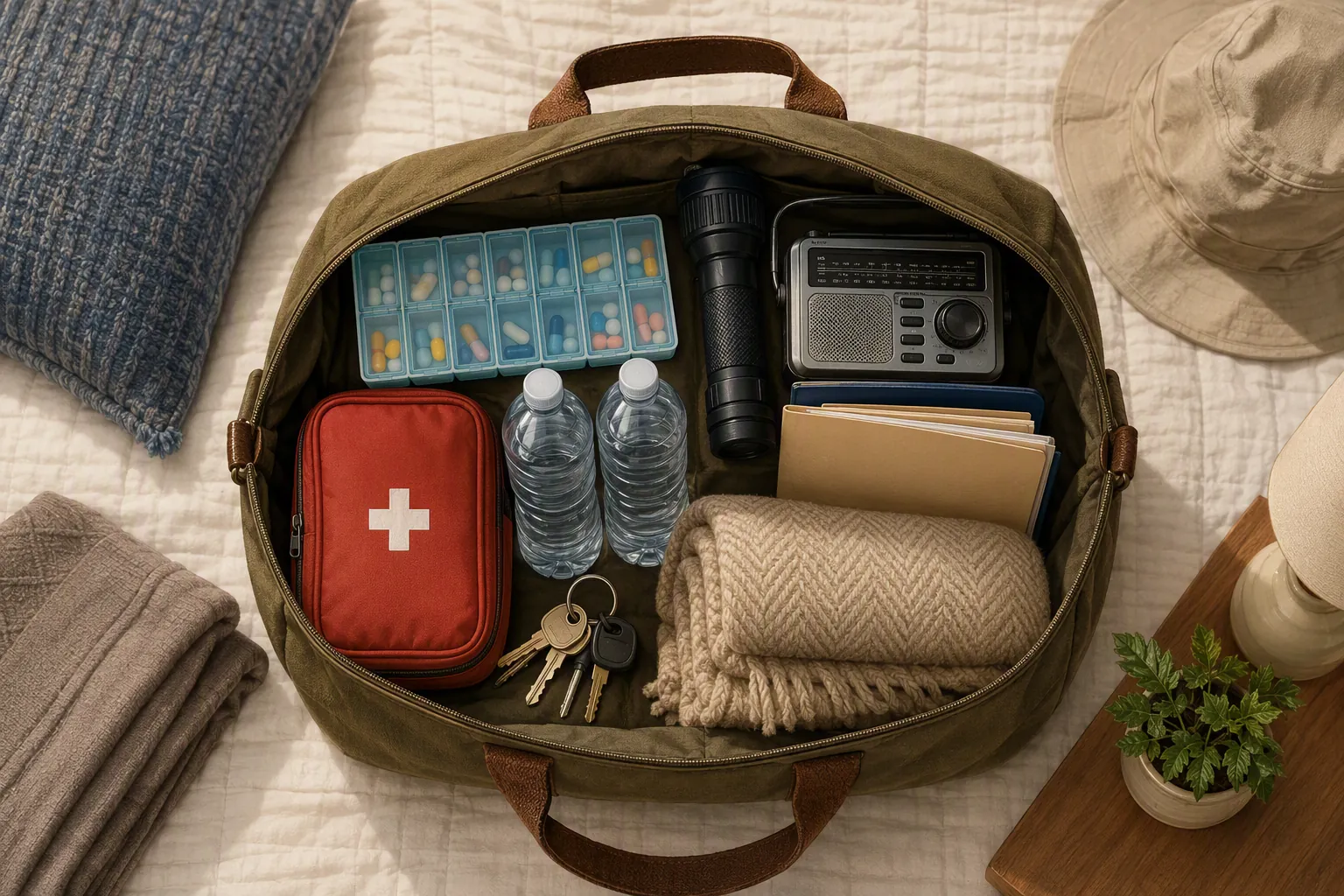
For tornado planning, some supplies belong inside or immediately beside the shelter, not in the garage or a high pantry. Start with the items the person cannot safely be without.
- Current medication list, pharmacy information, allergies, diagnoses, and prescriber contacts.
- Essential daily medications in clearly labeled, child-resistant containers, with a rotation system so they do not expire unnoticed.
- Supplies for glasses, hearing aids, dentures, incontinence care, diabetes care, wound care, or other daily needs.
- A flashlight, extra batteries, battery-powered or hand-crank radio, and charging bank.
- Water, easy-to-open food, blanket, sturdy shoes, gloves, and a basic first-aid kit.
- Copies of key documents, emergency contacts, insurance information, and a written equipment list.
- Spare keys, if appropriate, stored where the support person knows to find them.
Power-dependent equipment needs its own decision, not a casual “bring the charger.” If the person uses oxygen equipment, CPAP, a powered wheelchair, a hospital bed, refrigerated medication, or an electronic communication device, write down what must keep running, how long backup power is expected to last, who knows how to operate it, and when emergency help should be called. For deeper outage planning, use the 72-hour power outage safety checklist for seniors.
Make warnings redundant enough to survive a dead phone
A single alert is a weak plan. Phones run out of battery. Sirens may not be heard indoors. Do Not Disturb can silence the wrong thing. Hearing loss, closed bedroom doors, television volume, and overnight storms all change whether a warning is actually received.
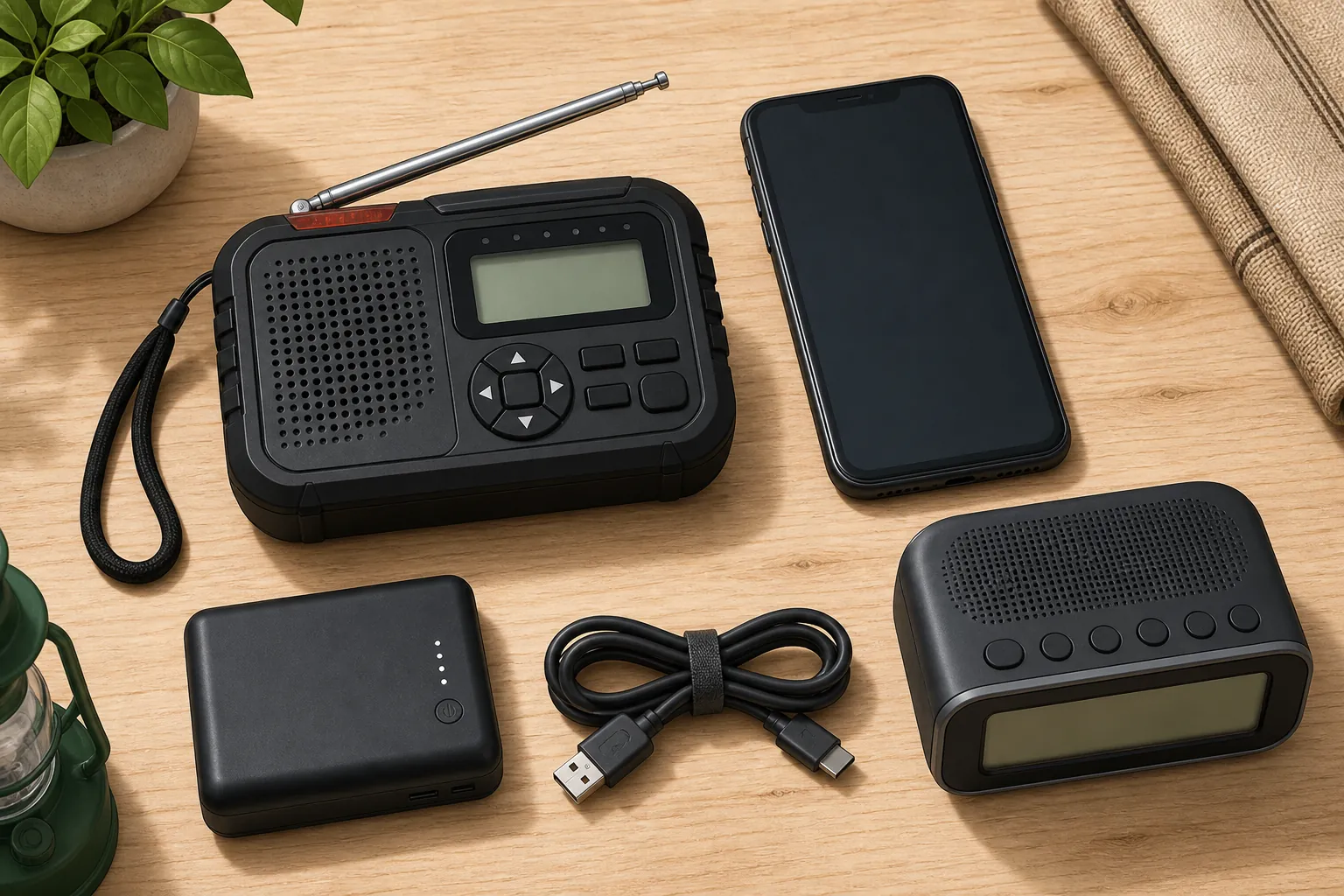
Ready.gov recommends several tornado warning sources, including NOAA Weather Radio, Wireless Emergency Alerts, the FEMA app, and local alerting systems such as sirens.[3]
| Alert layer | How to make it senior-safe |
|---|---|
| NOAA Weather Radio with battery backup | Keep it plugged in, add batteries, set the correct local alerts, and test whether it can be heard from the bedroom and main sitting area. |
| Wireless Emergency Alerts | Confirm alerts are enabled on the phone and that the phone is kept charged and near the person, not across the room or in another part of the house. |
| FEMA app | Set the older adult’s location and any caregiver locations that matter; check notification settings after phone updates. |
| Local sirens and community alerts | Treat sirens as an outdoor warning layer, not the only indoor alert. Add local text, call, or county alert systems if available. |
| Human check-in | Assign a named person to call or knock when warnings are issued, especially overnight or when the older adult may not respond to electronic alerts. |
Test alerts where the older adult actually is at the wrong times of day: in bed, in the bathroom with the fan on, in the recliner while the television is on, or in the kitchen while appliances are running. If the alert cannot cut through those conditions, it needs another layer. The same reliability pattern applies across hazards; the guide to setting up alerts an older adult will actually get is useful even though the example hazard is different.
Name the helpers before anyone needs help
The support network should be written down by name, not by category. “A neighbor” is vague. “Maria next door has a spare key and knows the oxygen backup is in the hall closet” is a plan.
Ready.gov’s older-adult guidance recommends having at least one person in the support network with a spare key who knows where emergency supplies are kept and how to use lifesaving equipment or administer medicine.[7]
- Primary warning caller: the person who calls when a tornado watch or warning is issued.
- Spare-key helper: the person who can enter if the older adult cannot reach the door.
- Transportation helper: the person responsible if the shelter is outside the home.
- Equipment helper: the person who understands oxygen, backup batteries, communication devices, or other essential equipment.
- After-storm contact: the person who confirms the older adult is safe after the warning passes.
One person can fill more than one role, but every role needs a backup. Severe weather can block roads, knock out power, or leave the usual caregiver dealing with damage at their own home. For older adults living alone, pair this plan with a broader severe weather safety checklist for seniors living alone so alerting, transportation, and post-storm check-ins are covered together.
Give helpers the exact information they need and no scavenger hunt: shelter location, supply location, medication list location, equipment instructions, pet plan, spare-key location, and emergency contacts. If the older adult is comfortable doing so, place a one-page plan in a visible folder near the shelter supplies.
Practice the plan when the sky is quiet
A tornado warning is the wrong time to discover that the wheelchair cannot clear the closet door or that the weather radio batteries corroded months ago. Practice should be calm, slow, and honest. The goal is not speed for its own sake; it is finding the part of the plan that fails before the weather does.
The CDC’s analysis of the April 2011 outbreak found a mean warning lead time of about 22 minutes, but that was an average from that event, not a guarantee for a future storm.[1] Build the plan so the older adult does not need every one of those minutes to go perfectly.
- Walk from the bed, bathroom, kitchen, and favorite chair to the shelter.
- Use the actual cane, walker, wheelchair, scooter, oxygen tubing, or other device.
- Check whether the person can open the shelter door, sit safely, and keep the mobility device accessible.
- Test the weather radio, phone alerts, charger, flashlight, and backup batteries.
- Have the spare-key helper locate supplies and explain how they would reach the person.
- Replace expired food, water, batteries, and medical supplies.
- Update medication lists, phone numbers, door codes, and equipment instructions.
The American Red Cross recommends reviewing, practicing, and refreshing the plan and supplies every six months.[6] Tie that review to something easy to remember, such as the start of spring and fall severe-weather seasons or the same weekends used to check smoke alarms.
If you are also building a larger household plan, the severe weather emergency checklist for seniors and severe storm preparedness checklist seniors need can carry the broader planning pieces. For family caregivers, a severe weather plan for elderly parents is a fall plan explains why weather planning and fall prevention belong in the same conversation.
A safety note before you finalize the plan
This article is educational safety guidance, not medical, legal, engineering, or emergency-services advice. Questions about medical equipment, oxygen use, medication storage, refrigerated medicine, mobility support, home modifications, safe-room construction, transportation to public shelters, or local warning systems should be reviewed with the appropriate clinician, pharmacist, licensed contractor or engineer, utility provider, durable medical equipment supplier, or local emergency management authority.
The finished plan should be simple enough to test: the older adult knows where to go, the route is clear, the supplies are where helpers can find them, alerts arrive through more than one channel, someone with a spare key knows what to do, and the next six-month review is already on the calendar.
References
- Tornado-Related Fatalities — Five States, Southeastern United States, April 25–28, 2011, Centers for Disease Control and Prevention, July 22, 2011
- Fewer than Half of Older Adults Feel Prepared for Emergencies, AARP, July 2023
- Tornadoes, Ready.gov
- Safe Rooms, Federal Emergency Management Agency
- Emergency Preparedness for People with Disabilities, United Spinal Association
- Emergency Preparedness for Older Adults, American Red Cross
- Older Adults, Ready.gov
Related reading
Noticed something outdated or inaccurate on this page? Flag a correction. We review every report against CDC, NIA, and AARP HomeFit guidance before updating a page.
Part of the Fall Prevention section.