
STEADI: Intervene
Wildfire Recovery Checklist for Seniors and Caregivers
Most wildfire checklists cover the property, not the person. This phased recovery checklist for seniors and their caregivers flags the fall and health hazards at each stage and names the agencies that provide or fund help.
Most wildfire recovery lists start with the house. For an older adult, start with the person: medications, breathing equipment, glasses, cane or walker, power for medical devices, a safe bathroom path, and a place to sleep tonight. A home can be standing and still be unusable if the hallway is dark, the ramp is gone, the oxygen concentrator has no power plan, or the person who says “I’m fine” has missed two doses of a heart medication.
This wildfire recovery checklist and resource guide for seniors is organized by situation, not by room: while displaced, first re-entry, inside the home, cleanup, health reset, paperwork and money, and emotional recovery. Follow evacuation orders and local public-health instructions first. This article is general safety and benefits information, not medical, legal, or financial advice.
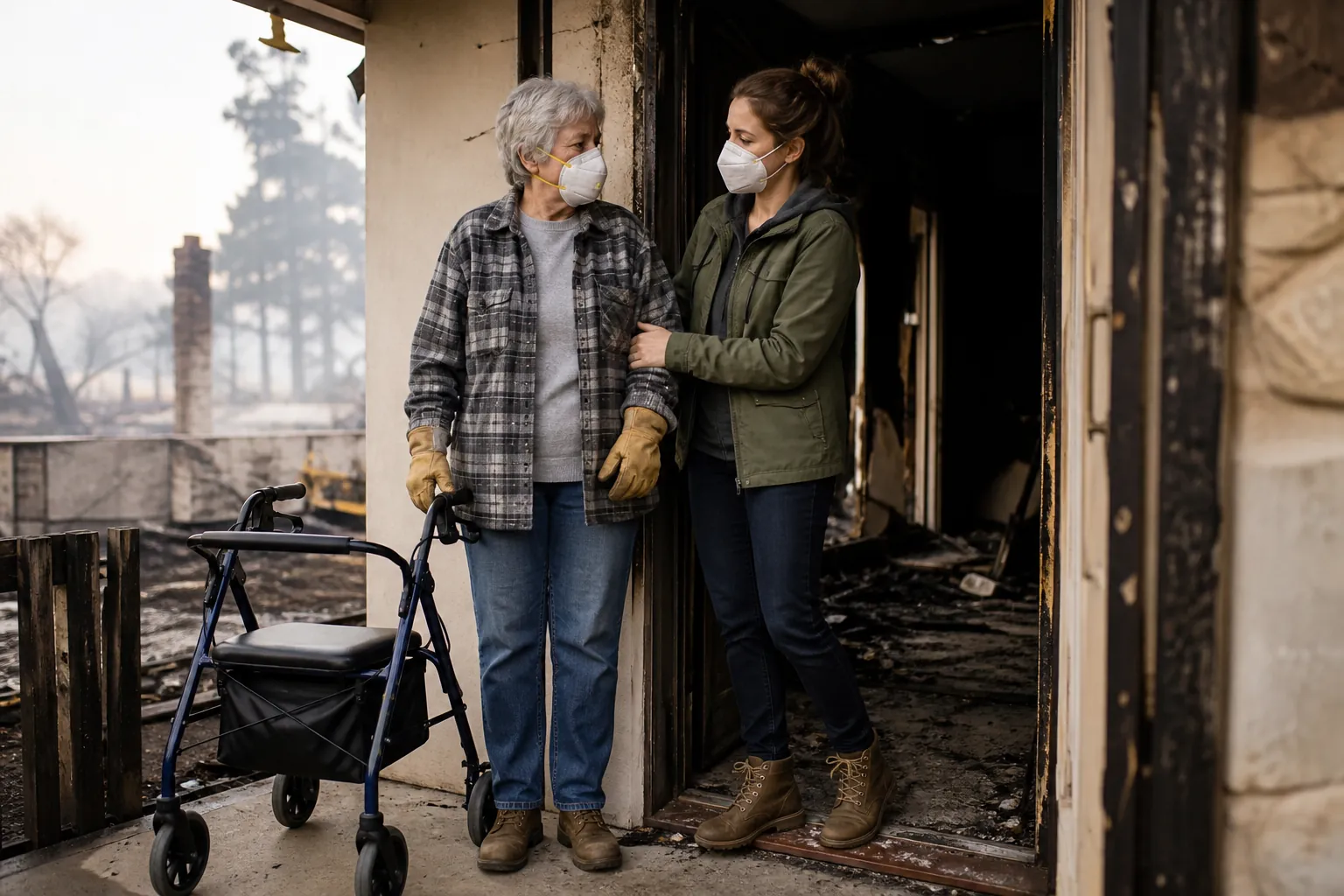
The short version: stabilize the person before inspecting the property
| Situation | What matters first |
|---|---|
| While displaced | Safe sleep, medication continuity, assistive devices, oxygen or CPAP power, transportation, caregiver communication |
| First re-entry | Official permission to return, do-not-enter red flags, protective gear, fall and puncture hazards |
| Inside the home | Lighting, walking paths, bathroom safety, smoke and ash exposure, damaged floors or stairs, lost mobility aids |
| Cleanup | Keep smoke-sensitive or balance-impaired seniors out of ash zones when possible; use wet cleaning methods and PPE |
| Health reset | Replace prescriptions, eyeglasses, hearing aids, walkers, oxygen supplies, refrigerated drugs, and care appointments |
| Paperwork and money | FEMA Individual Assistance if declared, insurance, local aging agencies, Red Cross, state and county programs |
| Emotional recovery | Watch for distress, sleep disruption, grief, confusion, withdrawal, and caregiver overload; use crisis and disaster support lines |
While displaced: do not wait for re-entry to rebuild the daily routine
The first recovery job is not “find out how bad the house is.” It is keeping the older adult medically and physically steady until the next decision is possible. That means confirming where they are sleeping, who has their medication list, whether they have their glasses and hearing aids, and whether they can get to the toilet at night without tripping over bags, oxygen tubing, pets, or unfamiliar furniture.
The American Red Cross advises older adults to prepare both a Go-Kit and a Stay-at-Home Kit, including enough medication for an extended period; its older-adult guidance names a 30-day medication supply as part of planning where possible. [1] Ready.gov’s older-adult guidance also tells people who rely on powered medical equipment to talk with medical providers about backup power and to plan for assistive devices and transportation. [2]
- Medication: photograph every prescription bottle you still have, write down the pharmacy name, and ask the prescribing office or pharmacy about emergency replacement. Do not assume a no-cost emergency refill program applies unless it has been activated for the current disaster.
- Medical equipment: identify what runs on electricity: oxygen concentrator, CPAP or BiPAP, nebulizer, ventilator, power wheelchair, lift chair, hospital bed, refrigerated medication, or charging dock.
- Mobility and sensory aids: track the cane, walker, rollator, wheelchair, shower chair, eyeglasses, hearing aids, dentures, and phone charger as recovery-critical items, not conveniences.
- Night safety: put a flashlight, shoes, glasses, phone, and mobility aid within reach of the bed. In a hotel, shelter, or relative’s spare room, the fall risk is often the unfamiliar route to the bathroom.
- Care contact: choose one person to keep the medication list, insurance information, doctor contacts, and evacuation address current. If several adult children are helping, make one shared note instead of ten separate text threads.
If heat, smoke, or a power outage is still affecting the area, treat medical-device power as a health issue, not a comfort issue. The same planning principles in our guides to heat-wave and power-outage safety for seniors and power-grid emergency orders for older adults apply here: know what must stay powered, how long batteries last, and where the person can go if the home cannot support the device.
First re-entry: permission to return is not the same as permission to walk in
Only return when public officials say the area is open. CDC guidance on staying safe after a wildfire says to follow local instructions, avoid damaged or fallen power lines, and be alert for hazards such as unstable structures, ash, and debris. [3] California’s Ready for Wildfire returning-home checklist gives the same basic sequence: wait for authorization, use protective gear, and assume the property may contain hidden hazards. [4]
For seniors, the safer default is this: the older adult should not be the first person to inspect the home. If they have balance problems, breathing problems, low vision, dementia, heart or lung disease, or use a walker or oxygen, send a physically steady adult with proper gear first if local officials allow it. If no one can do that safely, wait for qualified help.
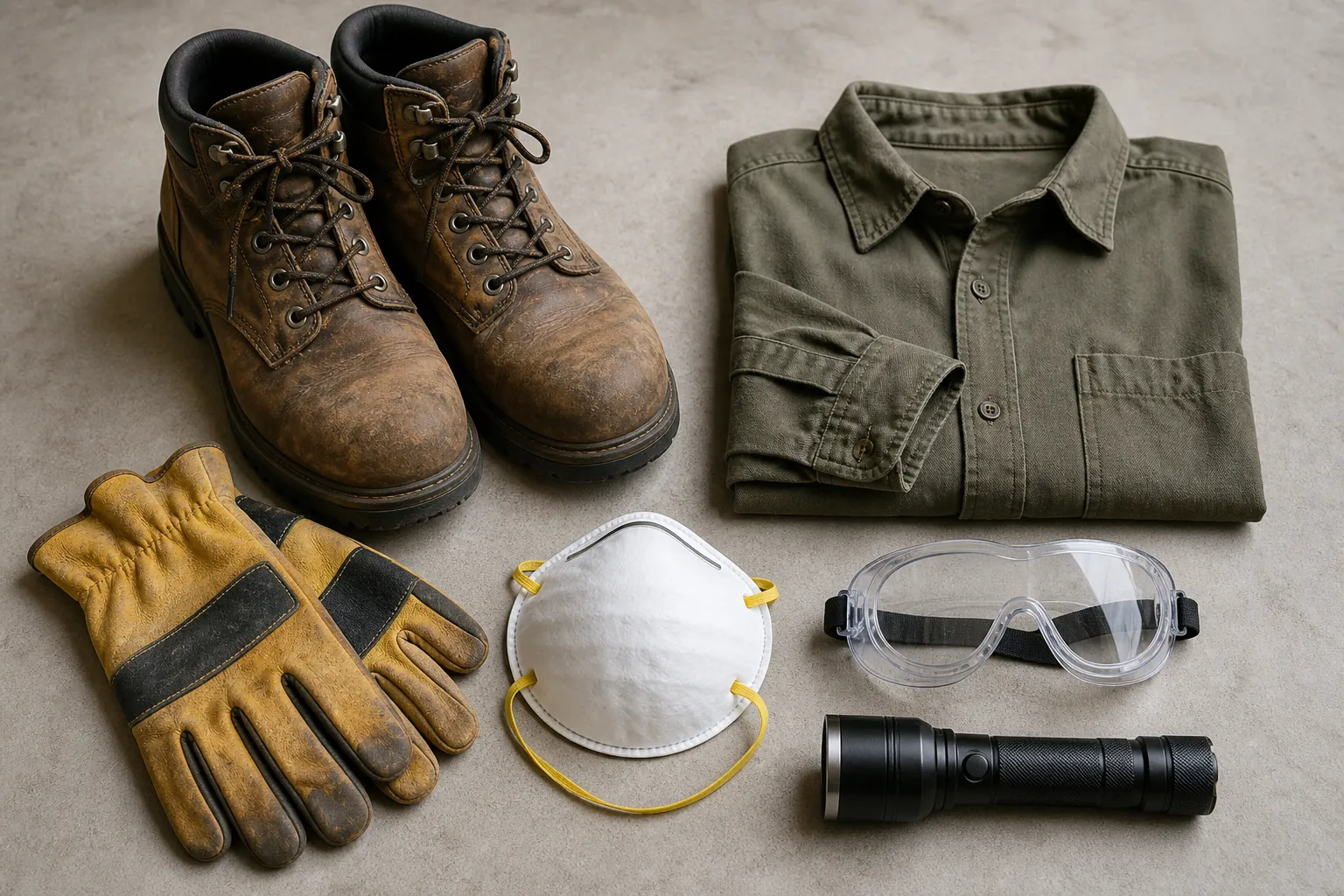
Re-entry gear is fall-prevention gear, too
Post-fire gear lists can sound like cleanup advice, but much of the gear is also there to keep someone upright and uninjured. Ready for Wildfire recommends items such as sturdy shoes or boots, leather gloves, long sleeves and pants, eye protection, a respirator such as an N95, a flashlight, and a battery-powered radio when returning home. [4]
- Sturdy closed-toe shoes or boots: ash can hide nails, glass, warped metal, and broken tile. Thin slippers are not re-entry footwear.
- Heavy gloves: do not let someone with fragile skin or poor grip move debris barehanded.
- N95 or better respirator: ash and smoke residue are not ordinary dust. People with COPD, asthma, heart disease, or oxygen needs should not be assigned ash inspection.
- Goggles: irritated eyes plus low light can turn a hallway into a fall trap.
- Flashlight or headlamp: power may be out, and smoke-darkened rooms can hide steps, curled rugs, cords, and debris.
- Phone, charger, and backup battery: do not inspect alone without a way to call for help.
Do-not-enter red flags
A KQED post-disaster checklist drawing on FEMA and Sonoma County guidance warns people not to enter if they smell gas, if the structure is still standing but has not been declared safe, or if floodwater is present; it also calls out slip, trip, fall, and puncture hazards after a disaster. [5] Put bluntly: if any of these are present, this is not the moment to prove independence.
- Do not enter if you smell gas, hear hissing, or suspect a utility leak.
- Do not enter a damaged structure until officials or qualified inspectors have cleared it.
- Do not enter through standing water, wet electrical areas, or unstable flooring.
- Do not walk under sagging ceilings, leaning walls, damaged stairs, or loose roofing.
- Do not send an older adult into ash, debris, or dark rooms to “just look around.”
If the older adult has dementia or serious memory problems, do not rely on verbal warnings alone. Damaged homes invite familiar routines: walking to the old bedroom, reaching for the usual light switch, stepping toward a favorite chair. Use the same supervision mindset covered in our earthquake preparedness guide for dementia caregivers: simplify the environment, block unsafe areas, and assign one person to stay close during transitions.
Inside the home: inspect the walking route before the rooms
Once the structure is cleared for entry, resist the urge to start in the most damaged room. Start with the route the older adult will actually use: doorway, entry, path to a chair, path to the bathroom, path to the bed, path to medications, and path out again. If that route is not safe, the home is not yet functionally safe for that person.
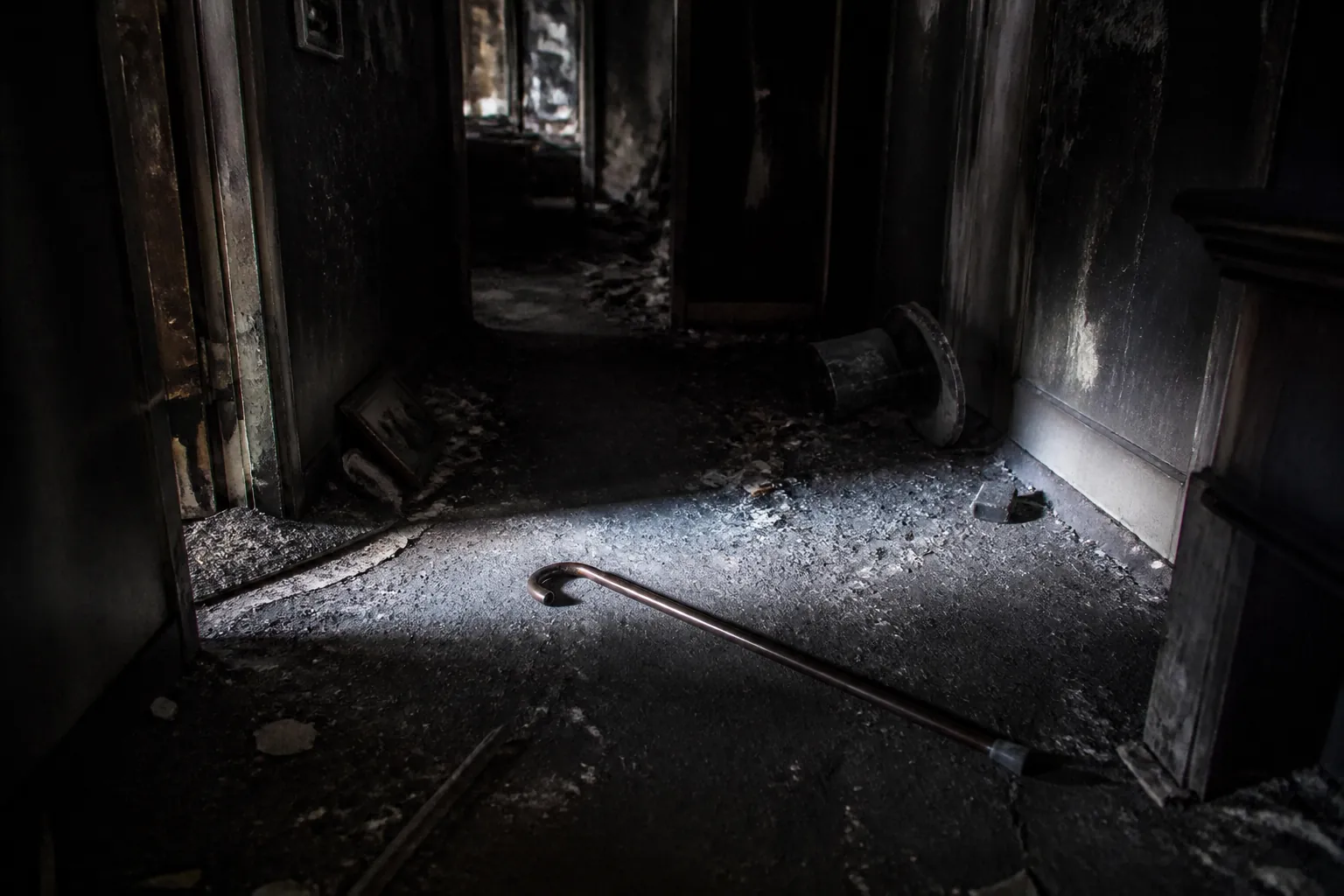
Check the first ten steps
The first ten steps inside tell you a great deal. Is there light? Is the floor dry and level? Are there nails, ash piles, broken glass, buckled flooring, curled rugs, fallen cords, or furniture shifted into the path? Can a walker fit through without catching? Can the person turn around if they get frightened or short of breath?
- Door threshold: look for warped metal, broken tile, loose mats, and ash ridges that can catch a toe or walker wheel.
- Lighting: use battery lanterns or headlamps before walking through dim rooms. A single phone flashlight is not enough for a person using a cane or walker.
- Floors: treat wet spots, ash, soot, and fine debris as slip risks. Ash on a smooth floor can behave like powder.
- Stairs: do not use stairs with damaged rails, missing tread edges, poor lighting, wet ash, or visible structural damage.
- Bathroom: confirm the toilet path, handholds, lighting, and floor surface before the older adult returns for the night.
- Bedroom: clear a wide path from bed to bathroom and place shoes, glasses, phone, flashlight, and mobility aid in the same reachable spot every night.
For a more detailed lighting-and-path setup, use our power-outage fall-proofing checklist. Wildfire damage adds ash and debris, but the basic fall-prevention rule is the same: no dark route, no cluttered route, no surprise step.
Smoke and ash change who should be in the house
CDC wildfire guidance warns that ash and debris can create health and safety hazards after a fire. [3] For an older adult with asthma, COPD, heart disease, oxygen use, poor balance, or frailty, “wear a mask and help sweep” is not a reasonable assignment. Their job may be to stay out of the cleanup zone while someone else documents damage, removes hazards, and ventilates only when local air quality and official guidance make that appropriate.
Use the same room-by-room thinking you would use after a storm or winter hazard audit, but move more slowly. Our guides to winter-proofing a parent’s home room by room and preventing falls during heavy rain are useful for the habit of tracing actual walking paths, not just admiring a clean checklist.
Cleanup: keep it small, wet, and realistic
Cleanup advice often assumes a strong adult with good lungs, steady balance, and plenty of daylight. That is not always who is standing in the doorway after a wildfire. If the older adult is smoke-sensitive, dizzy, weak, recently hospitalized, cognitively impaired, or dependent on a walker, cleanup should happen around them, not by them.
CDC guidance for wildfire cleanup includes wearing protective clothing and respirators when handling ash and debris and avoiding actions that raise dust. [3] Ready for Wildfire also emphasizes protective gear when returning and cleaning up after fire damage. [4]
- Do wet wipe and wet mop surfaces when cleanup is appropriate. Do not dry sweep ash where it can become airborne.
- Do bag or remove small trip hazards after photographing damage for insurance or assistance records.
- Do keep the older adult out of rooms where debris removal, ash disturbance, ladder work, or utility inspection is happening.
- Do not ask someone using oxygen, a walker, or a cane to carry boxes through ash, uneven thresholds, or poor lighting.
- Do not mix cleaning chemicals or run generators indoors, in garages, or near open windows.
If the person must be present briefly, give them a clean place to sit near an exit, with their mobility aid, water, phone, medications, and mask. Set a time limit. A tired older adult walking back through debris after “just one more thing” is when falls happen.
Health reset: replace what the fire interrupted
A scoping review on wildfires and older adults found that only about 11% of 75 studies addressed recovery, even though the review documented recovery problems that matter immediately to seniors: disrupted continuity of care, medication access problems, and power-outage threats to oxygen, ventilators, CPAP machines, power wheelchairs, and refrigerated drugs. [6] That gap shows up in real kitchens and shelter cots. People can be “back home” and still not be medically recovered.
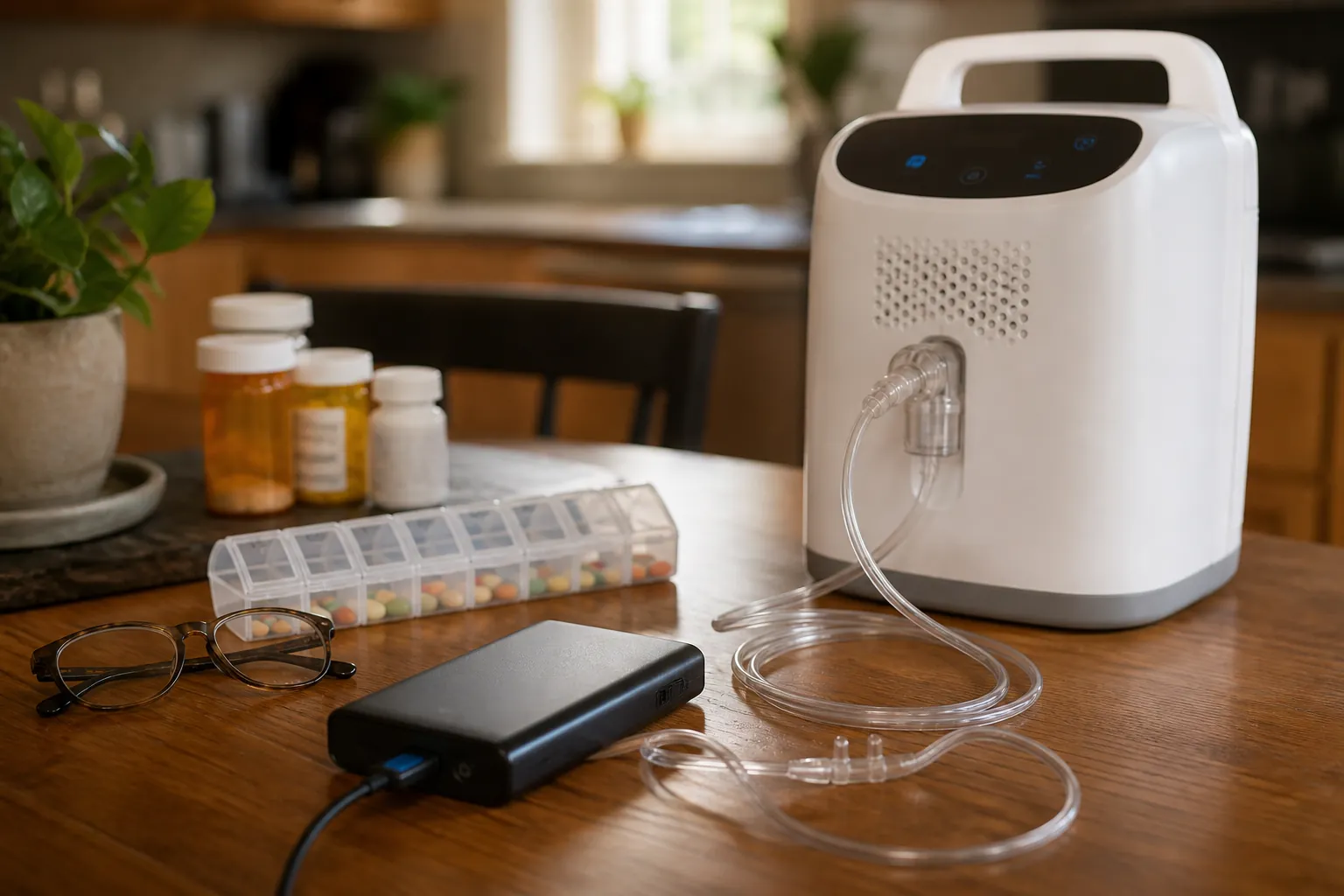
Medication and care continuity checklist
- Make a current medication list: drug name, dose, time taken, prescribing clinician, pharmacy, and what was lost or contaminated.
- Call the pharmacy first, then the prescriber. Ask about emergency refills, mail delivery, transfer to another pharmacy, and replacement of refrigerated medications.
- Ask the clinician whether missed doses, smoke exposure, dehydration, stress, or poor sleep change what symptoms should trigger urgent care.
- Replace eyeglasses, hearing aids, dentures, and diabetic supplies quickly. A person who cannot see the threshold or hear a smoke alarm is not safely reset.
- Document lost or damaged durable medical equipment: walker, rollator, wheelchair, cane, shower chair, commode, hospital bed, lift equipment, oxygen supplies, CPAP, or power wheelchair.
- Reschedule interrupted appointments: dialysis, wound care, infusion therapy, physical therapy, cardiology, pulmonology, oncology, primary care, and home-health visits.
If Medicare, Medicaid, a Medicare Advantage plan, or another insurer may be involved in replacing equipment or medications, get the rules from the plan or agency handling the claim. Disaster work attracts confident guesses. For fall-related benefit basics, start with our Medicare wellness and fall-prevention FAQ, but confirm disaster-specific coverage directly before buying replacements you expect to be reimbursed.
Power plan for oxygen, CPAP, refrigeration, and mobility
Do not call recovery stable until the power plan is boringly specific. “We have a battery” is not enough. Which device does it power? For how long? Who charges it? Where is the backup location if the outage lasts longer? How will the person get there if roads are limited or the caregiver is at work?
Ready.gov tells older adults who use medical equipment that requires electricity to speak with healthcare providers about what to do during power outages. [2] California Department of Aging disaster tip sheets are a state-specific example of the same planning logic, including medication, assistive devices, and backup-power needs; readers outside California should look for their own state or county aging-agency equivalents rather than assuming California contacts or programs apply. [7]
Paperwork and money: look for assistance that restores function, not just walls
Keep a running file: photos, receipts, hotel bills, medication replacement costs, equipment serial numbers, insurance claim numbers, FEMA application number if applicable, and notes from every call. Caregivers should write the date, agency, person spoken to, and next step. In recovery, the person who has the note often gets further than the person who has the better memory.
FEMA Individual Assistance after the 2024 reforms
As of July 31, 2026, FEMA’s 2024 Individual Assistance reforms matter for older adults because they name practical needs that are easy to miss in property-first recovery. FEMA describes Serious Needs Assistance for immediate needs such as food, water, baby formula, breastfeeding supplies, medication, and other emergency supplies; Displacement Assistance for short-term housing needs; removal of the former requirement to apply for a U.S. Small Business Administration loan before certain FEMA assistance; expanded home-repair eligibility; and accessibility-related repairs such as an exterior ramp, grab bars, and a paved path to the home. [8]
The caveat is important: FEMA availability, deadlines, documentation rules, and award amounts depend on the specific federal disaster declaration. Check the current declaration and application deadline before making decisions. Do not copy a number from a past wildfire and assume it applies to this one.
For seniors, the accessibility-repair provision is not a side benefit. A ramp, grab bars, and a safer path can decide whether someone returns home or becomes effectively locked out of it. If the fire damaged a ramp, rail, bathroom support, entry path, or mobility route, document it as a functional access problem, not merely cosmetic damage.
Who to contact
- FEMA: apply only if Individual Assistance is available for the declared disaster. Save the application number and every decision letter.
- Homeowners, renters, auto, and health insurers: ask what documentation is needed before discarding damaged property or replacing equipment.
- Local Area Agency on Aging or county aging department: ask about case management, meals, transportation, in-home support, caregiver respite, and disaster-specific programs.
- American Red Cross: check for shelter, reunification, recovery planning, and local disaster services.
- Pharmacy and prescribers: ask about emergency refills, transferred prescriptions, prior authorization problems, and replacement of contaminated or temperature-compromised drugs.
- Durable medical equipment supplier: ask about replacement, repair, loaner equipment, oxygen delivery, battery backup, and documentation for insurance or assistance claims.
- State and county disaster recovery offices: look for local grants, tax relief, debris rules, price-gouging protections, and aging-service hotlines. Treat California resources as examples of what to search for locally, not national promises.
If a benefit rule touches Medicaid, disability status, or state programs, confirm it with the administering agency. The same caution behind our benefits-literacy coverage, including medical frailty and Medicaid work-exemption rules, applies after a wildfire: small wording differences can change eligibility.
Emotional recovery: distress can look like stubbornness, silence, or confusion
After a wildfire, an older adult may minimize losses because they want control back. A caregiver may push too hard because they are scared and exhausted. Both can be true. Watch for sleep problems, panic, irritability, withdrawal, worsening confusion, missed meals, increased drinking, refusal to use oxygen or medications, or repeated unsafe attempts to return to the property.
Los Angeles Times reporting on wildfire recovery noted that older adults are more likely to develop PTSD and adjustment disorders after disasters. [9] That does not mean every older adult is fragile. It means distress deserves the same practical attention as a missing walker or a bad stair rail.
- Use familiar anchors: the same medication time, the same bedtime setup, the same phone check-in, the same safe chair.
- Limit repeated exposure to damage photos, news clips, and neighborhood rumor chains if they increase agitation.
- Give the older adult real choices where possible: which clothing to replace first, which family member to call, whether to sit outside or in the kitchen while calls are made.
- Do not argue with dementia-related confusion in a damaged setting. Redirect to the next safe action.
- For disaster-related emotional distress, SAMHSA’s Disaster Distress Helpline is 1-800-985-5990 by call or text. If distress is acute, suicidal, or dangerous, call or text 988 for the Suicide & Crisis Lifeline or use local emergency services.
Before you consider recovery stable
Do this final pass before deciding the senior is “back home” or that the caregiver can step back.
- Medications are replaced, correctly scheduled, and safe to use.
- Eyeglasses, hearing aids, dentures, cane, walker, wheelchair, oxygen, CPAP, and other assistive or medical devices are replaced, repaired, or actively being funded.
- There is a safe, lighted walking path from entry to chair, bathroom, bedroom, medication area, and exit.
- Bathroom supports, rails, ramps, thresholds, and outdoor paths are usable for this person’s current mobility, not their pre-fire mobility.
- Ash, smoke residue, puncture hazards, and unstable surfaces are removed or blocked from the older adult’s living area.
- Power risks are addressed for oxygen, CPAP, refrigeration, phone charging, lighting, and powered mobility.
- Insurance, FEMA if available, aging-agency referrals, medical-equipment claims, and local recovery resources are in motion.
- The older adult and caregiver both know where to get emotional support, including the SAMHSA Disaster Distress Helpline and 988 when distress is urgent.
References
- Older Adults, American Red Cross.
- Older Adults, Ready.gov.
- Safety Guidelines: After a Wildfire, Centers for Disease Control and Prevention.
- Returning Home Checklist, Ready for Wildfire.
- What to Do After a Disaster: A Checklist From FEMA and Sonoma County, KQED.
- Wildfires and Older Adults: A Scoping Review, PMC.
- Disaster Preparedness Disaster Tip Sheets, California Department of Aging.
- Individual Assistance 2024 Reforms, Federal Emergency Management Agency.
- Wildfire impact on older adults’ mental health, Los Angeles Times.
Related reading
Noticed something outdated or inaccurate on this page? Flag a correction. We review every report against CDC, NIA, and AARP HomeFit guidance before updating a page.
Part of the Fall Prevention section.