
Room checklist
Aging in Place Remodel: Room-by-Room Safety Checklist and Priority Guide
A practical, room-by-room guide for families prioritizing home modifications by fall risk. Learn which rooms to tackle first, what specific changes make the biggest safety impact, and how to match modifications to your older adult's current mobility needs.
Why a Room-by-Room Priority Approach Matters
The idea of remodeling a home for aging in place can feel overwhelming. When families start researching, they often encounter a long list of potential changes — widening doors, installing ramps, replacing flooring, adding grab bars — and it is easy to conclude that the only way to do it right is to renovate the entire house at once. That assumption is both financially daunting and, for most families, unnecessary.
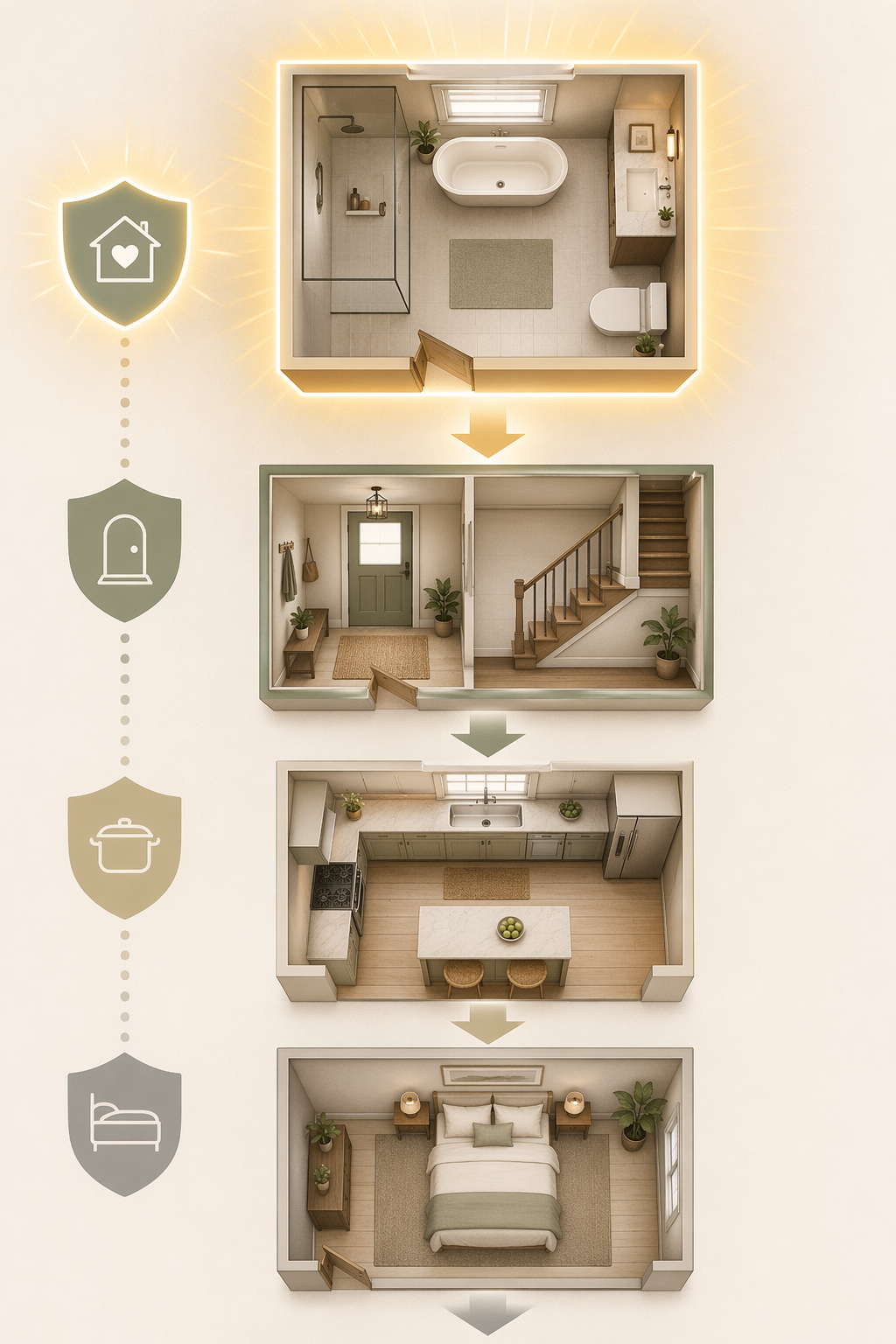
A more effective approach is to prioritize by risk level and by the specific mobility challenges the older adult faces today, not by hypothetical needs that may never materialize. The bathroom, for example, presents a far more concentrated set of fall hazards than the living room, and it should be addressed first. The entryway and stairs come next, followed by the kitchen and bedroom. This room-by-room priority framework allows families to spread costs over time, avoid rushed emergency renovations after an injury, and make the biggest safety impact with each dollar spent.
This guide walks through each room of the house in priority order, specifying exactly which modifications make the biggest safety impact, what the key specifications are, and how to match each change to your older adult's current functional level. For detailed cost information on each modification, we link to the site's dedicated cost guides rather than duplicating that data here.
If you are reading this after a recent fall or hospital discharge, you may want to start with the 6-step crisis guide for immediate next steps. For everyone else, begin with the room that carries the highest risk.
Bathroom: The Highest-Risk Room — Start Here
The bathroom is the most dangerous room in the house for an older adult. It combines wet, slippery surfaces with the need to transfer on and off the toilet, step in and out of the shower or tub, and maintain balance on hard flooring — often in a tight space with few handholds. Falls in the bathroom are the leading cause of injury among older adults, and the consequences are often severe.
For these reasons, the bathroom should be the first room you modify, regardless of budget. The good news is that the most impactful changes are also among the most affordable.
Priority Bathroom Modifications
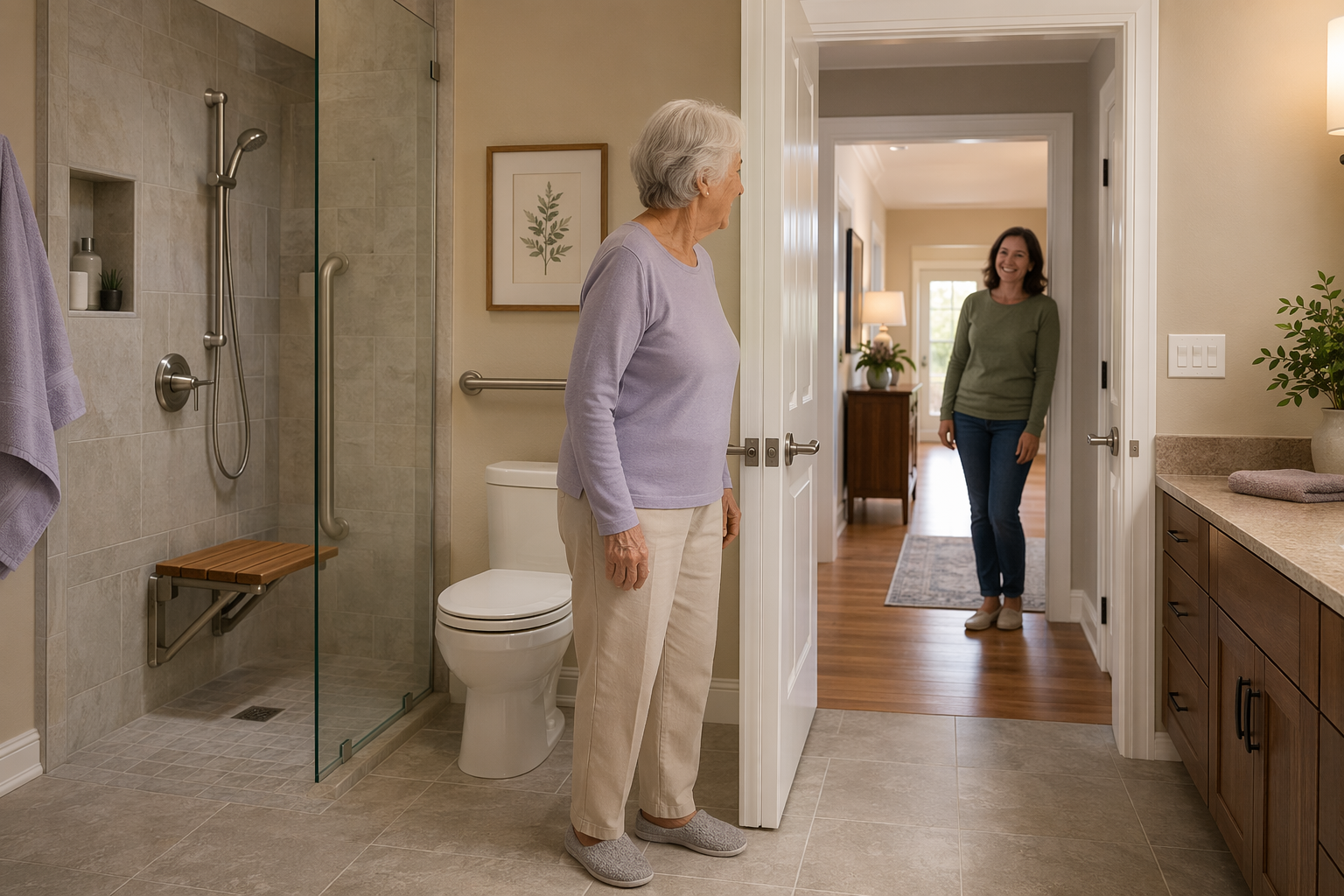
- Grab bars near the toilet, shower, and tub. A 2021 study published in Human Factors found that people with a grab bar in the shower were 75.8% more likely to recover their balance while stepping from a slippery shower to a dry floor. Grab bars should be professionally installed with wall bracing capable of supporting 250–300 pounds. They are the single most underappreciated safety device in the home.
- Curbless (zero-entry) shower. Eliminating the step-over threshold removes one of the most common fall triggers. The NAHB CAPS checklist recommends a minimum shower width of 36 inches with a fold-down seat and an adjustable handheld showerhead.
- ADA-height toilet (17–19 inches). Standard toilets are about 14–15 inches high, which makes sitting down and standing up more difficult for people with reduced leg strength. A comfort-height toilet is 2.5 inches higher and significantly reduces transfer strain.
- Non-slip flooring. Replace glossy tile or polished stone with slip-resistant vinyl, textured tile, or rubber. The bathroom floor should be the most slip-resistant surface in the house.
- Handheld showerhead and fold-down shower seat. These allow bathing while seated, reducing the need to stand on a wet surface. A fold-down seat takes up minimal space when not in use.
- Lever-handle or touchless faucet. Lever handles are easier to operate for people with arthritis or reduced hand strength. Touchless faucets add convenience and reduce the risk of scalding.
The bathroom is also the room where the distinction between product cost and installed cost matters most. A grab bar may cost $15–$80 at a home improvement store, but professional installation — which includes reinforcing the wall to support 250–300 pounds — can bring the total to $100–$400 per bar. Do not skip professional installation for load-bearing grab bars; a bar that pulls out of drywall during a fall is worse than no bar at all.
Entry and Exterior: Safe Arrival and Departure
The second-highest priority area is the home's entry points. If an older adult cannot enter or exit the home safely, every other modification loses much of its value. The entry is also where many families first encounter the need for structural changes — steps, thresholds, and narrow doorways that were never designed with mobility aids in mind.
Key Entry Modifications
- Zero-step entry. At least one entrance to the home should have no step. This can be achieved by building a concrete ramp, installing a modular aluminum ramp, or regrading the walkway. The NAHB CAPS checklist specifies that ramps should have a slope no higher than 1:12 (one inch of rise per 12 inches of run) and a 5-foot landing at the top.
- Widened doorways. Interior doors should provide a minimum clear width of 32 inches, which typically requires a 36-inch door. Exterior doors should meet the same standard. Door widening costs $600–$2,000 per doorway depending on whether the wall framing needs to be modified.
- Lever-style door hardware. Lever handles replace round doorknobs, which require gripping and twisting — a motion that is difficult for people with arthritis, reduced hand strength, or limited dexterity. Lever handles cost $75–$400 per door installed.
- Sensor lighting at all entrances. Motion-activated lights ensure the entry path is well-lit without requiring the user to find a switch in the dark. This is especially important for evening arrivals or departures.
- Threshold height limits. Interior thresholds should be no higher than 1/4 inch. Exterior thresholds should be no higher than 1/2 inch and should be beveled to reduce tripping risk.
| Modification | Key Specification | Typical Cost Range |
|---|---|---|
| Zero-step entry / ramp | Slope no higher than 1:12; 5-foot landing | $1,500 – $12,000+ |
| Door widening (per door) | 32-inch minimum clear width (36-inch door) | $600 – $2,000 |
| Lever-style handles (per door) | Replace round knob with lever | $75 – $400 |
| Sensor lighting | Motion-activated at all entrances | $25 – $150 per fixture |
| Threshold adjustment | 1/4-inch interior max; 1/2-inch exterior max | $50 – $200 |
Stairs: Preventing the Most Dangerous Falls
Falls on stairs are among the most serious — they frequently result in head injuries, hip fractures, and long hospital stays. If the older adult lives in a multi-story home, the stairs must be addressed before any other room on the upper floor.
Critical Stair Modifications
- Handrails on both sides. The NAHB CAPS checklist specifies handrails with a diameter of 1.25 inches on both sides of the stairway. This diameter provides the best grip for people with reduced hand strength. Handrails should extend the full length of the stairs.
- Contrast strips on the top and bottom steps. High-contrast tape or paint on the nosing of the first and last steps helps people with reduced depth perception or low vision identify where the stairway begins and ends.
- Adequate lighting. Stairs should be well-lit from both the top and bottom. A three-way switch (one at each end) is essential so the user does not have to navigate stairs in the dark to turn a light on or off.
- Stair lift or pre-framing for future elevator. If climbing stairs is already difficult, a stair lift is the most practical solution. Straight stair lifts typically cost $2,500–$8,000 installed; curved stair lifts start around $10,000. For families planning a long-term stay, pre-framing a shaft for a future home elevator or ensuring a 4-foot minimum stairway width for a lift can save significant renovation costs later.
Kitchen: Daily Function and Safety
The kitchen is where many older adults spend a significant portion of their day — preparing meals, managing medications, and socializing with family. While the fall risk in the kitchen is generally lower than in the bathroom or on stairs, the cumulative effect of daily difficulties can erode independence and increase the risk of burns, cuts, and other injuries.
Kitchen modifications should focus on reducing the need to reach, bend, and carry — the movements that become most difficult with age-related strength and balance changes.
Priority Kitchen Modifications
- Lever-handle faucets. Replace twist-knob faucets with single-lever or touchless models. These are easier to operate with one hand and reduce the risk of scalding.
- Pull-out shelves and drawers. Replace deep lower cabinets with pull-out shelves so that pots, pans, and food items are accessible without bending or reaching to the back of a cabinet.
- Under-cabinet lighting. Task lighting on countertops reduces shadows and makes food preparation safer for people with reduced vision.
- Front-control appliances. Stoves and ovens with controls on the front panel eliminate the need to reach across hot burners. This is a critical safety modification for anyone with reduced mobility or cognitive changes.
- Counter height adjustments. If the primary cook uses a wheelchair or scooter, consider lowering a section of counter to 30–32 inches with knee space below. For standing users, standard 36-inch counters are generally fine.
Bedroom: Rest and Recovery Space
The bedroom is the space where the older adult rests, recovers from illness or injury, and begins and ends each day. Fortunately, 78% of older adults already have a main-floor bedroom, which means many families will not need to add a new bedroom — they simply need to modify the existing one.
Key Bedroom Modifications
- Bed height adjustment. The bed should be at a height that allows the user to sit on the edge with feet flat on the floor and stand up without strain. For most people, this means the top of the mattress should be 20–23 inches from the floor. Bed risers or an adjustable bed frame can achieve this.
- Transfer poles or grab bars near the bed. A floor-to-ceiling transfer pole or a wall-mounted grab bar next to the bed provides a stable handhold for getting in and out of bed.
- Clear paths for mobility devices. The pathway from the bed to the bedroom door and to the bathroom should be at least 36 inches wide to accommodate a walker or wheelchair. Remove furniture that narrows these paths.
- Pull-down closet rods. Adjustable closet rods that can be lowered or pulled down make clothing accessible without reaching overhead or bending.
- Wide doorways. As with the rest of the house, bedroom doorways should provide a 32-inch minimum clear width. If the bedroom is on the main floor, this is especially important for emergency evacuation.
Hallways, Living Areas, and Flooring Throughout
Once the highest-risk rooms are addressed, the remaining shared spaces — hallways, living rooms, and dining areas — need attention. These areas are where the older adult moves between rooms, and the cumulative fall risk across these spaces can be significant if they are not designed for safe navigation.
Hallway and Living Area Specifications
| Feature | NAHB CAPS Specification | Why It Matters |
|---|---|---|
| Hallway width | 36 inches minimum | Accommodates walkers and wheelchairs; allows two people to pass |
| Turn spaces in living areas, kitchen, bedroom, bathroom | 5 feet by 5 feet minimum | Allows a wheelchair or walker to turn 180 degrees without backing up |
| Light switch height | 48 inches maximum above floor | Reachable from a seated position or for someone with limited reach |
| Electrical outlets | 15 inches on center above floor | Reduces bending; easier to reach from a seated position |
| Flooring throughout | Slip-resistant vinyl, cork, rubber, or low-pile carpet | Reduces fall risk; easier for mobility devices to roll over |
Flooring: The Foundation of Home Safety
Flooring is the one modification that touches every room in the house, and it deserves careful consideration. The wrong flooring can turn a safe room into a hazard zone.
- Recommended surfaces: Slip-resistant vinyl, cork, rubber, and low-pile carpet are the safest choices. These materials provide traction, reduce the severity of fall impacts, and are easier for walkers and wheelchairs to navigate than thick carpet or uneven tile.
- Avoid: High-pile carpet (which catches walker tips and wheelchair wheels), loose area rugs (which slide and bunch), polished stone or glossy tile (which become dangerously slippery when wet), and uneven transitions between flooring types.
- Transitions: Where different flooring materials meet, use a flush transition strip. Any change in height greater than 1/4 inch is a tripping hazard.
Next Steps: Getting Professional Help and Starting Safely
Before you call a contractor or buy any materials, the single most important step you can take is to get an occupational therapy (OT) assessment. An OT can evaluate the older adult's specific mobility challenges, balance, strength, and daily routines, and recommend modifications that match their actual needs — not a generic checklist. This assessment is the gold standard for ensuring that every dollar you spend on modifications addresses a real, current risk.
For structural work — grab bar installation, door widening, ramp construction, stair lifts — hire a CAPS-certified contractor (Certified Aging-in-Place Specialist). CAPS professionals are trained by the NAHB to design and build homes that are safe, accessible, and comfortable for older adults. They understand the specifications in this guide — 32-inch doorways, 5-foot turn spaces, 1:12 ramp slopes — and they know how to integrate them into a home without making it look institutional.
Not sure whether you need an OT, a CAPS contractor, or a general contractor? Our CAPS vs. general contractor vs. OT comparison guide breaks down who does what and when to hire each.
Funding Sources to Explore
Home modifications can be expensive, but several funding programs may help offset the cost:
- VA grants: The VA Home Improvements and Structural Alterations (HISA) grant and the Specially Adapted Housing (SAH) grant provide funding for veterans who need home modifications for a service-connected disability.
- Medicaid waivers: Some states offer Home and Community-Based Services (HCBS) waivers that cover home modifications as part of a plan to keep older adults out of nursing homes.
- USDA Rural Development: The Section 504 Home Repair program provides loans and grants to low-income homeowners in rural areas for home repairs and modifications.
- Local and nonprofit programs: Habitat for Humanity's Aging in Place program, Rebuilding Together, and local Area Agencies on Aging may offer free or low-cost modification services.
Remember: you do not need to do everything at once. Start with the bathroom. Then move to the entry and stairs. Then the kitchen, bedroom, and shared spaces. Each room you make safer reduces the risk of a fall — and gives your family more time to plan the next step thoughtfully, rather than reacting to an emergency.
Related reading
Need a professional assessment?
Find a CAPS-credentialed professional or local aging services through our outbound resource list — we never name or rank individual contractors.
Find Local HelpNoticed something outdated or inaccurate on this page? Flag a correction. We review every report against CDC, NIA, and AARP HomeFit guidance before updating a page.