
Plan ahead
Home Modifications
Product-neutral, room-by-room aging-in-place guidance (entryway, bathroom, bedroom, kitchen, stairs/hallways) modeled on the AARP HomeFit checklist structure, with dimensional specifics (grab bar height and clearance, lighting placement, threshold height) drawn from ADA and CAPS standards. Each room page states what to check, what to change, and when a CAPS-credentialed professional is warranted, without naming or ranking contractors or products. Cross-links to relevant Fall Prevention risk factors and Mobility equipment comparisons.
Entryway
This room's checklist is in progress. In the meantime, the matching Fall Prevention risk factor covers general guidance.
Bathroom
This room's checklist is in progress. In the meantime, the matching Fall Prevention risk factor covers general guidance.
Bedroom
This room's checklist is in progress. In the meantime, the matching Fall Prevention risk factor covers general guidance.
Kitchen
This room's checklist is in progress. In the meantime, the matching Fall Prevention risk factor covers general guidance.
Stairs And Hallways
This room's checklist is in progress. In the meantime, the matching Fall Prevention risk factor covers general guidance.
Other
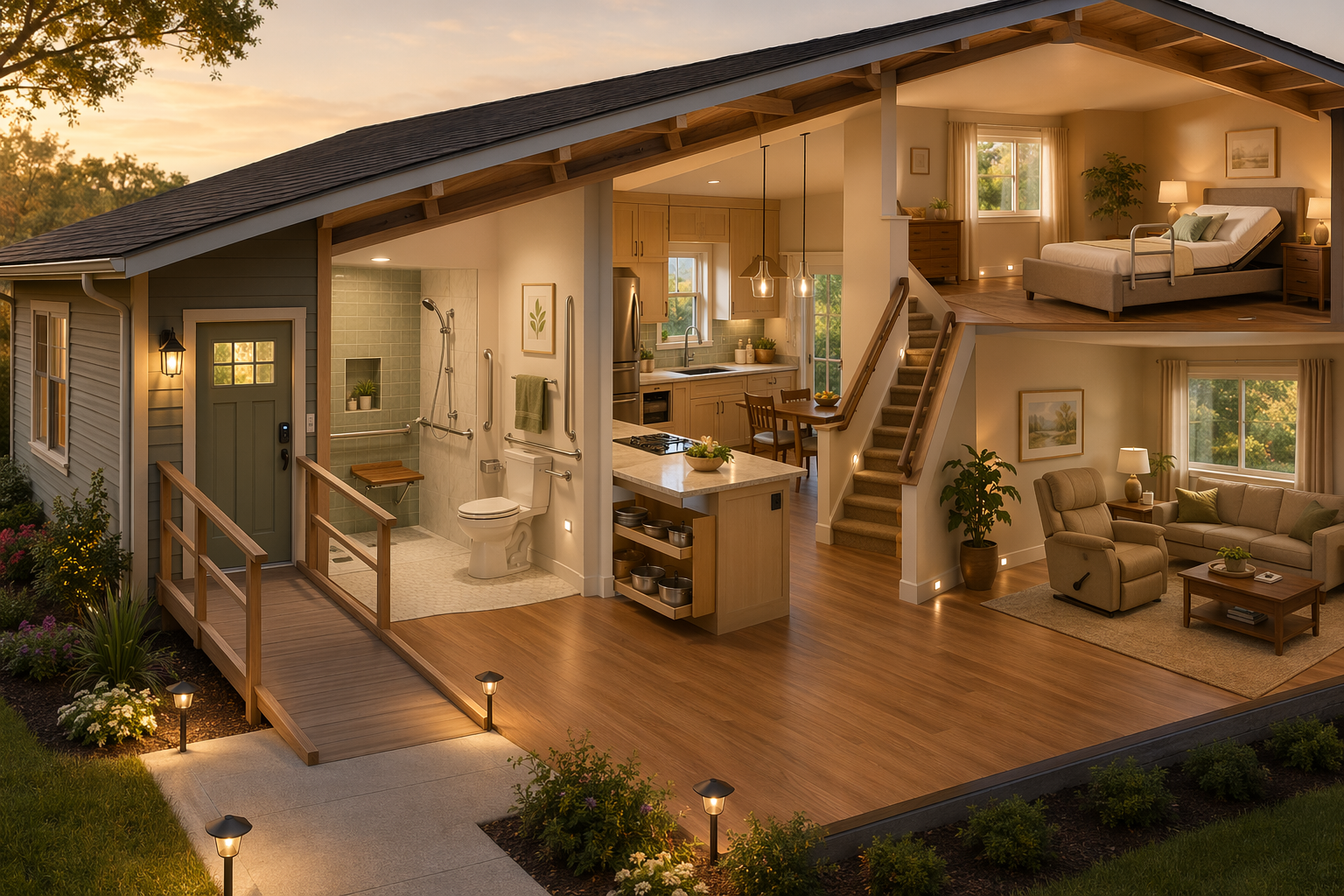
Aging in Place Home Modifications: A Room-by-Room Safety Checklist with Expert OT Guidance
A practical, evidence-based room-by-room safety checklist for families and older adults, grounded in occupational therapy principles. Learn how to systematically identify hazards and prioritize modifications from the bathroom (highest-risk room) to every other area of the home.

A Risk-Based Priority Guide to Aging-in-Place Home Modifications
Overwhelmed by the many possible home modifications? This guide helps you decide what to fix first by organizing changes into four risk-based phases — starting with immediate bathroom and stair safety, then entry access, daily function upgrades, and finally major renovations. Caregivers can avoid wasting money on less critical changes while leaving life-threatening hazards unaddressed.
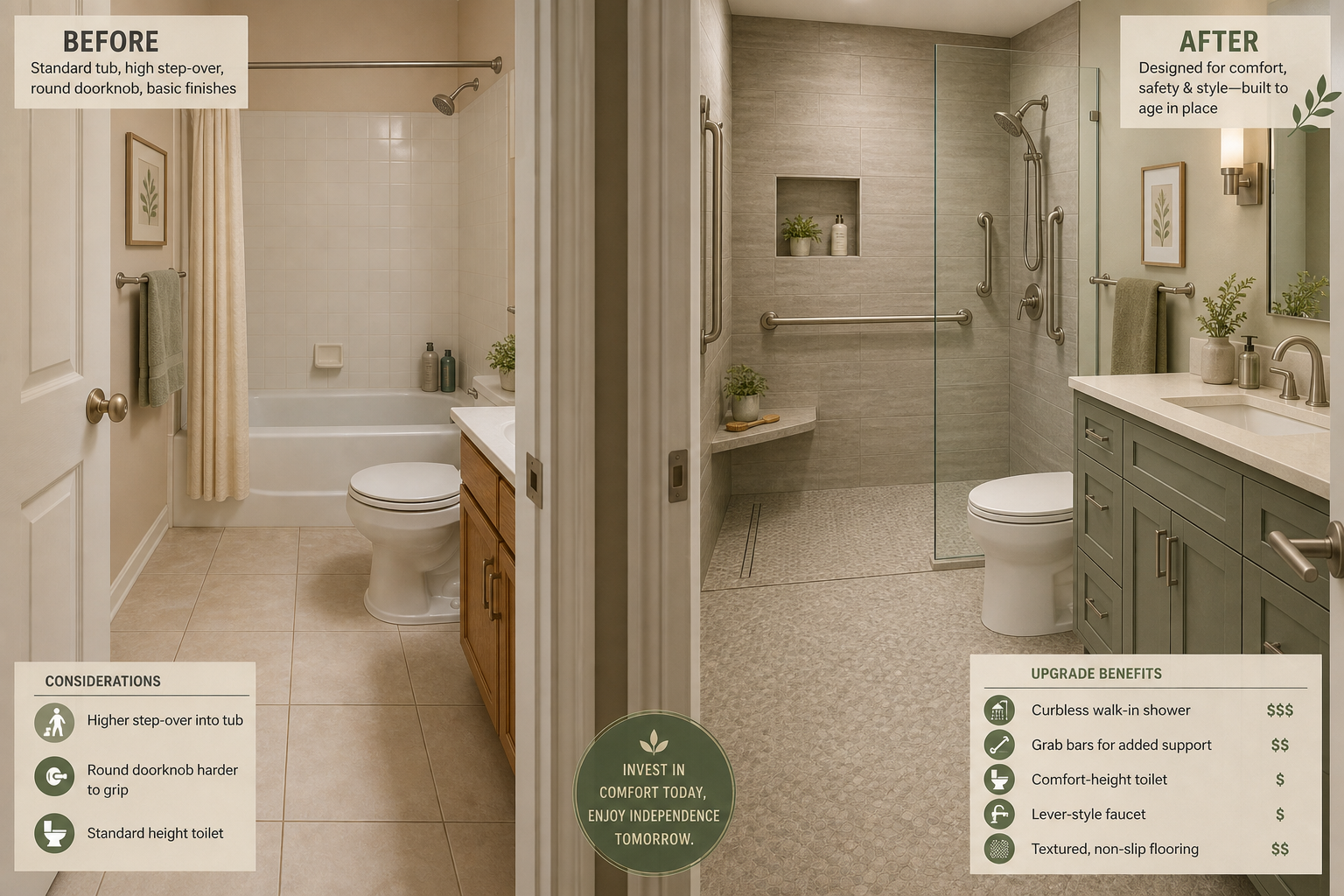
Where to Find Money for an Aging-in-Place Remodel: Grants, Loans, and Assistance Programs (2026)
A practical guide for adult children and older adults on a limited budget, revealing underutilized federal grants, VA benefits, Medicaid waivers, and nonprofit programs that can dramatically reduce out-of-pocket costs for aging-in-place home modifications.
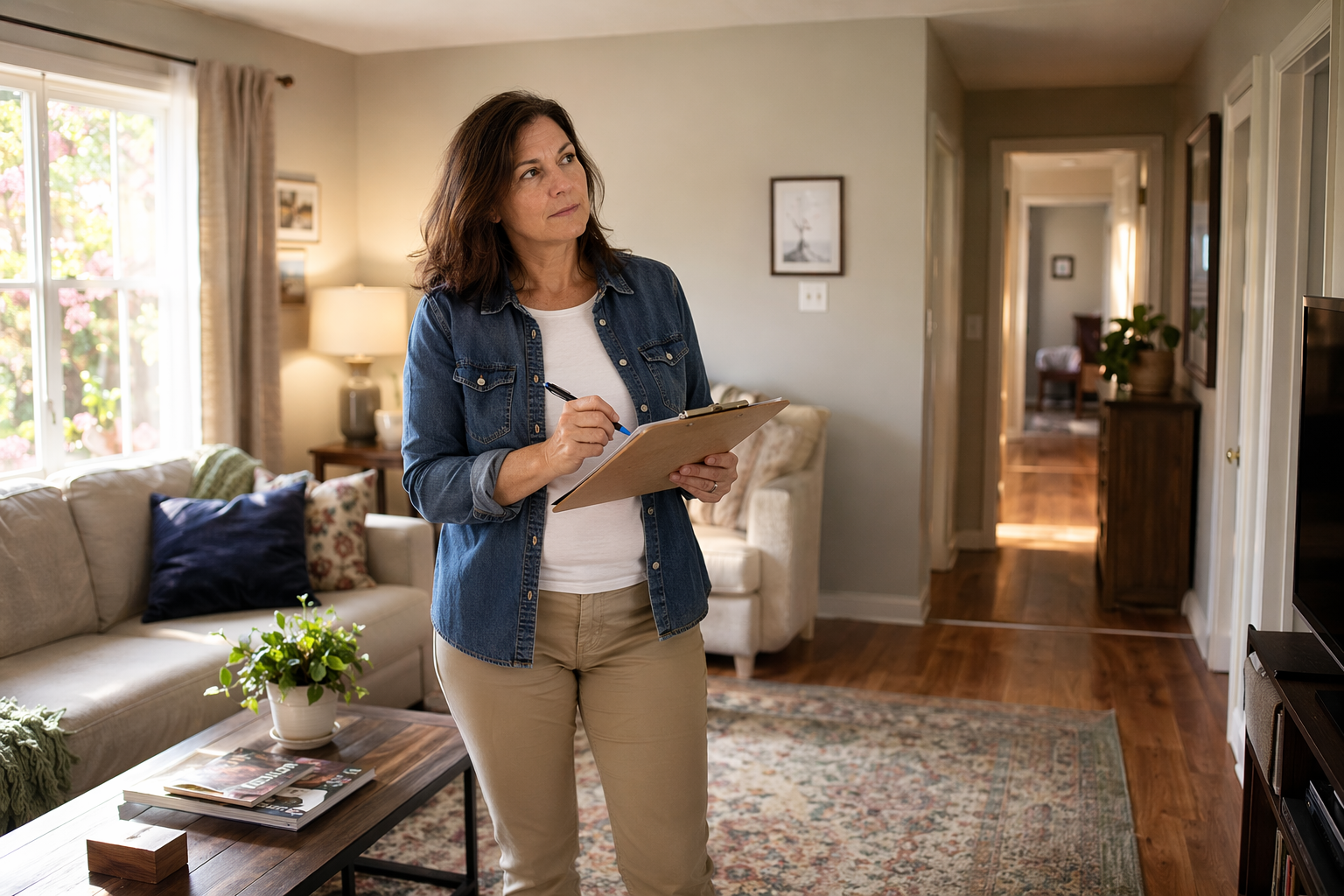
Aging in Place Home Modifications: A Room-by-Room Walk-Through Guide for Family Caregivers
This practical, printable walk-through guide helps you assess each room in your parent’s home for fall risks and aging-in-place needs, with room-by-room hazard spotting, priority indicators, and cost ranges so you know what to fix first and what it will cost.
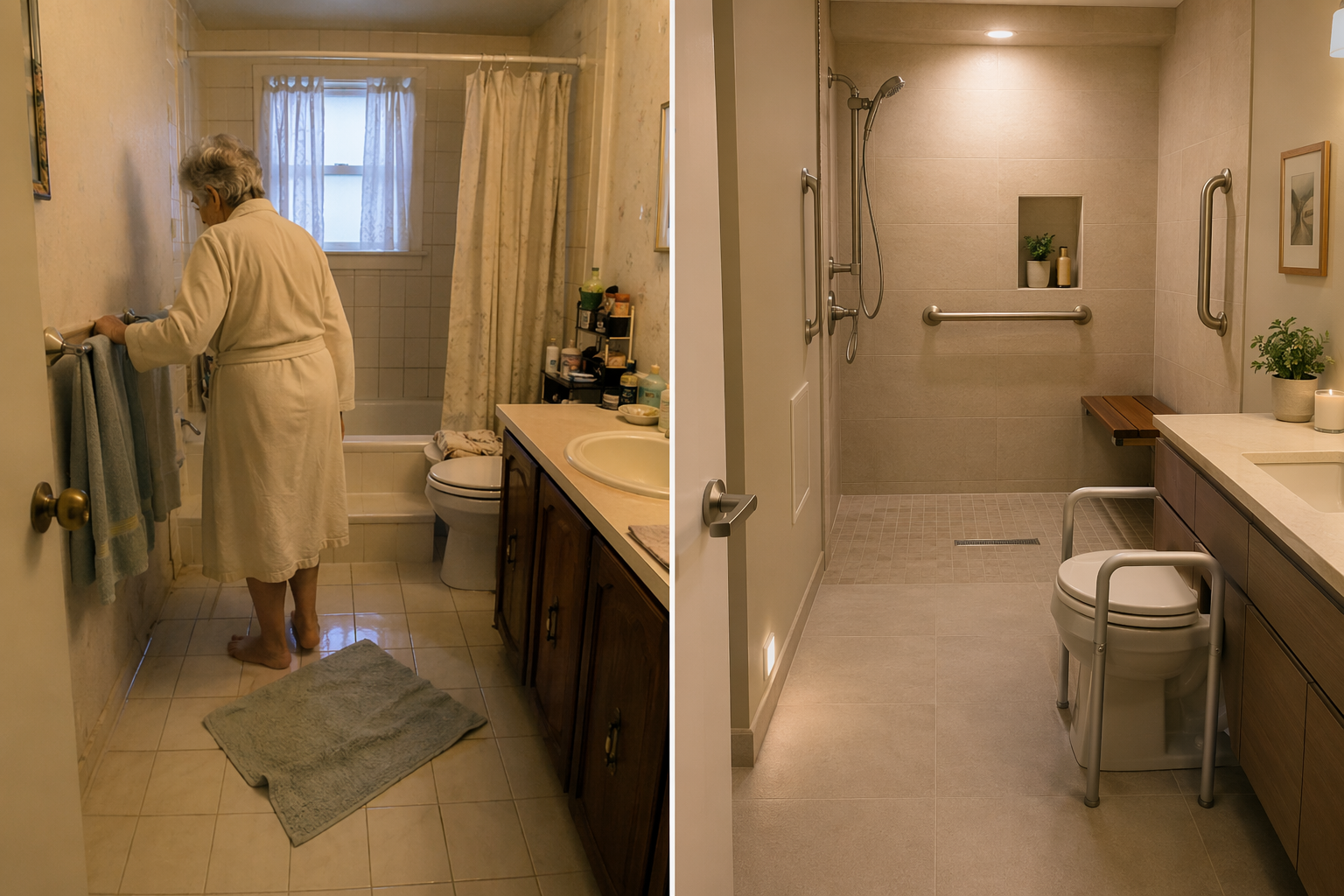
Bathroom Remodel for Elderly: A Phased Roadmap from $500 Quick Fixes to Full Renovation
This article provides a three-phase roadmap for adult children who need to make their parent's bathroom safer but don't know where to start. Learn how to reduce fall risk immediately with under $500 in simple upgrades, then plan for larger renovations over time without overwhelming your budget.
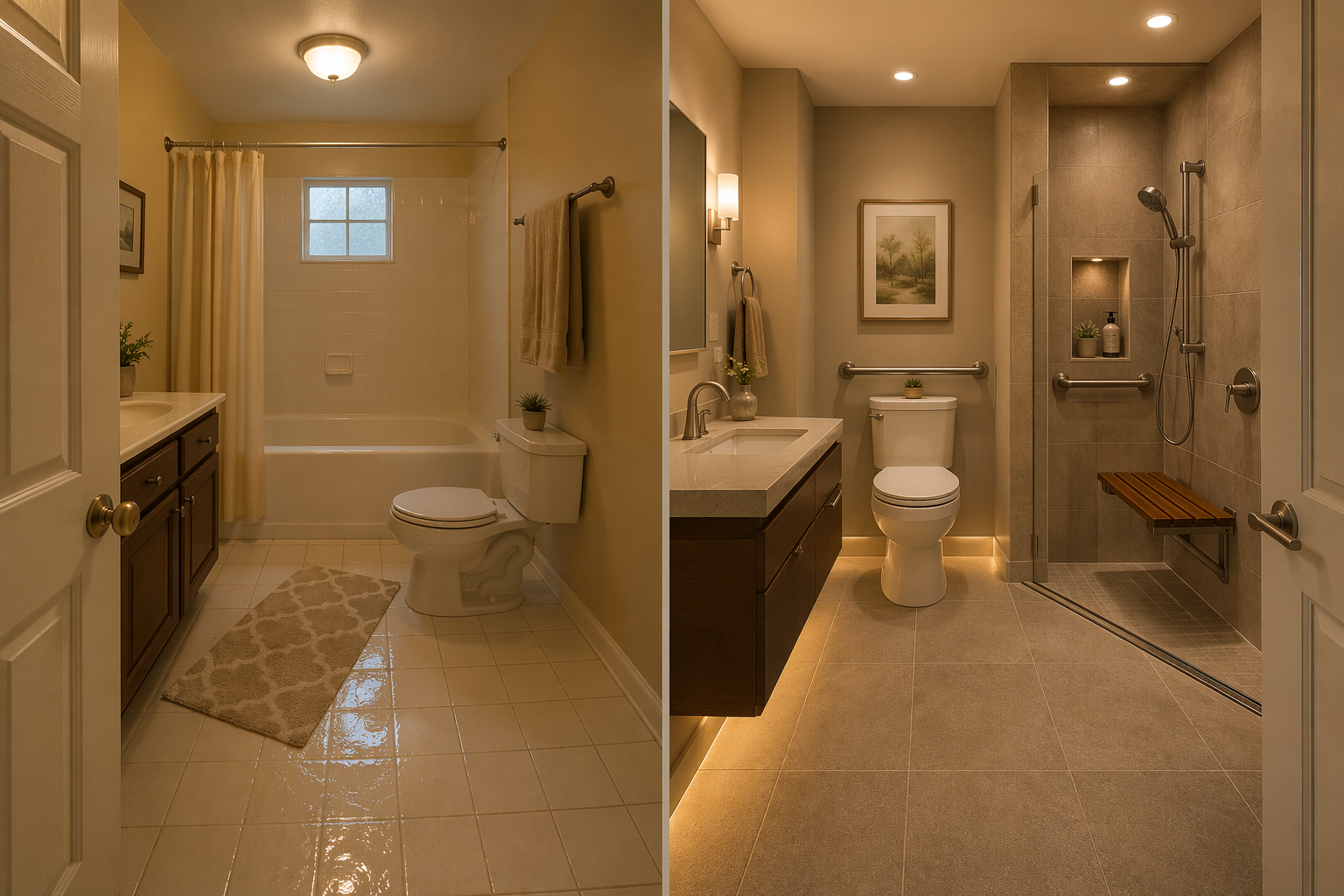
Bathroom Remodel for Elderly: Evidence-Based Features That Reduce Fall Risk
Discover the five bathroom modifications with the strongest research support for preventing falls—from grab bars and curbless showers to non-slip flooring and layered lighting—backed by CDC data, peer-reviewed studies, and ADA standards. This article is for caregivers and older adults seeking authoritative, evidence-based guidance for an aging-in-place bathroom remodel.
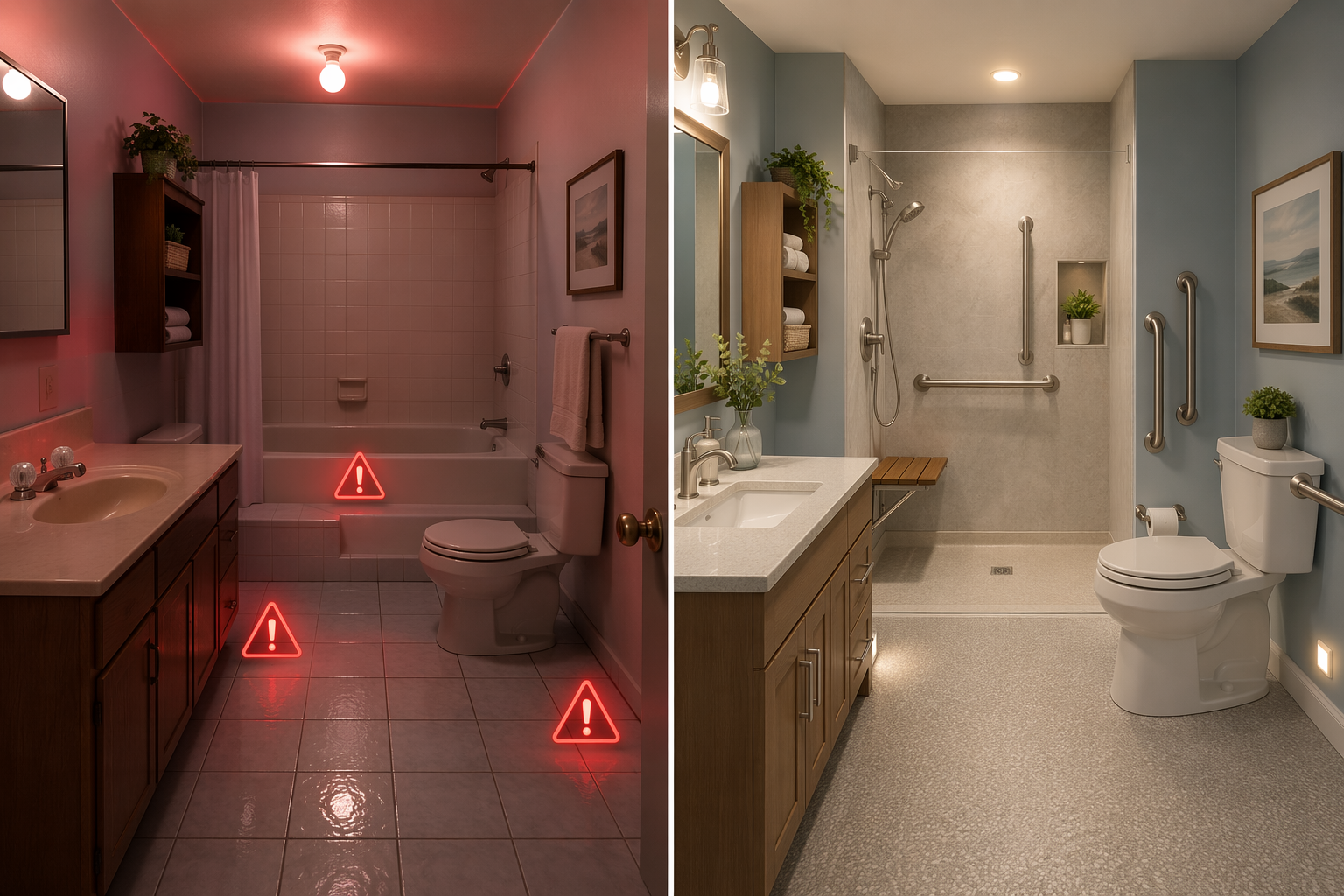
The Complete Bathroom Safety Remodel: What to Prioritize, What It Costs, and How to Pay — A Step-by-Step Guide for Family Caregivers
This step-by-step guide helps family caregivers prioritize bathroom modifications that prevent falls, understand cost ranges, and find funding options—without the need for a full gut renovation.
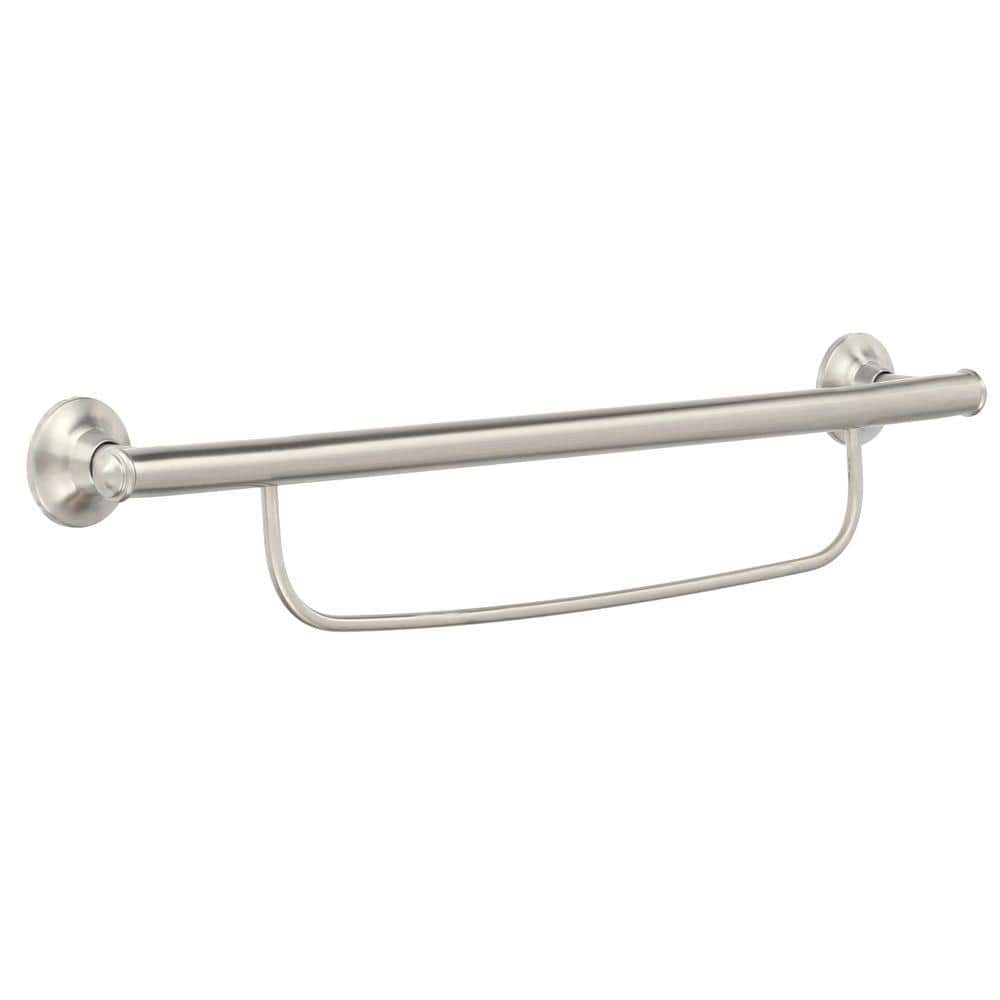
Bathroom Remodel for Elderly: Universal Design That Doesn't Look Institutional
A guide for older adults and their families who want a safe, accessible bathroom but worry about the 'hospital look' and resale value. Learn how modern decorative grab bars, curbless showers, and matte finishes make aging-in-place upgrades indistinguishable from high-end design.

CAPS, Occupational Therapist, or General Contractor: Which Professional Should Handle Your Parent's Home Modifications?
Family caregivers often struggle to distinguish between CAPS-certified professionals, occupational therapists, and general contractors for aging-in-place home modifications. This guide compares their distinct skill sets, explains when to hire each type, and outlines the most cost-effective sequence — an assessment by a CAPS or OT before any construction begins.
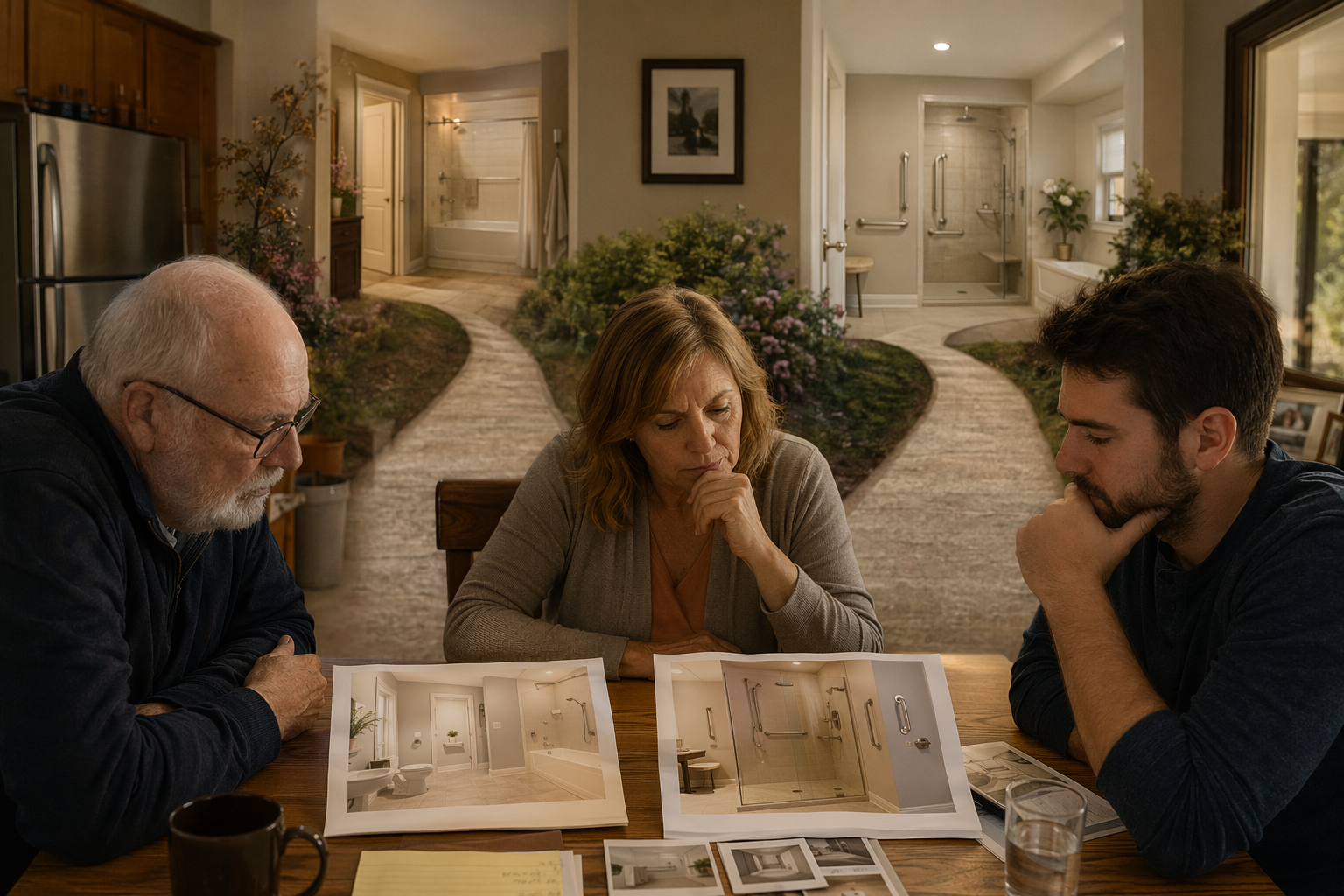
Choosing Between a CAPS Specialist and a General Contractor for Aging-in-Place Modifications
Learn when a CAPS-certified contractor is worth the investment and when a general contractor will do, plus five key questions to ask before hiring for aging-in-place home modifications.
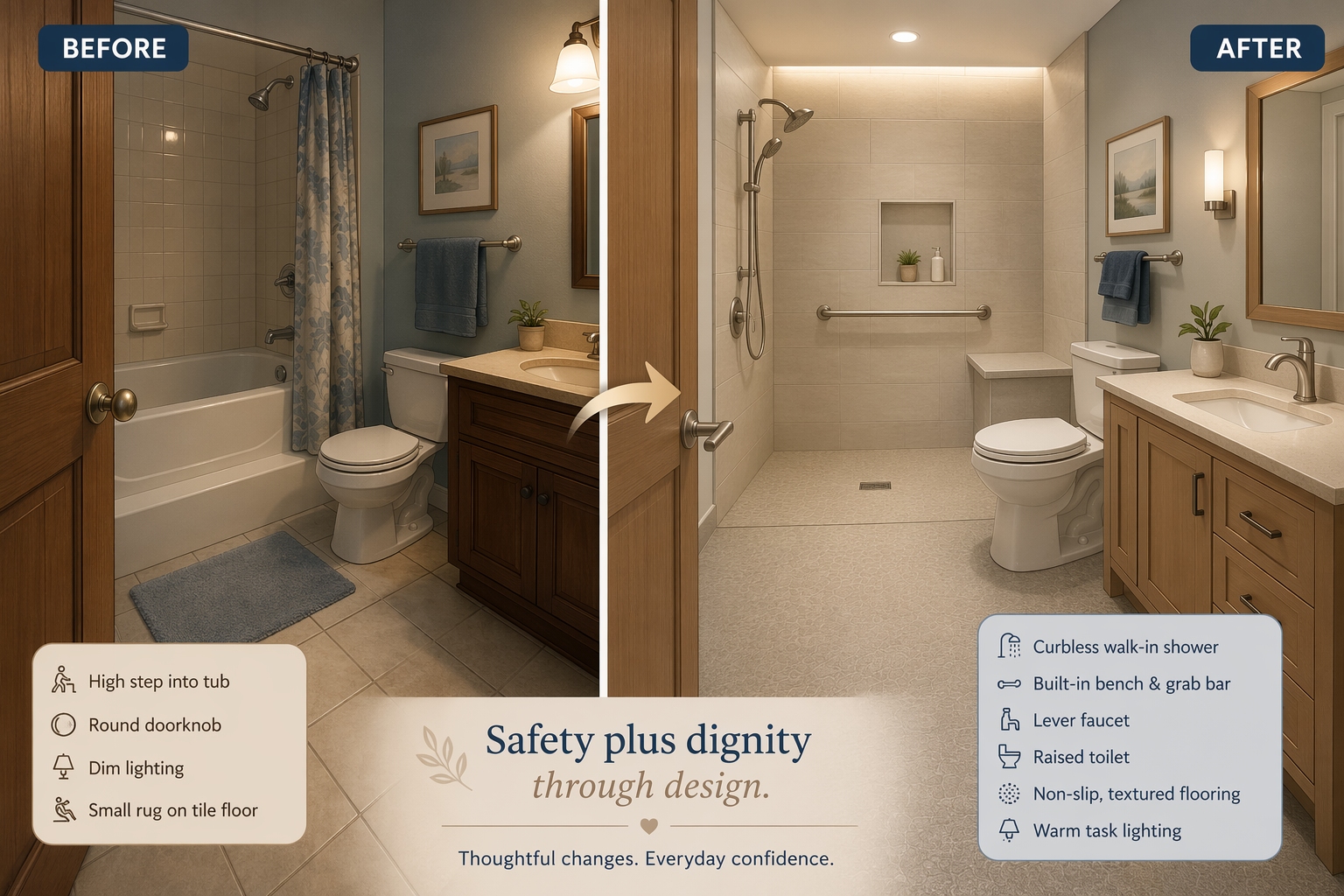
The Family Caregiver's Guide to Planning an Aging-in-Place Remodel: From Assessment to Contractor to Completion
A structured five-step process for adult children planning home modifications for a parent — covering professional assessments, prioritizing by fall risk, realistic budgeting, hiring CAPS-certified contractors, and phasing work over time to reduce costs and stress.
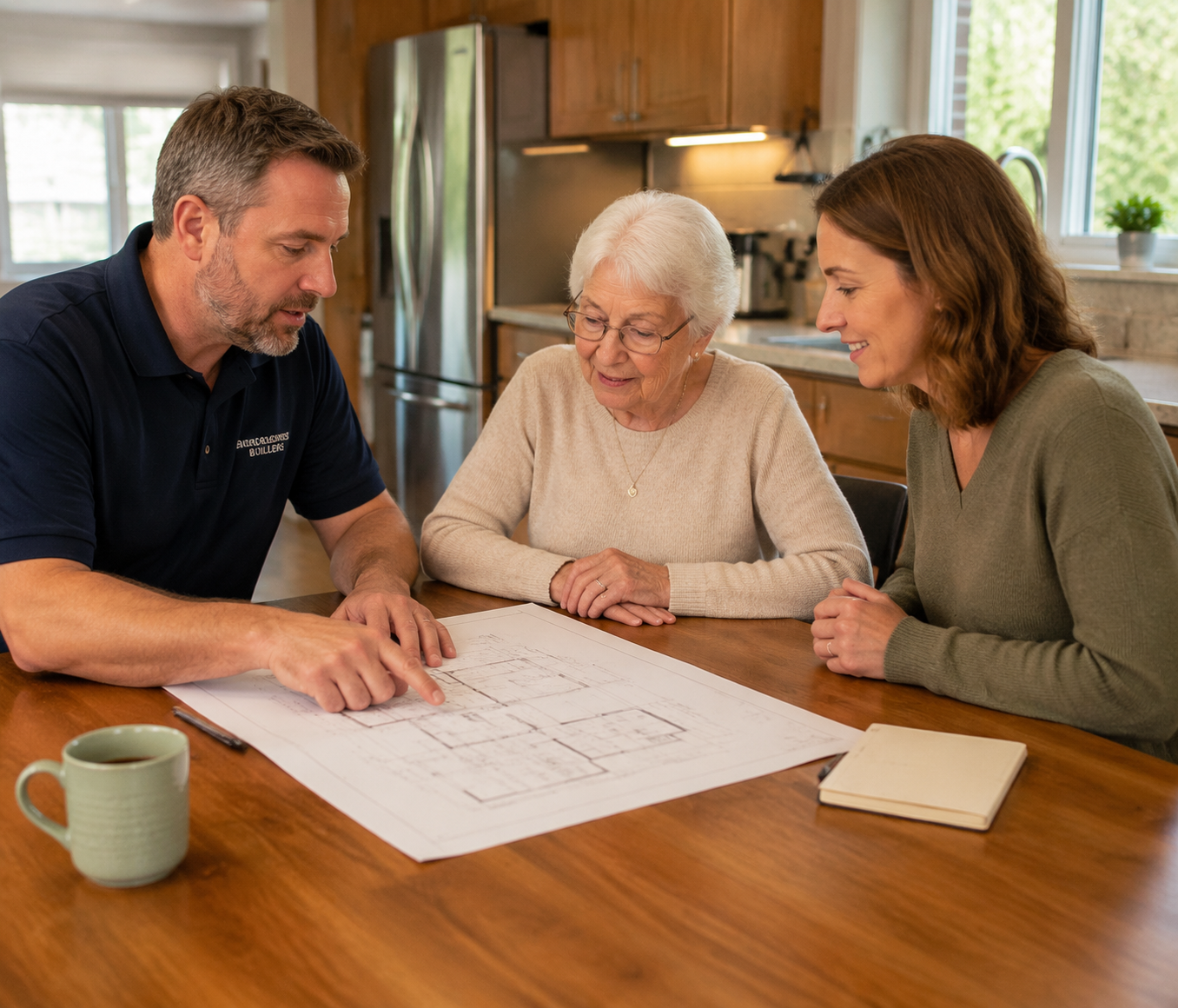
How to Find, Vet, and Hire a Certified Aging-in-Place Specialist
This guide walks family caregivers through the process of finding, interviewing, and hiring a Certified Aging-in-Place Specialist (CAPS), including where to verify credentials, what questions to ask, and red flags to avoid — helping you make informed decisions and avoid costly mistakes.