
Plan ahead
Home Modifications
Product-neutral, room-by-room aging-in-place guidance (entryway, bathroom, bedroom, kitchen, stairs/hallways) modeled on the AARP HomeFit checklist structure, with dimensional specifics (grab bar height and clearance, lighting placement, threshold height) drawn from ADA and CAPS standards. Each room page states what to check, what to change, and when a CAPS-credentialed professional is warranted, without naming or ranking contractors or products. Cross-links to relevant Fall Prevention risk factors and Mobility equipment comparisons.
Bathroom
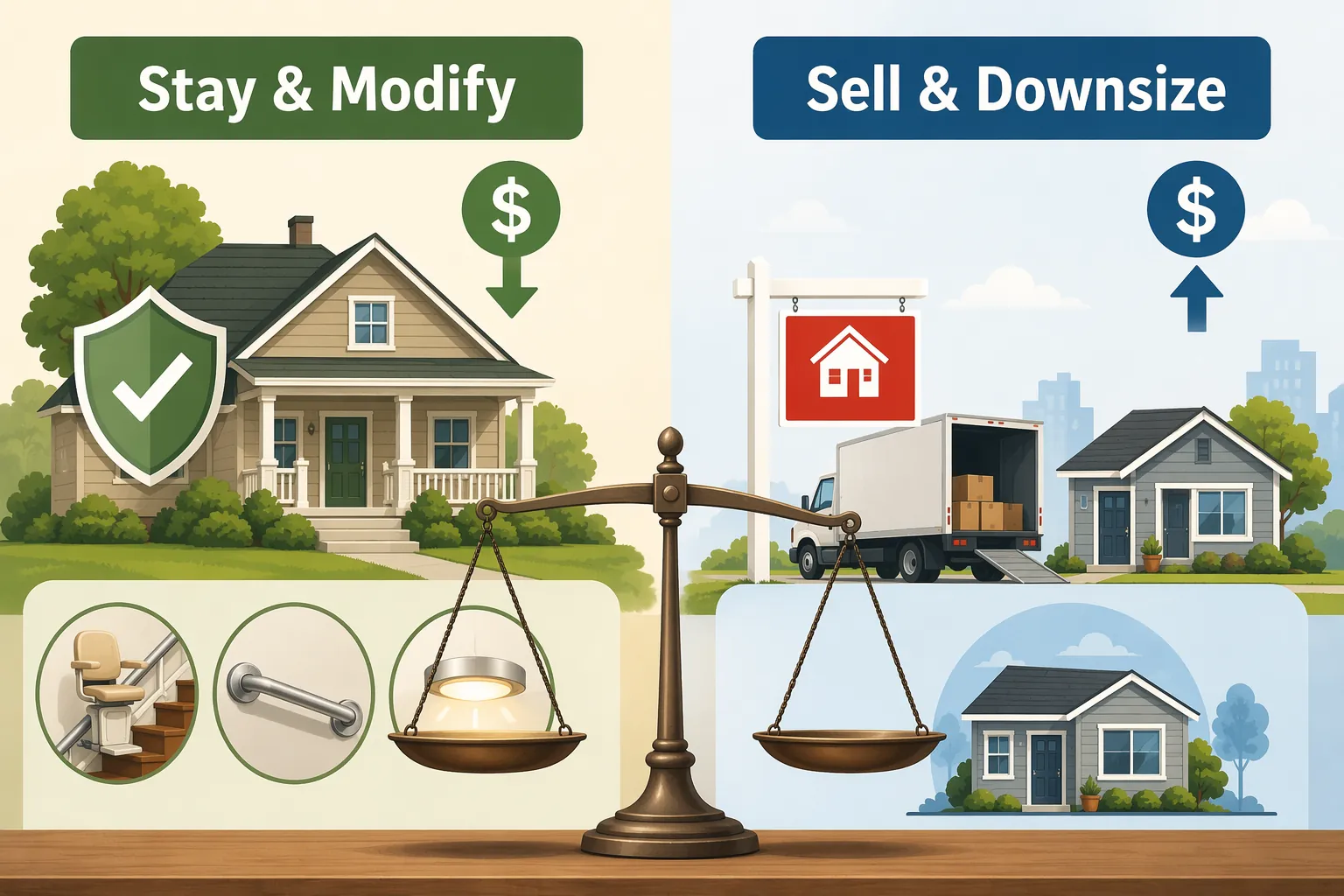 —
—Why Seniors Are Choosing Home Modifications Over Downsizing
High mortgage rates make downsizing expensive for seniors who hold low-rate loans. This article explains why modifying the current home for safety often makes more financial sense, and how the lock-in effect shifts the calculus toward aging in place.
 —
—How generic drug tariffs raise senior medication costs and fall risk
Proposed tariffs on generic drugs add cost pressure that could lead seniors to skip doses, a known fall risk factor. This guide explains the connection and offers steps caregivers can take now to protect medication adherence and home safety.
Entryway
This room's checklist is in progress. In the meantime, the matching Fall Prevention risk factor covers general guidance.
Bedroom
This room's checklist is in progress. In the meantime, the matching Fall Prevention risk factor covers general guidance.
Kitchen
This room's checklist is in progress. In the meantime, the matching Fall Prevention risk factor covers general guidance.
Stairs And Hallways
This room's checklist is in progress. In the meantime, the matching Fall Prevention risk factor covers general guidance.
Other
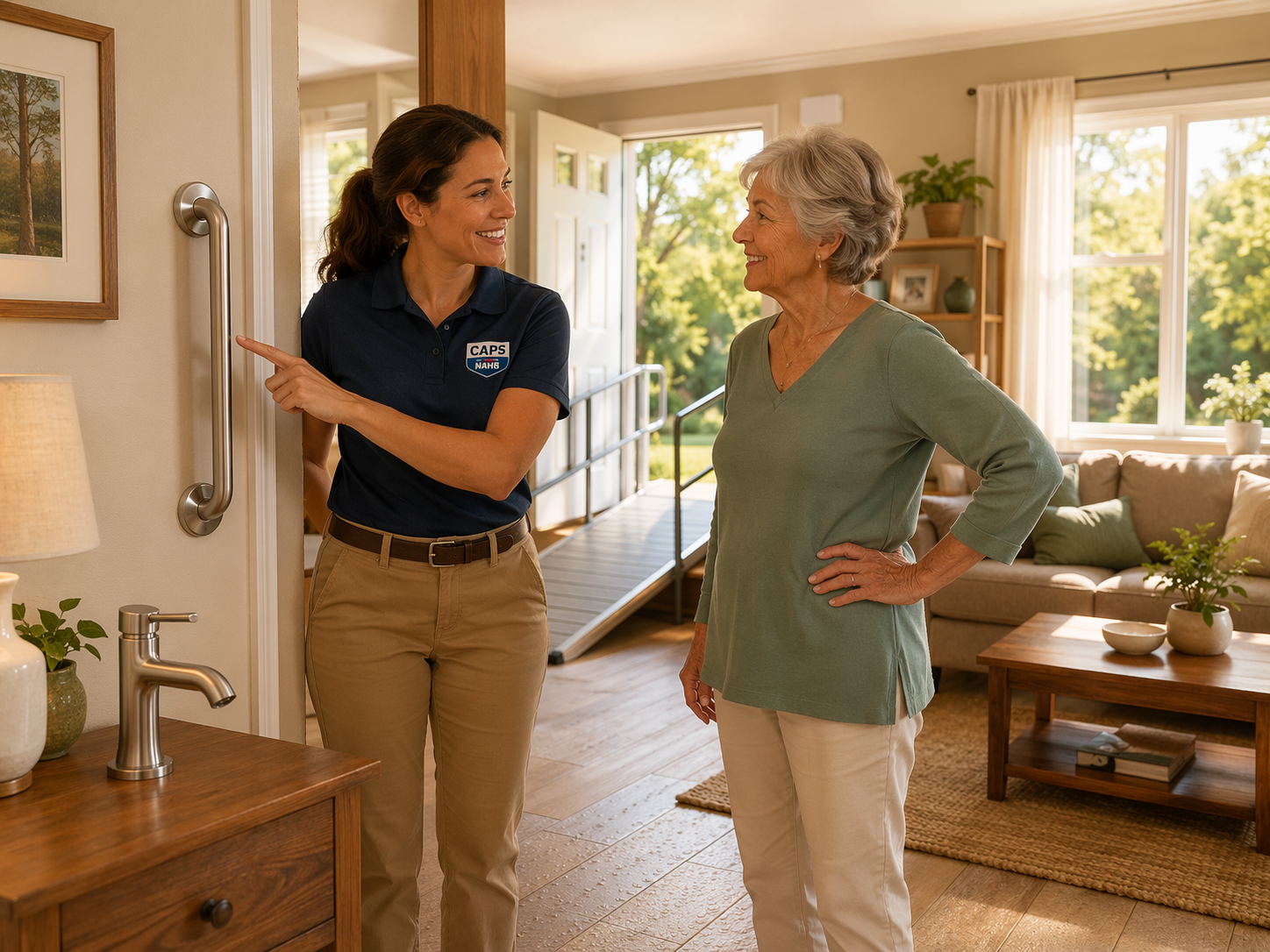
Is CAPS Certification Worth It? A Complete Guide for Professionals Considering the Credential
This guide helps remodelers, occupational therapists, interior designers, and other professionals evaluate whether the Certified Aging-in-Place Specialist (CAPS) credential is worth their time and money. It covers the curriculum, costs, competing certifications, earning potential, and a decision framework tailored to different professional backgrounds.
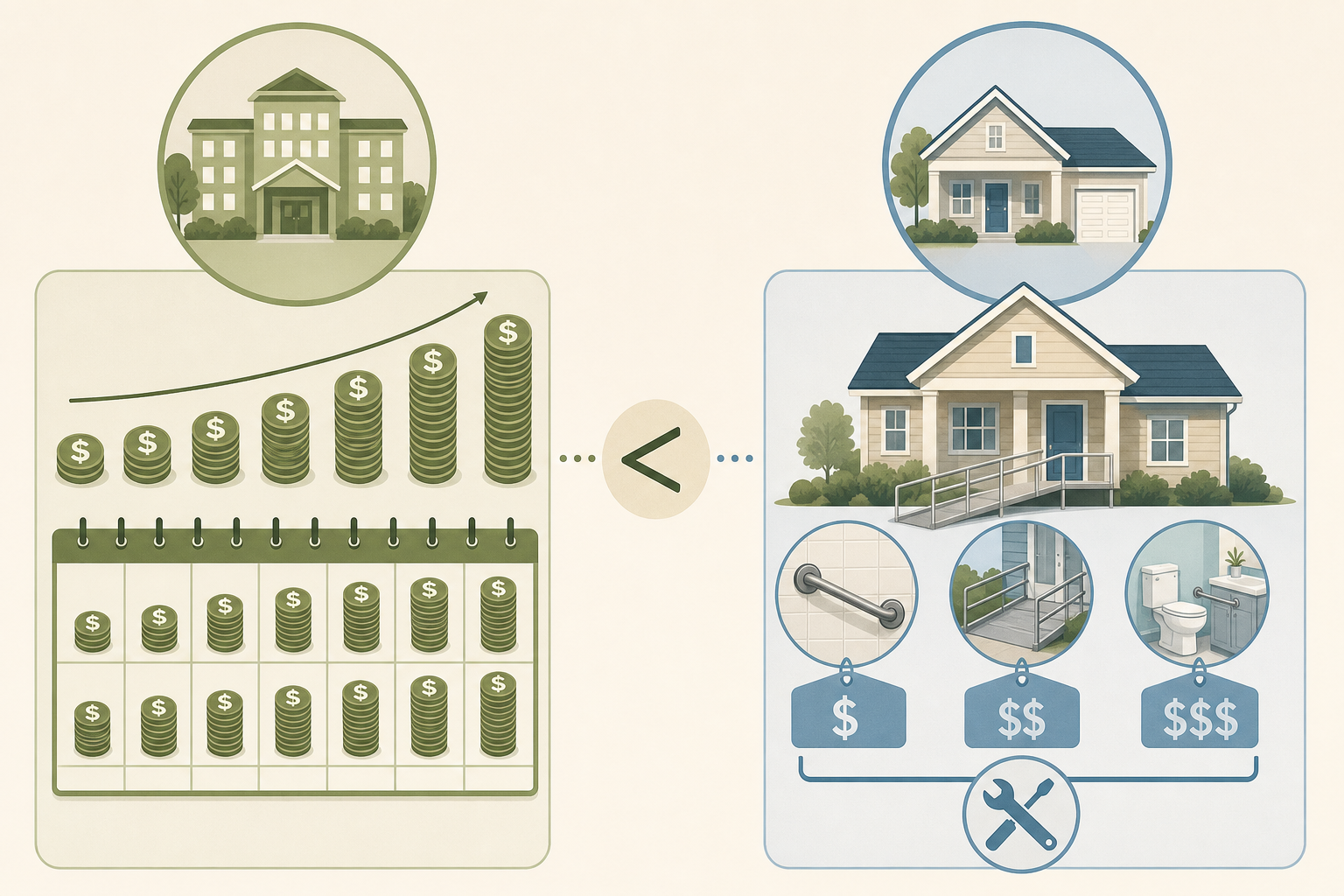
How Much Does a CAPS Home Modification Cost? Full Breakdown with Budget Planning
A comprehensive cost breakdown of aging-in-place modifications with a CAPS professional, including a comparison to assisted living, a detailed phasing strategy, and a roadmap for financial assistance through Medicaid waivers, VA grants, and tax deductions.
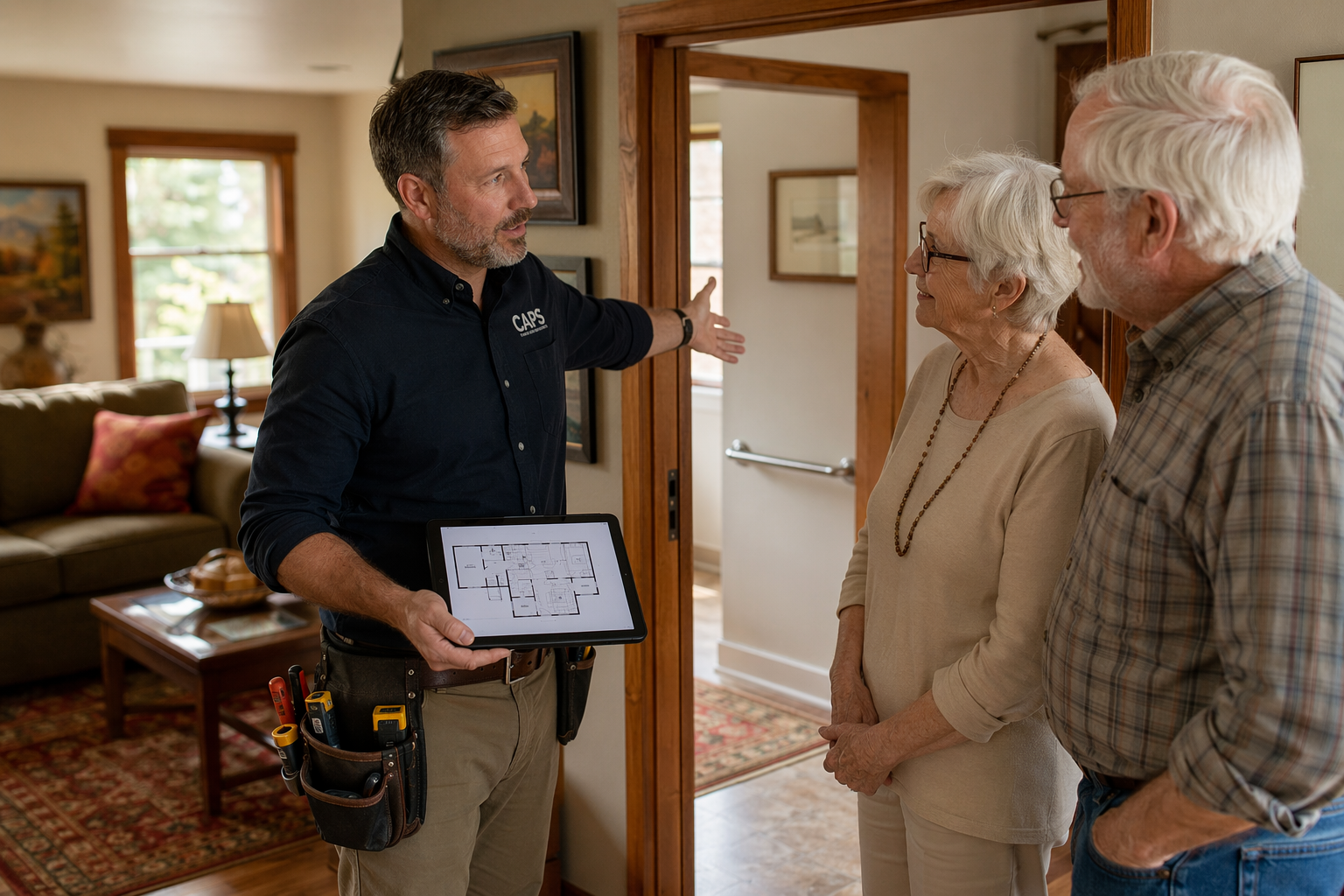
CAPS Specialist vs. Occupational Therapist: Who Should Assess Your Parent's Home for Aging in Place?
Adult children often don't know whether to hire an Occupational Therapist (OT) or a Certified Aging-in-Place Specialist (CAPS) for a home safety assessment. This guide explains their distinct roles — OTs assess the person's functional abilities, while CAPS professionals focus on structural solutions — and outlines the ideal collaborative workflow for the best outcomes.
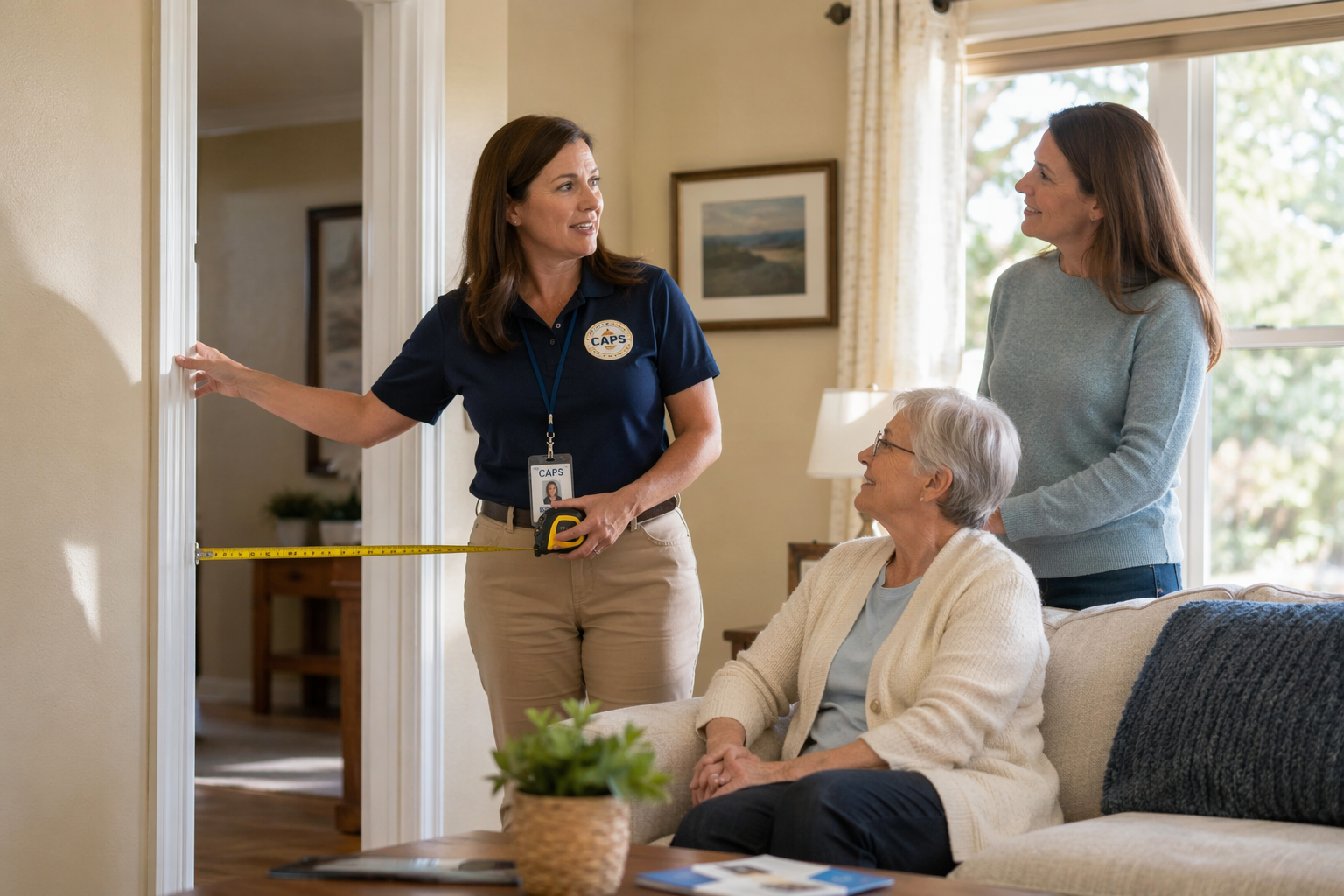
CAPS vs. General Contractor vs. Occupational Therapist: Who Should You Hire for Aging-in-Place Home Modifications?
Family caregivers often don't know which professional to call first for home modifications. This article explains the distinct roles of a CAPS-certified specialist, an occupational therapist, and a general contractor — and shows how combining them can save money, ensure safety, and unlock funding.
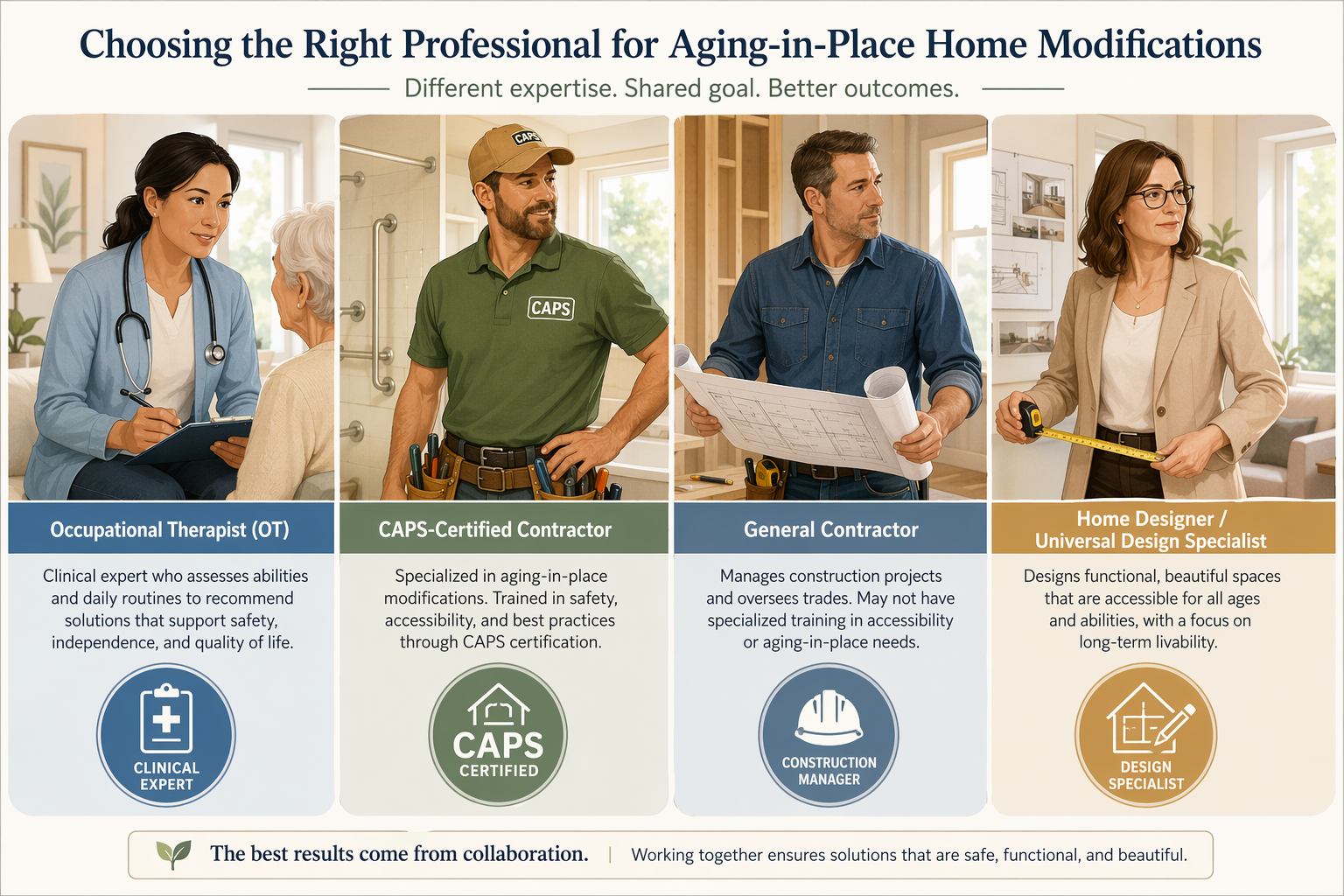
CAPS vs. General Contractor vs. OT: Who Should You Hire for Aging-in-Place Home Modifications?
Family caregivers often hire the wrong professional first — a general contractor for a job that needs an OT assessment, or an OT for work that needs a contractor. This guide compares CAPS-certified specialists, general contractors, occupational therapists, and other aging-in-place professionals so you can match the right expert to your parent's specific needs.

CAPS vs. Occupational Therapist vs. General Contractor: Who Should You Hire for Aging-in-Place Home Modifications?
Family caregivers often face a confusing choice between a CAPS-certified remodeler, an occupational therapist with CAPS, or a general contractor for home modifications. This guide explains what each professional brings, when to hire one alone versus building a team, and how the right collaboration can prevent costly mistakes and ensure modifications truly fit your loved one's needs.
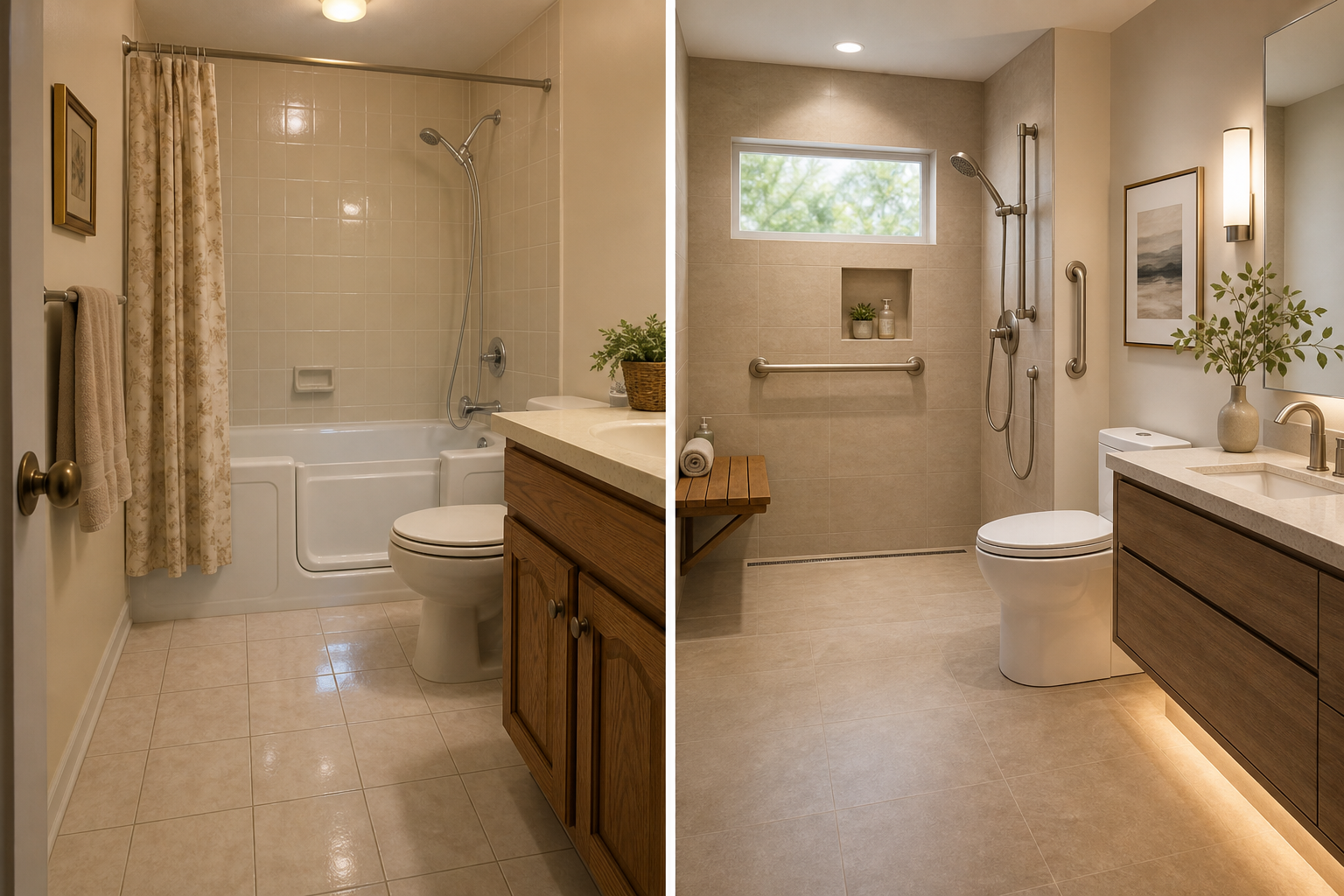
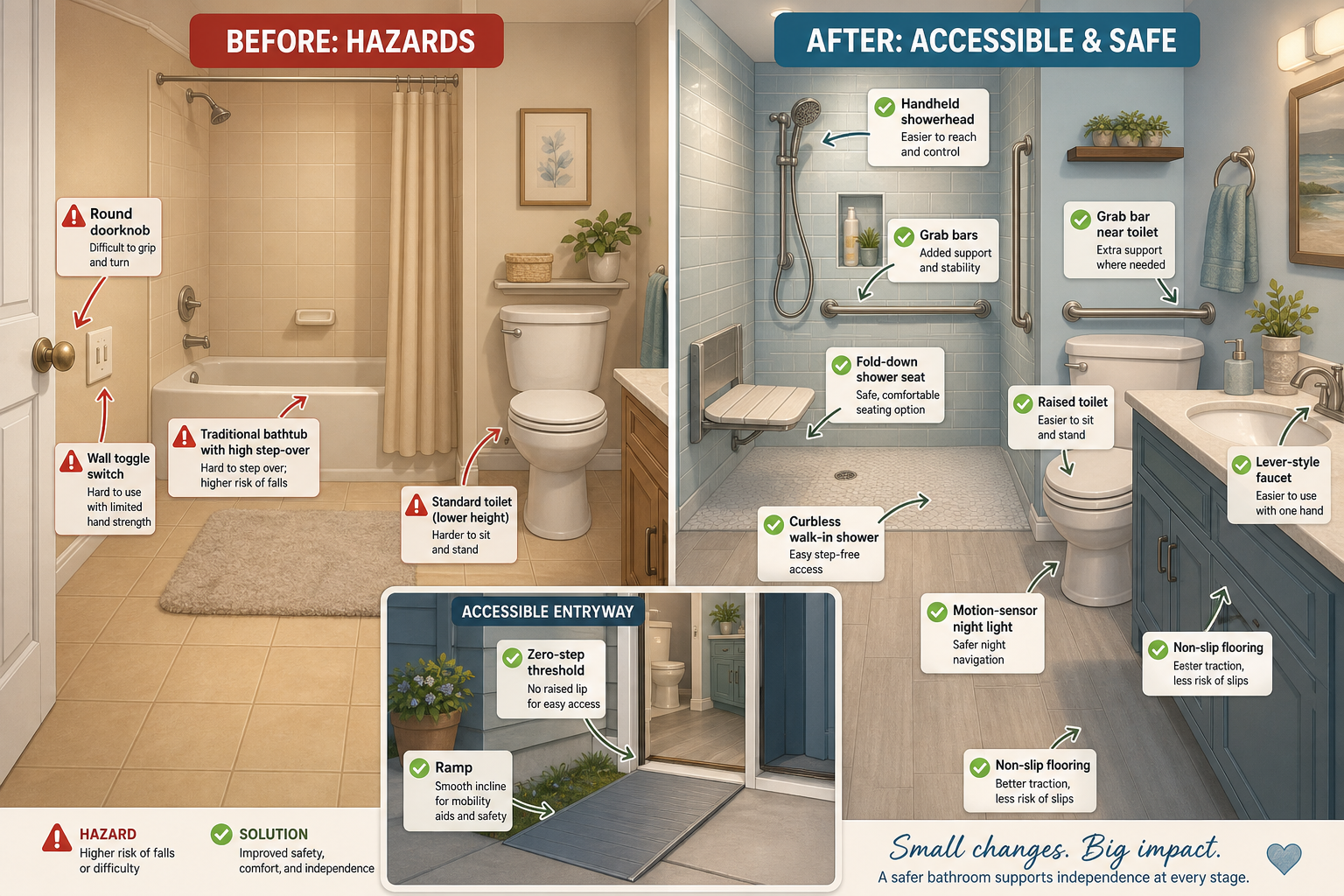
The Complete Bathroom Safety Upgrade: What Every Aging-in-Place Renovation Must Include
A room-by-room guide for adult children planning a bathroom safety renovation after a parent's fall. Covers the five essential modifications ranked by impact, with specific technical standards (DCOF ratings, grab bar placement, ANSI references), cost ranges, and a phased approach from under $500 to full renovation.
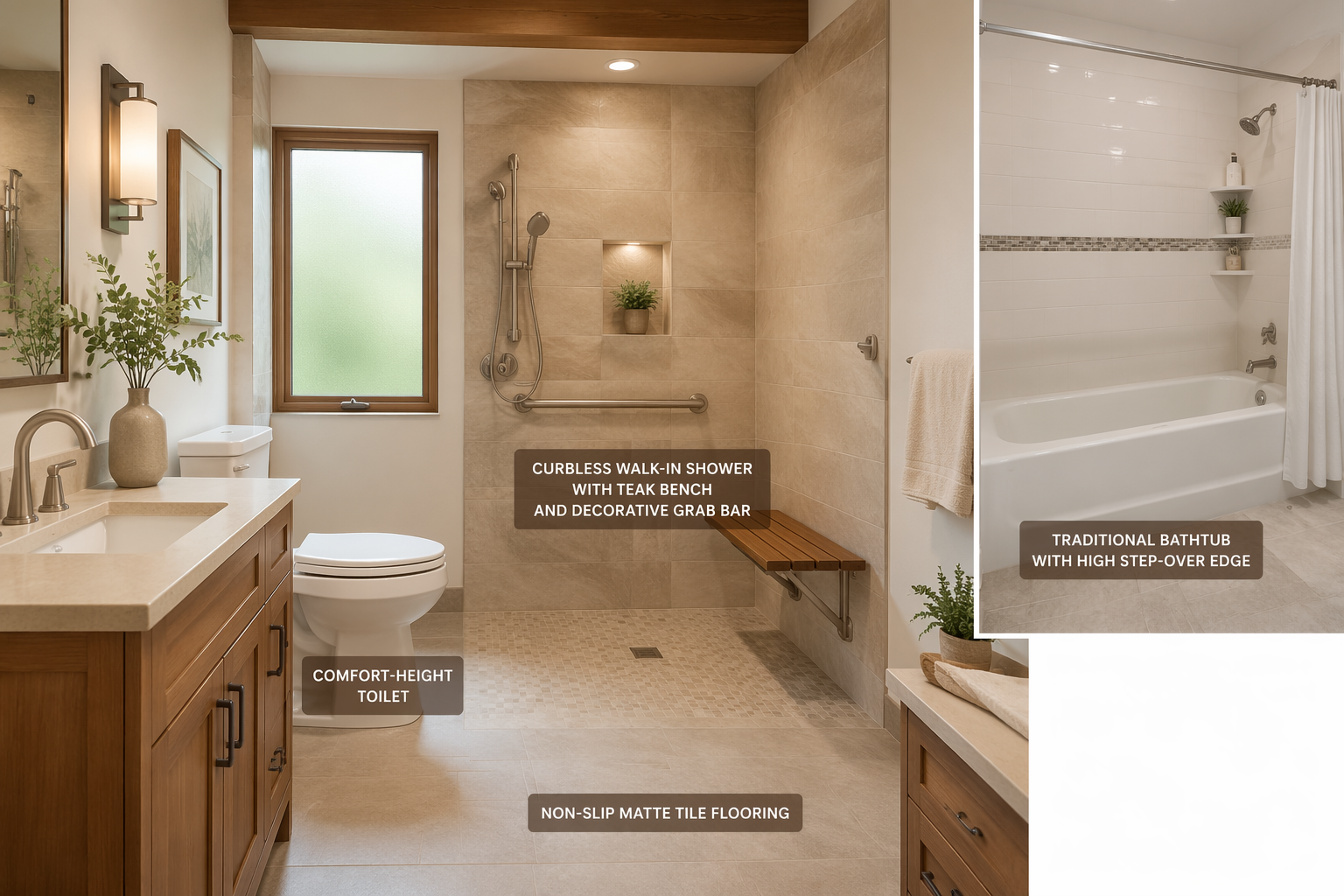
The Complete Cost Guide to Aging-in-Place Remodeling: What Every Modification Actually Costs and How to Pay for It
This guide provides adult children and family caregivers with detailed, project-level cost ranges for aging-in-place home modifications, a room-by-room breakdown, a remodel-versus-assisted-living payback calculation, and a comprehensive roadmap of public and private funding sources to offset upfront investment.
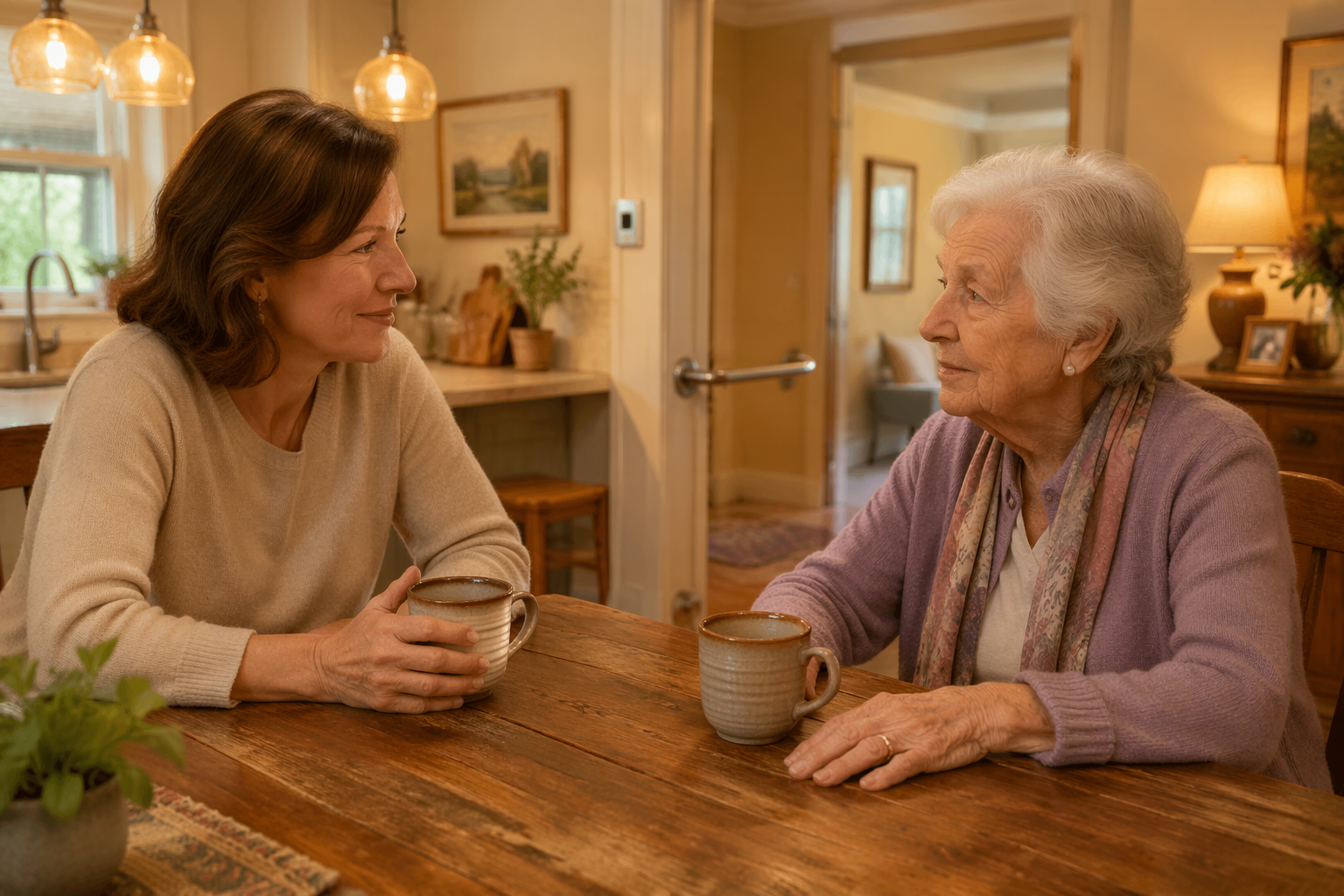
How to Talk to a Reluctant Parent About Home Modifications: A Caregiver's Conversation Guide
A practical guide for adult children whose parent resists home safety modifications after a fall or functional decline. Learn the five common resistance patterns, evidence-backed conversation scripts, and a relationship-first framework to move from conflict to collaboration.
The Evidence Behind Aging-in-Place Home Modifications: What the Research Says About Fall Reduction, Independence, and Cost-Effectiveness
For evidence-minded family caregivers and older adults: This article translates the key findings from a 2025 systematic review and supporting studies into practical takeaways, showing how home modifications measurably reduce falls, lower care hours, and cut emergency admissions.