
Flagship section
Fall Prevention
The flagship section, built directly on the CDC STEADI screen-assess-intervene model. Contains the fall risk screening quiz, the post-fall decision tree for active crisis situations (conscious/responsive checks, when to call 911 vs. urgent care, what to watch for in the following 72 hours), risk-factor explainers (medication side effects, vision, balance), and numbered warning-sign guides. This is the only group that owns crisis-path content; modification and mobility groups link back here rather than duplicating triage guidance.
Plan ahead
other
 —
—How to Prepare for Storms and Prevent Falls in Elderly Adults
This pre-season checklist helps caregivers and older adults reduce fall risks during severe storms by addressing room-by-room hazards like darkness, wet floors, and displaced objects — with steps that take under two hours per room.
 —
—Why Storms Create a Dangerous Fall Risk for Seniors — and How to Prepare
Storms and power outages create a cascade of fall risks for older adults — darkness, cold-induced stiffness, disrupted medication routines. This article explains why these hazards multiply fall risk and what specific preparations can prevent a fall when the lights go out.
 —
—Fall Prevention for Older Adults During a Tropical Storm
A tropical storm creates unique fall hazards for older adults — darkness from power outages, wet indoor surfaces, debris-cluttered pathways, and inaccessible mobility aids. This guide explains how to prepare before the storm, stay safe during, and avoid fall injuries in the critical days after.
 —
—Why Wildfire Smoke Is More Dangerous for Seniors
Understand why wildfire smoke poses unique dangers to older adults, including higher risks of hospitalization and long-term health decline, and learn a layered protection strategy to reduce harm in senior living environments.
 —
—How long does wildfire smoke affect seniors in NYC?
A timeline-based guide for NYC caregivers on how long wildfire smoke symptoms typically last in seniors, when delayed symptoms may appear, and when to seek medical attention — based on national health sources and recent NYC emergency data.
 —
—How long does wildfire smoke last for older adults?
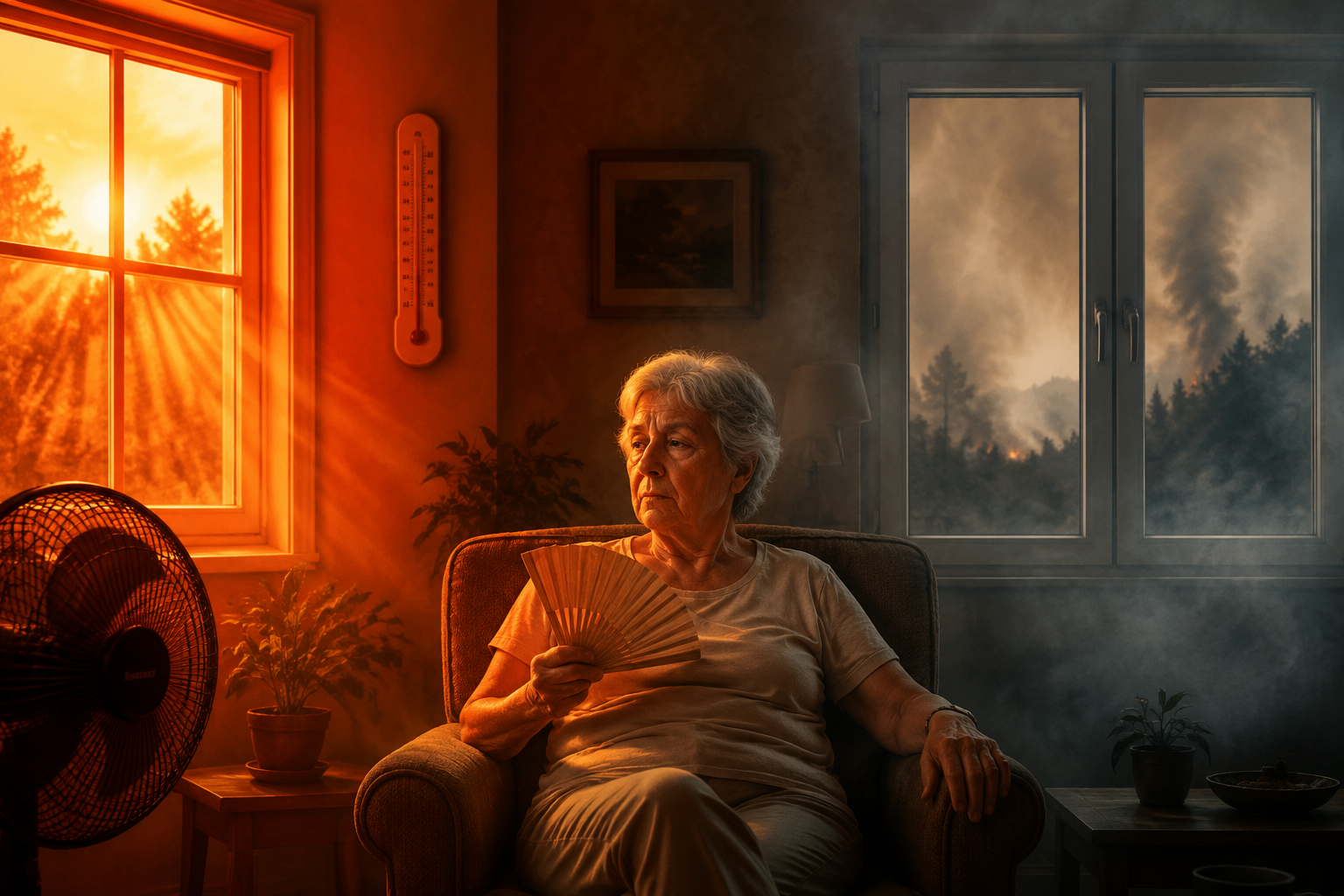
Wildfire smoke affects older adults across three distinct timelines — outdoor air clears within days, indoor smoke VOCs can linger for weeks to months, and cardiorespiratory health risks can persist for up to three months. This article breaks down each duration and gives caregivers clear safety thresholds to protect their parent.
 —
—How to use AC for seniors during wildfire smoke and heat
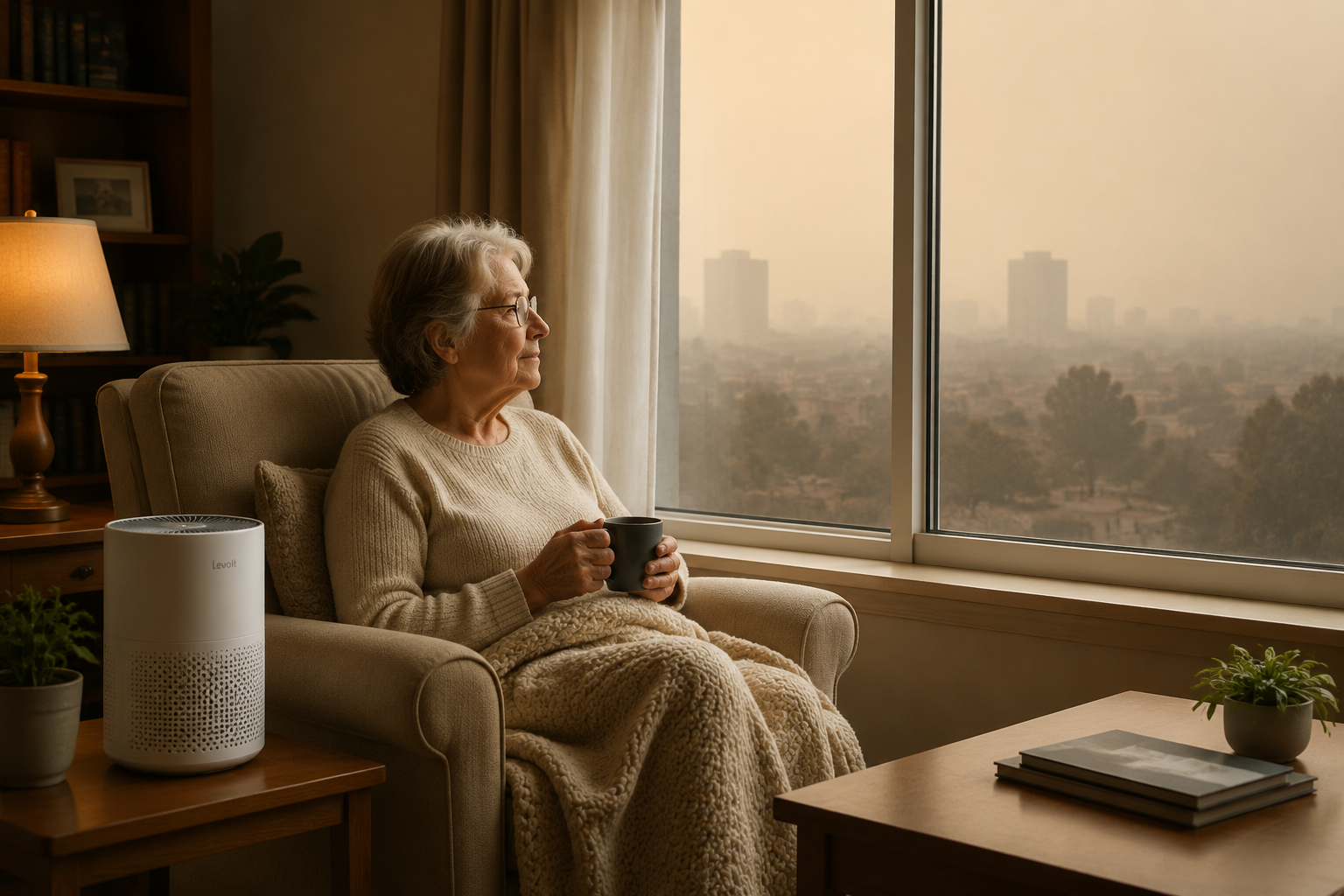
When wildfire smoke and extreme heat overlap, seniors face a dangerous choice between heat stroke and smoke inhalation. Air conditioning with the right filter and settings resolves both hazards simultaneously, but only if used correctly.
 —
—How Air Quality Alerts Harm the Aging Brain
Air pollution is a recognized risk factor for dementia, and for older adults already living with cognitive decline, air quality alerts can worsen confusion, raise fall risk, and accelerate symptom progression. This article explains why caregivers must treat alert days as brain-health emergencies and provides actionable steps to protect cognition indoors.
 —
—How Poor Air Quality Raises Fall Risk for Detroit Seniors
Learn why indoor air pollution in Detroit can increase fall risk for seniors by worsening chronic conditions that affect balance, and discover practical steps to improve air quality using HEPA filters and other low-cost interventions.
 —
—What Does a Code Purple Air Quality Alert Mean for Seniors?
A Code Purple air quality alert signals very unhealthy air conditions that pose serious risks for older adults. This guide explains what the alert means, why seniors are uniquely vulnerable, and the concrete steps caregivers should take to protect them.
 —
—Dementia Care at Home: A Practical Guide to Managing Behaviors, Safety, and Daily Life
A comprehensive, day-to-day guide for adult children providing home care for a parent with Alzheimer's or related dementia. Covers concrete strategies for managing wandering, sundowning, bathing resistance, and repetitive speech, plus dementia-friendly home safety, communication techniques, medication management, and when to bring in professional help.
 —
—How to Evacuate an Elderly Parent During an Earthquake
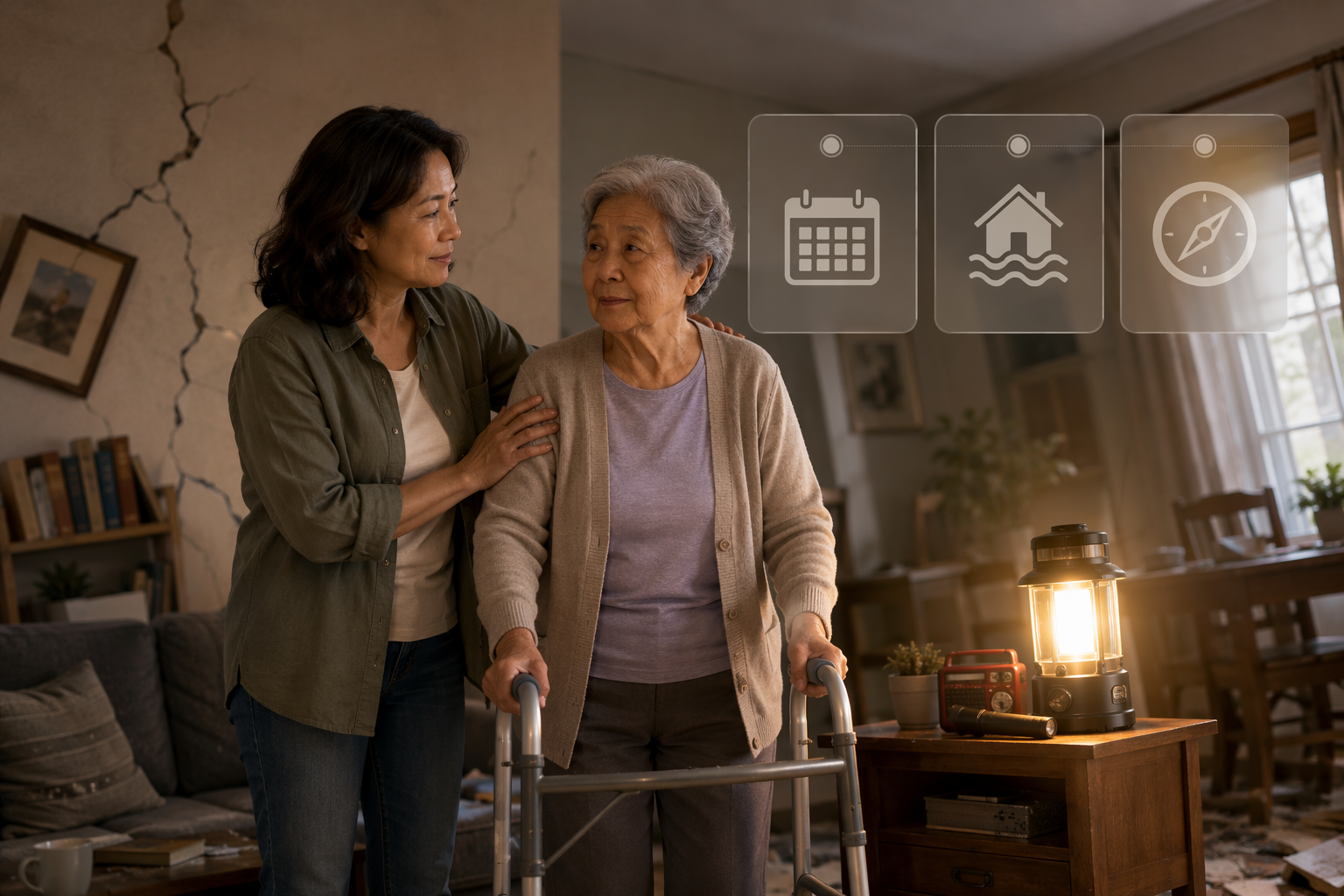
Learn how to create a three-phase earthquake plan for an elderly parent with mobility concerns: pre-quake preparation, safe positioning during shaking, and the critical stay-or-go decision after. This guide covers the support network, go-bag contents, and adaptations needed so you don't have to improvise during a crisis.