
Plan ahead
Home Modifications
Product-neutral, room-by-room aging-in-place guidance (entryway, bathroom, bedroom, kitchen, stairs/hallways) modeled on the AARP HomeFit checklist structure, with dimensional specifics (grab bar height and clearance, lighting placement, threshold height) drawn from ADA and CAPS standards. Each room page states what to check, what to change, and when a CAPS-credentialed professional is warranted, without naming or ranking contractors or products. Cross-links to relevant Fall Prevention risk factors and Mobility equipment comparisons.
Entryway
This room's checklist is in progress. In the meantime, the matching Fall Prevention risk factor covers general guidance.
Bathroom
This room's checklist is in progress. In the meantime, the matching Fall Prevention risk factor covers general guidance.
Bedroom
This room's checklist is in progress. In the meantime, the matching Fall Prevention risk factor covers general guidance.
Kitchen
This room's checklist is in progress. In the meantime, the matching Fall Prevention risk factor covers general guidance.
Stairs And Hallways
This room's checklist is in progress. In the meantime, the matching Fall Prevention risk factor covers general guidance.
Other
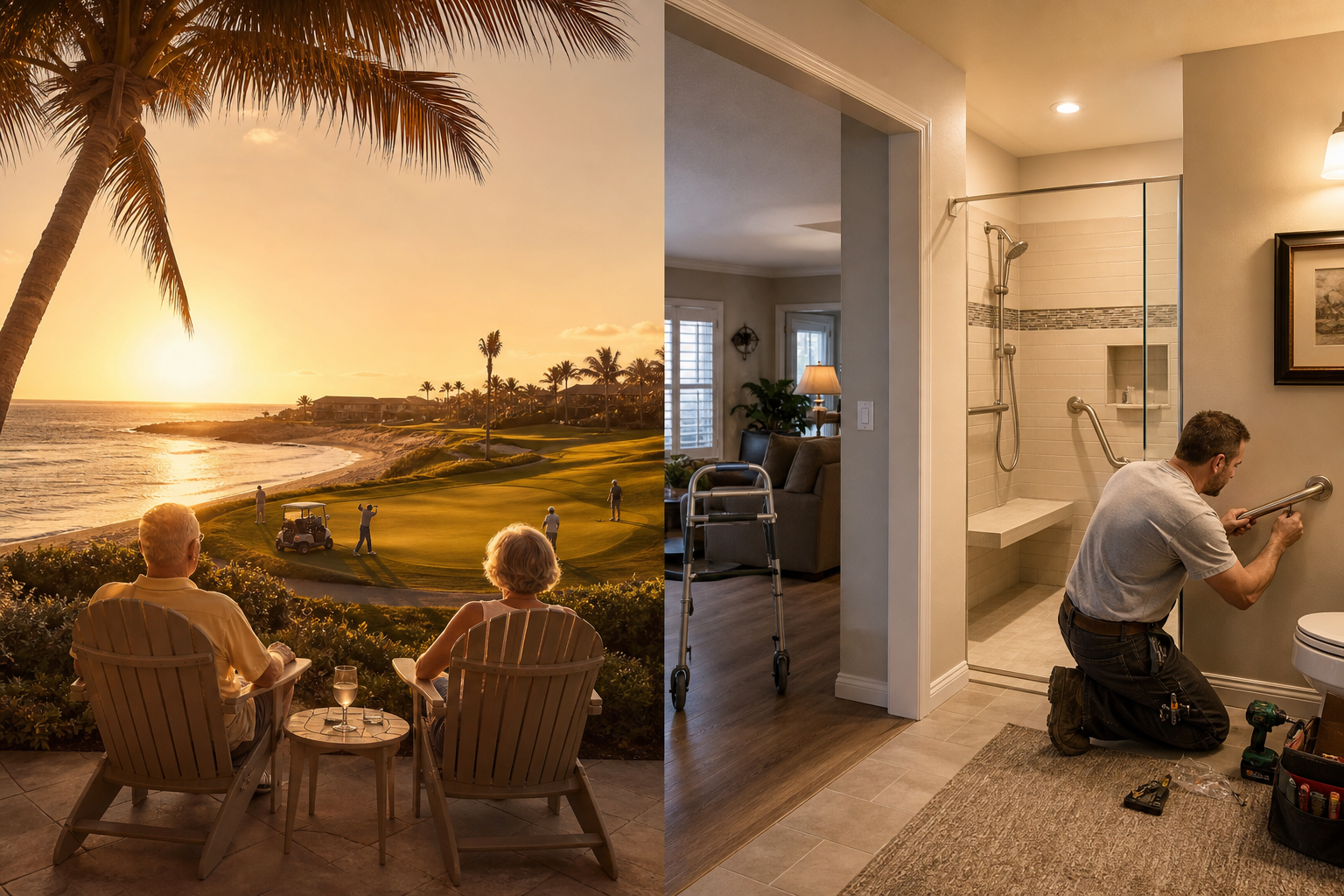
The Best Place to Live for Elderly Adults: Ranking Cities by Home-Modification Readiness and In-Home Care Infrastructure
Most retirement rankings focus on climate and taxes, but miss the housing stock, CAPS-certified contractor density, and home care ecosystem that truly enable aging in place. This guide evaluates U.S. cities through the lens of home-modification readiness and in-home care support, helping adult children decide where their parents can safely stay home.
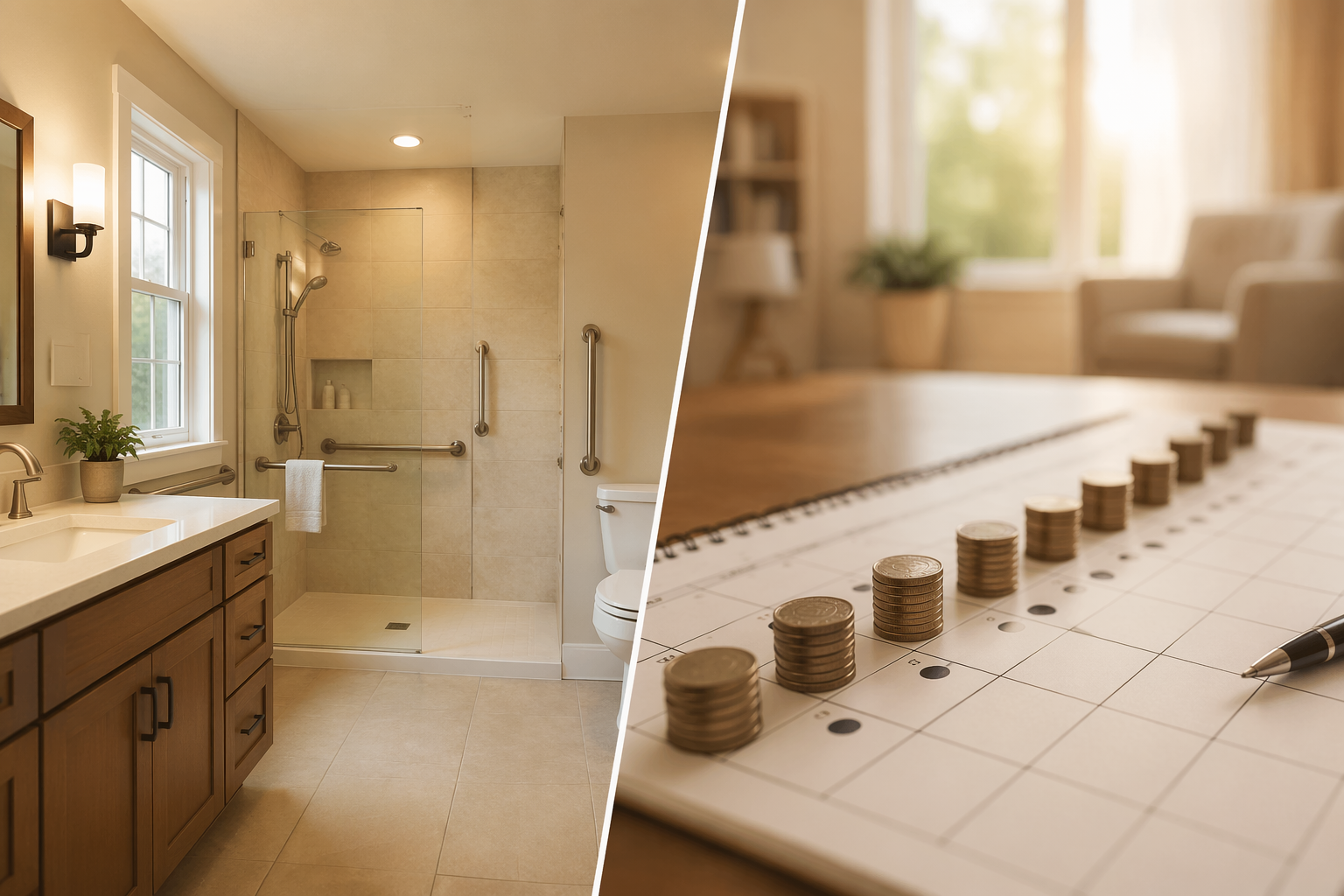
CAPS Home Modifications vs. Assisted Living: The $64,000 Annual Cost Comparison
For financially-conscious family caregivers and older adults, this article compares the one-time cost of a CAPS-guided home modification to the recurring annual expense of assisted living, demonstrating how a specialist's assessment prevents wasted spend and why the upfront investment is a fraction of the alternative.
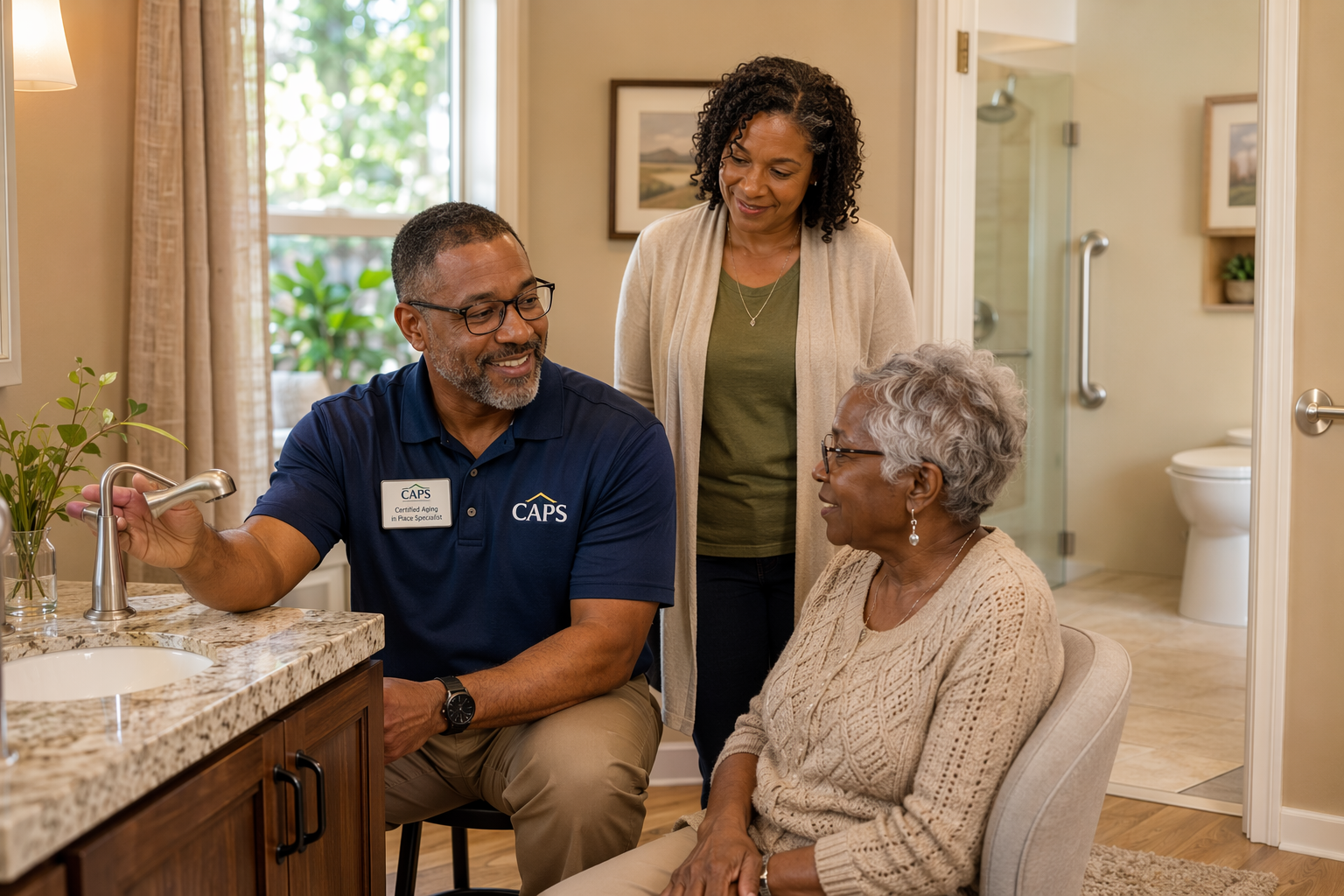
CAPS Specialist vs. General Contractor vs. Occupational Therapist: Who Should You Hire for Home Modifications?
Many families don't know which professional to call first after a parent's decline. This guide compares CAPS specialists, general contractors, and occupational therapists so you can choose the right expert for your situation.
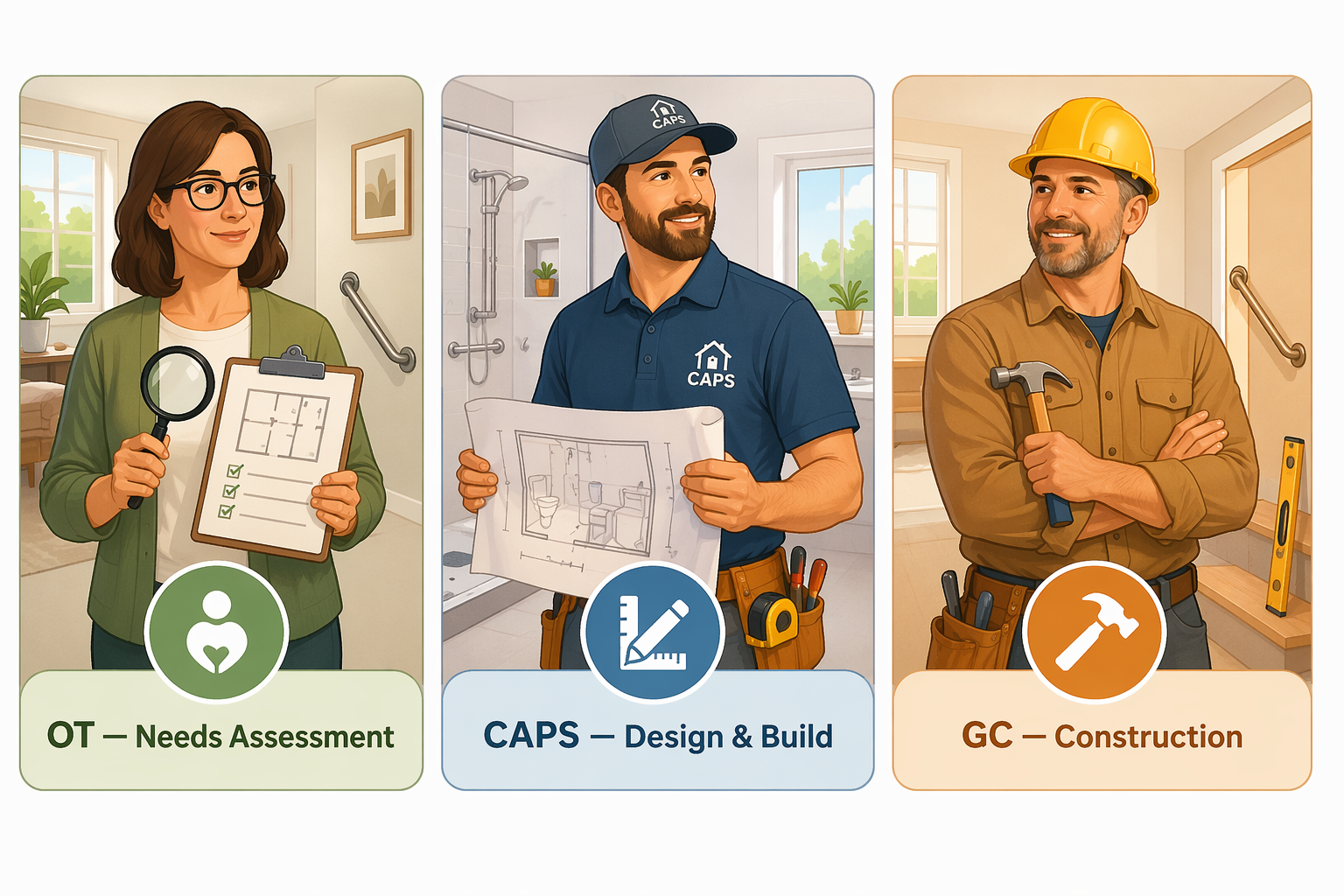
CAPS vs. OT vs. General Contractor: Who to Hire First for Aging-in-Place Home Modifications
Family caregivers often struggle to decide whether to call an occupational therapist, a CAPS-certified contractor, or a general contractor for home modifications. This article provides a clear, staged workflow — starting with a Medicare-covered OT assessment — to help you save time, money, and frustration.
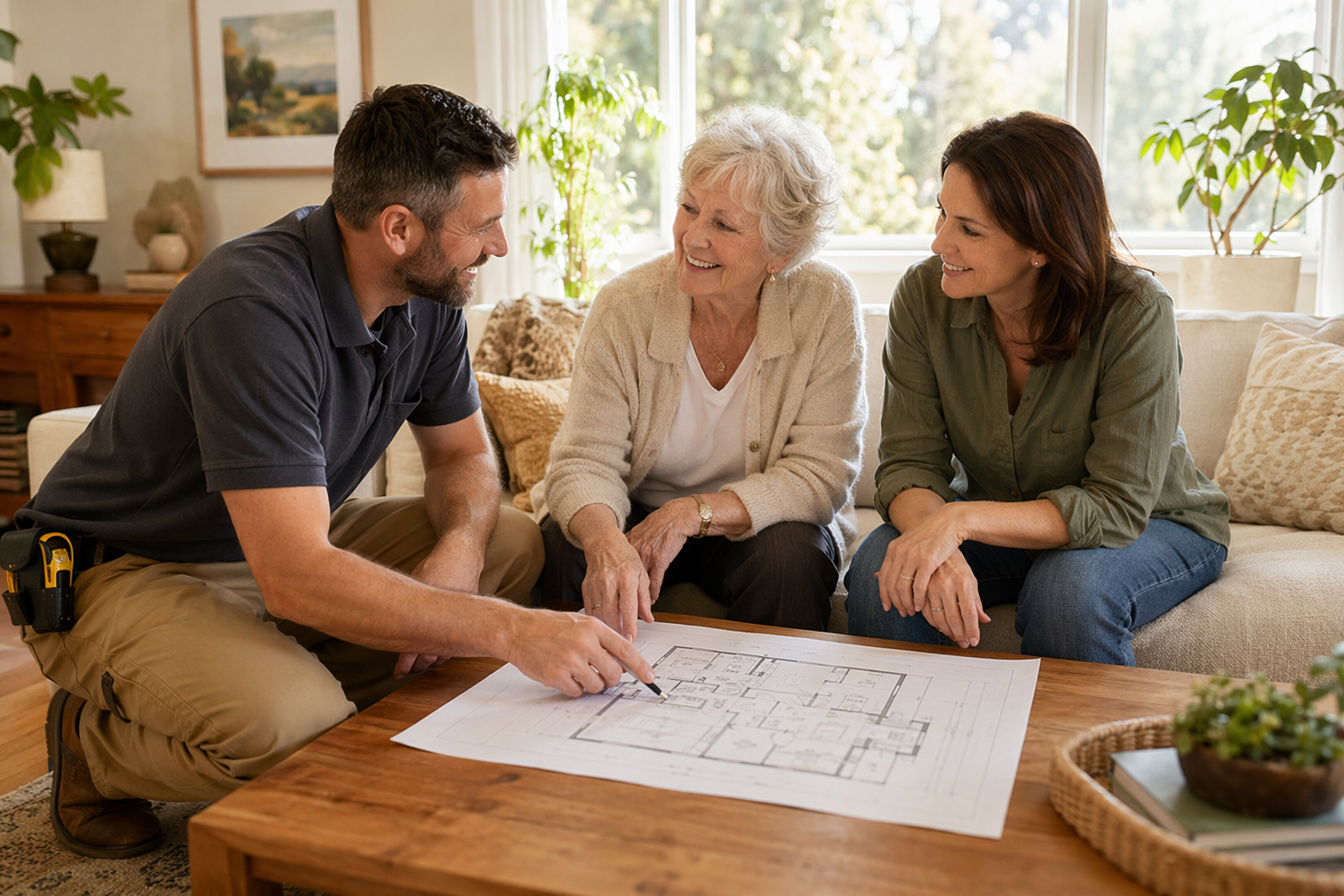
How Much Does a Certified Aging-in-Place Specialist Cost? Full Breakdown of Fees, Modifications, and Funding Sources
This article breaks down the costs of hiring a CAPS professional — from assessments and hourly consults to project management — and compares them against common home modification expenses and the annual cost of assisted living. It also covers funding sources like Medicaid waivers and VA grants that can offset the upfront investment.
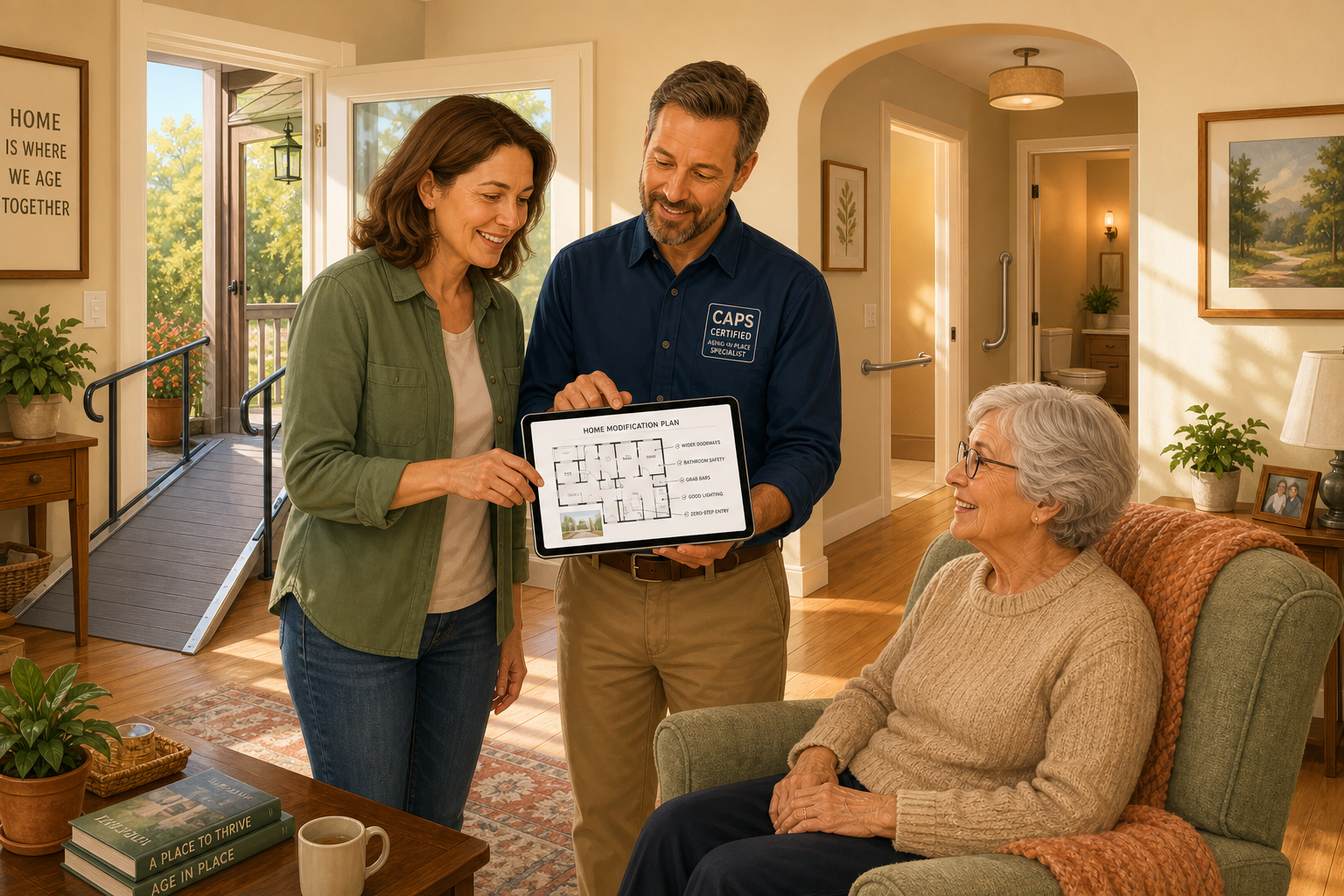
How to Hire a CAPS-Certified Aging-in-Place Specialist: A Complete Guide for Family Caregivers
A step-by-step guide for adult children navigating home modifications after a parent's fall or mobility decline. Learn what a CAPS specialist does, when to hire one, what modifications cost, and how to fund the project — from evaluation to final walkthrough.
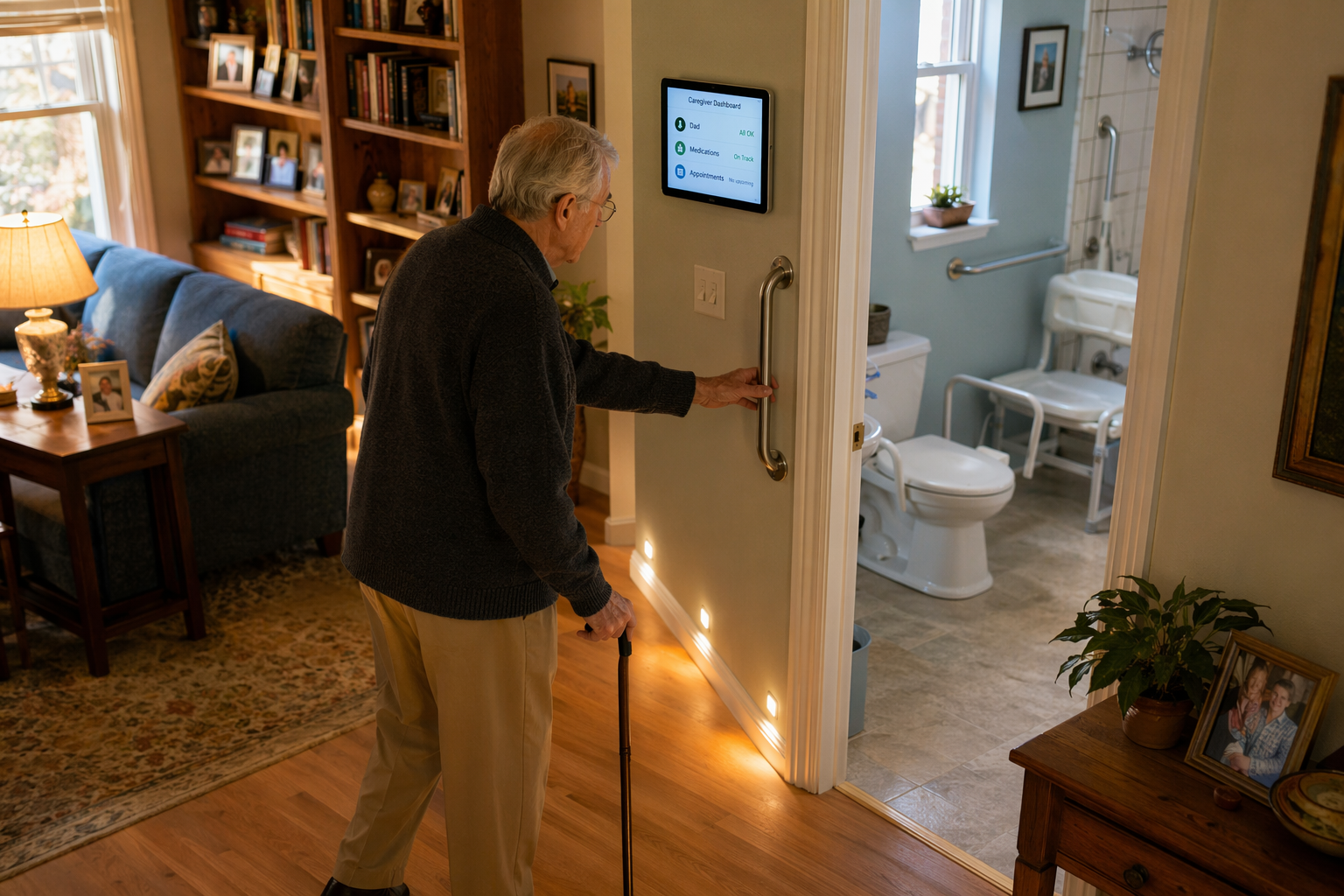
Does Aging in Place Really Work? What the Evidence Says About Home Modifications, Falls Prevention, and Quality of Life
A 2025 systematic review confirms that home modifications are effective for fall reduction, functional independence, and quality of life — but only when personalized and combined with exercise and caregiver support. This article synthesizes the peer-reviewed evidence for families deciding whether a parent can safely remain at home.
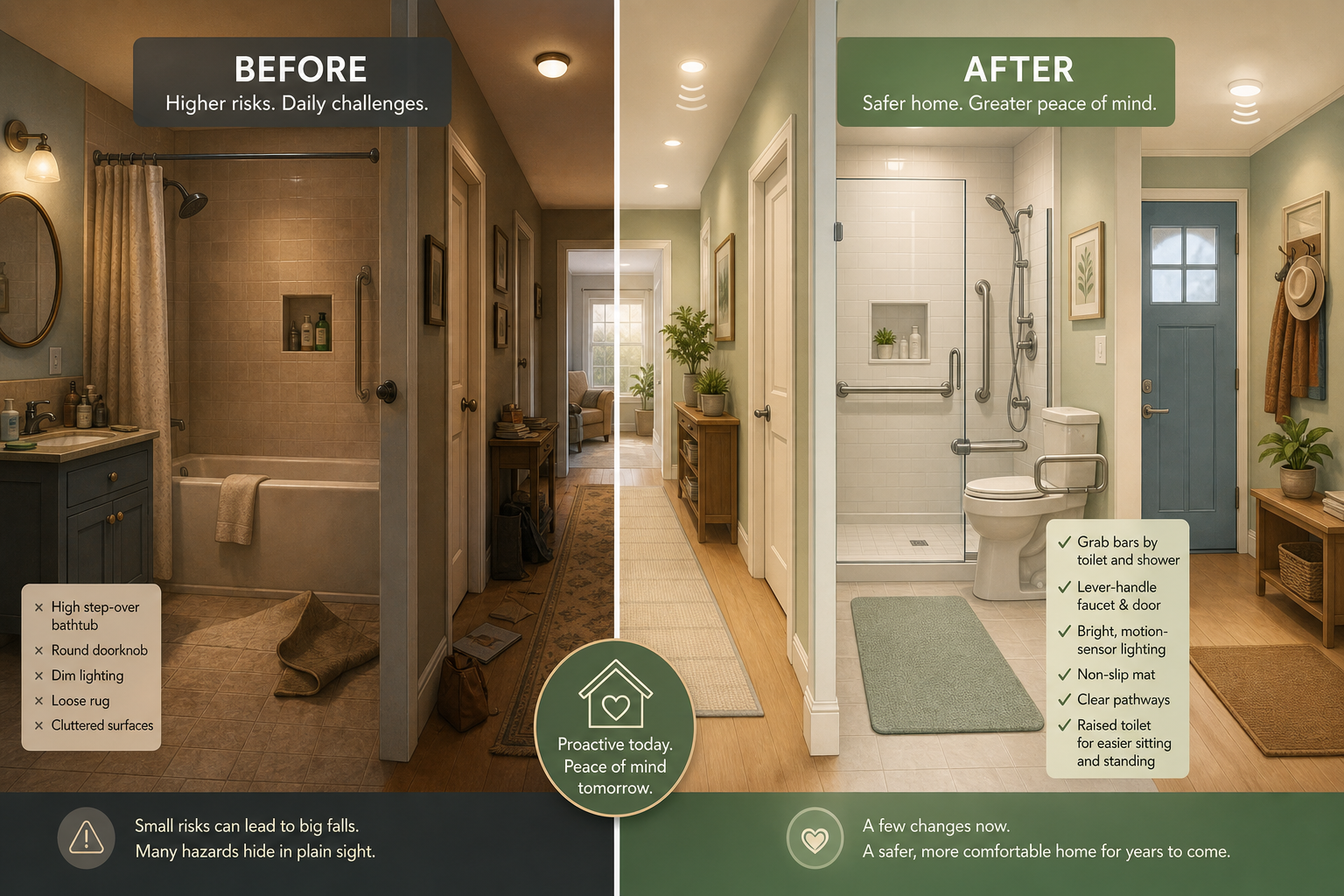
The Evidence-Based Case for Home Modifications: Falls Reduction, Independence, and Cost Savings
This article presents the research-backed case for aging-in-place home modifications as a proven intervention for preventing falls, preserving independence, and reducing long-term care costs. Designed for adult children who need data to justify the investment to reluctant parents, it covers key study findings, cost-effectiveness comparisons, and the often-overlooked caregiver burden reduction.
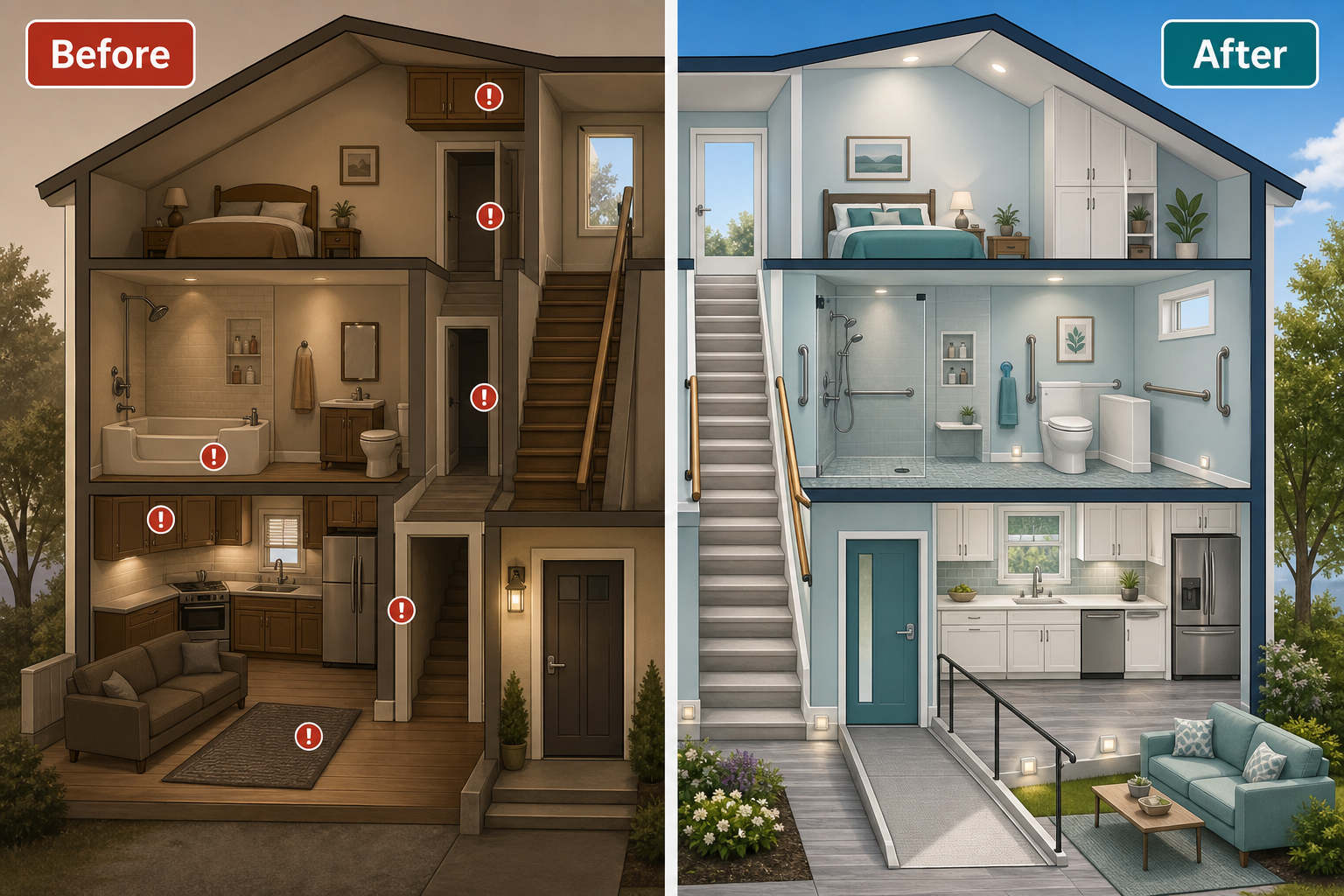
Home Modifications for Aging in Place: What the Evidence Actually Says About Fall Prevention and Independence
Most advice about home modifications is anecdotal. This article grounds recommendations in the strongest available evidence — including a 2025 systematic review — showing that grab bars, non-slip flooring, and stair railings can reduce falls by 39% or more, cut care hours by 42%, and deliver meaningful cost savings.
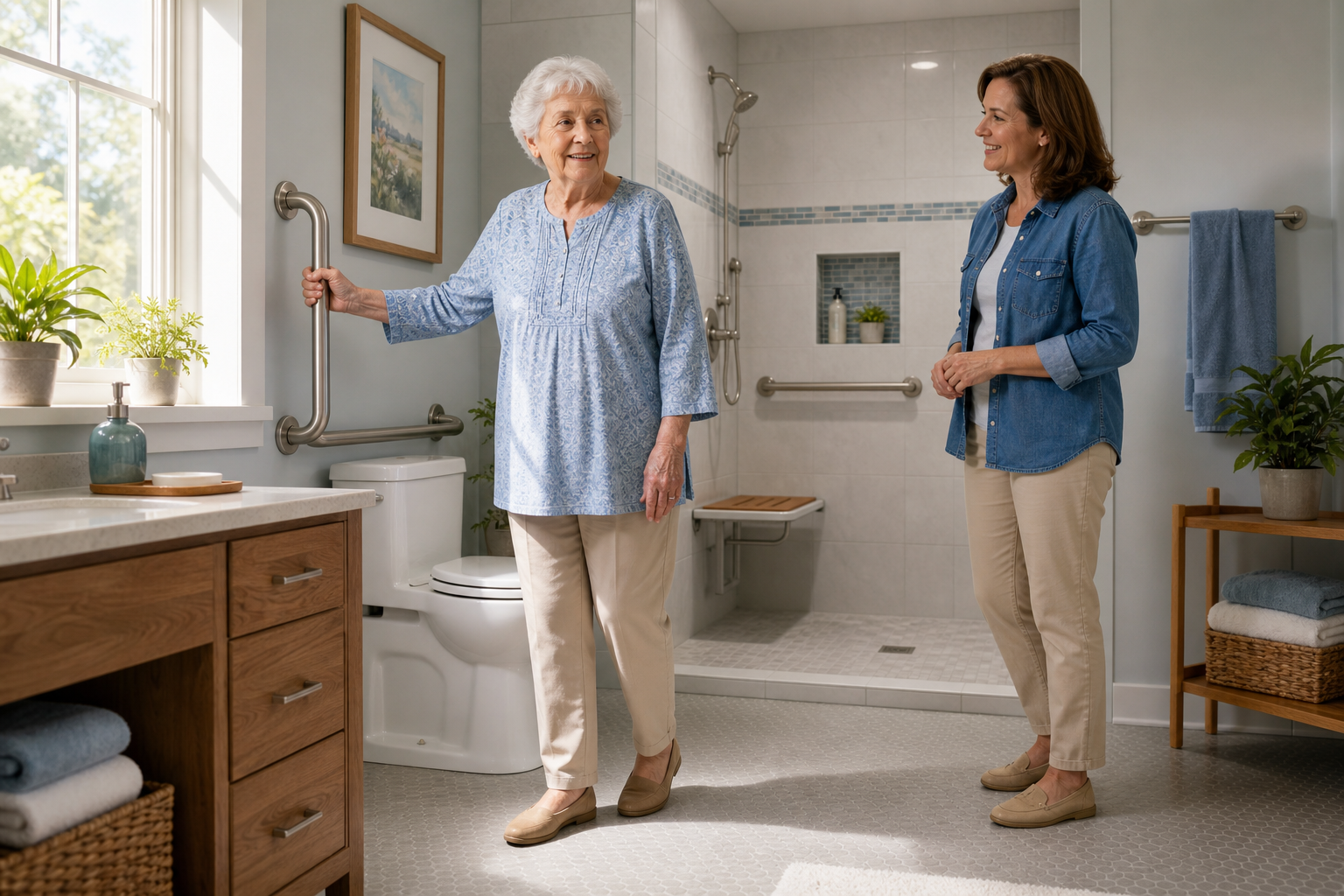
Habitat for Humanity Aging in Place Program: A Complete Guide to Free Home Modifications for Seniors
This guide explains how Habitat for Humanity's Aging in Place program works — who qualifies, what modifications are covered, how to apply, and what to expect from the process. Written for adult children and older adults exploring safe, affordable home modifications.
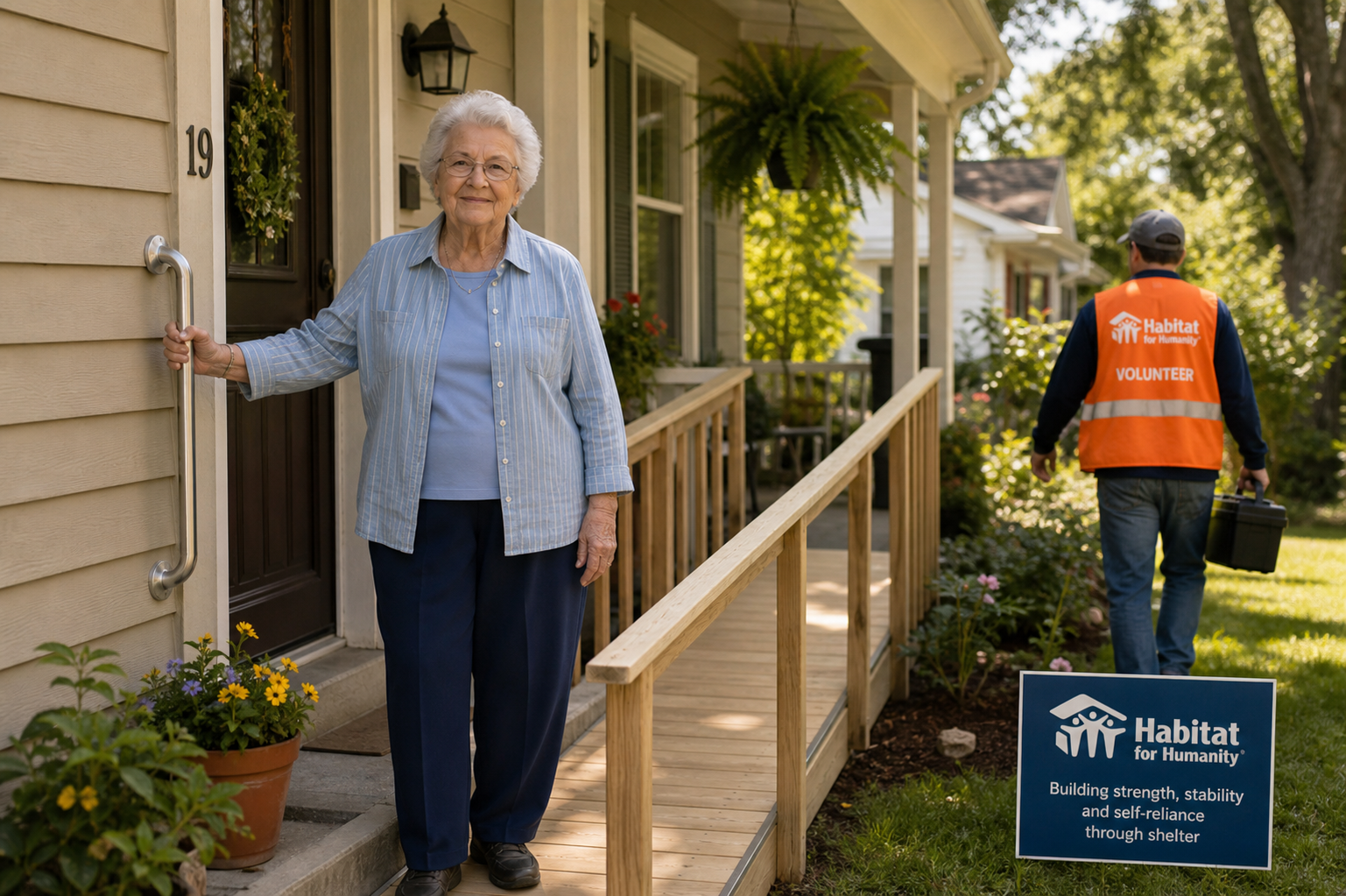
Habitat for Humanity Aging in Place vs. Other Senior Home Repair Programs: A Comparison for Family Caregivers
Compare Habitat for Humanity's Aging in Place program with HUD OAHMP, USDA Section 504, and state programs like RESTORE, SHARP, and Senior LinkAge to find the best fit for your parent's home modification needs.
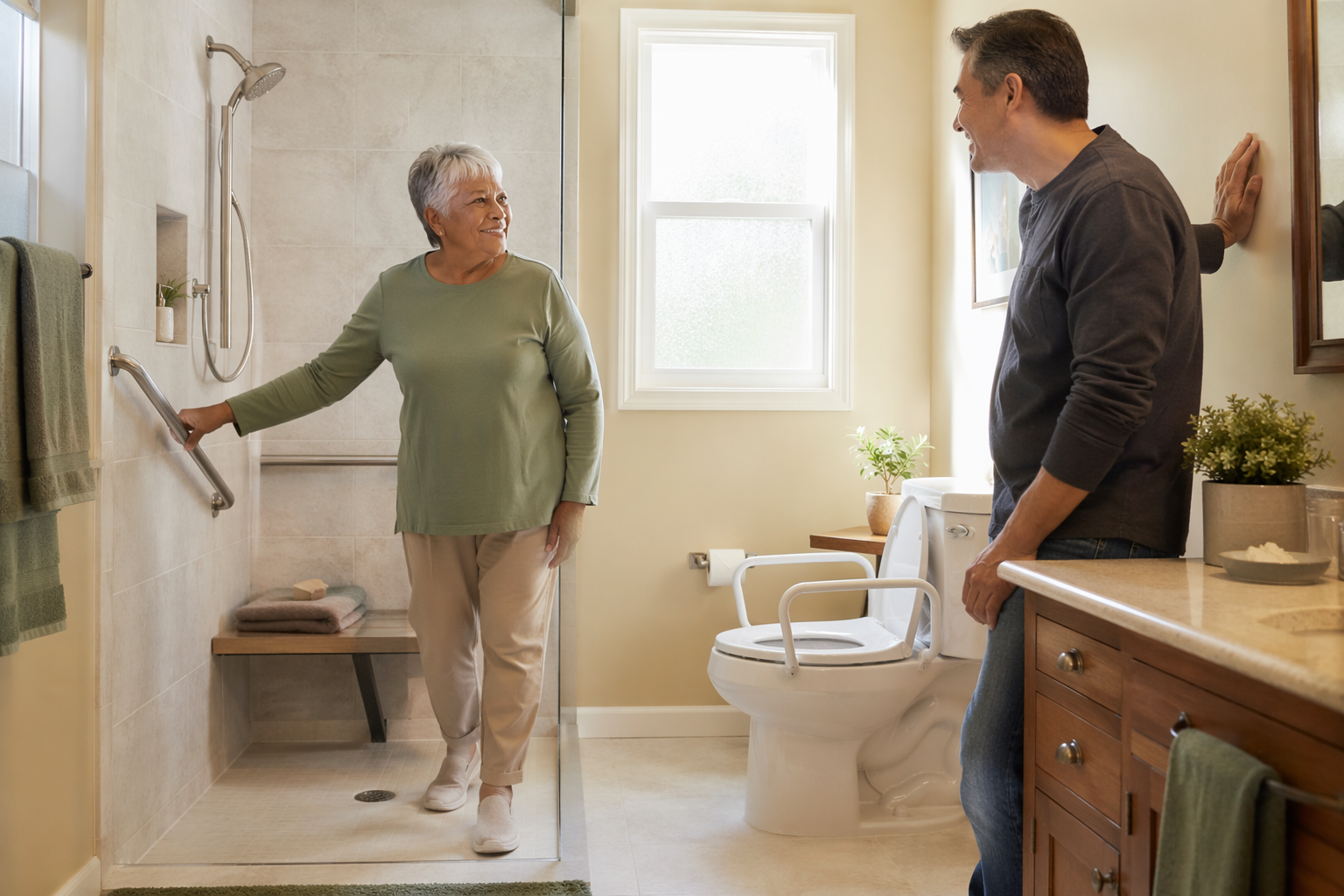
Habitat for Humanity Aging in Place vs. Other Senior Home Repair Programs: Which Option Is Right for Your Family?
A comprehensive comparison guide for adult children helping a parent choose between Habitat for Humanity's Aging in Place program and other options like Rebuilding Together, USDA Section 504, HUD loans, Medicaid waivers, and Weatherization Assistance. Includes a decision framework based on income, location, age, home condition, and urgency.