
Plan ahead
Home Modifications
Product-neutral, room-by-room aging-in-place guidance (entryway, bathroom, bedroom, kitchen, stairs/hallways) modeled on the AARP HomeFit checklist structure, with dimensional specifics (grab bar height and clearance, lighting placement, threshold height) drawn from ADA and CAPS standards. Each room page states what to check, what to change, and when a CAPS-credentialed professional is warranted, without naming or ranking contractors or products. Cross-links to relevant Fall Prevention risk factors and Mobility equipment comparisons.
Entryway
This room's checklist is in progress. In the meantime, the matching Fall Prevention risk factor covers general guidance.
Bathroom
This room's checklist is in progress. In the meantime, the matching Fall Prevention risk factor covers general guidance.
Bedroom
This room's checklist is in progress. In the meantime, the matching Fall Prevention risk factor covers general guidance.
Kitchen
This room's checklist is in progress. In the meantime, the matching Fall Prevention risk factor covers general guidance.
Stairs And Hallways
This room's checklist is in progress. In the meantime, the matching Fall Prevention risk factor covers general guidance.
Other
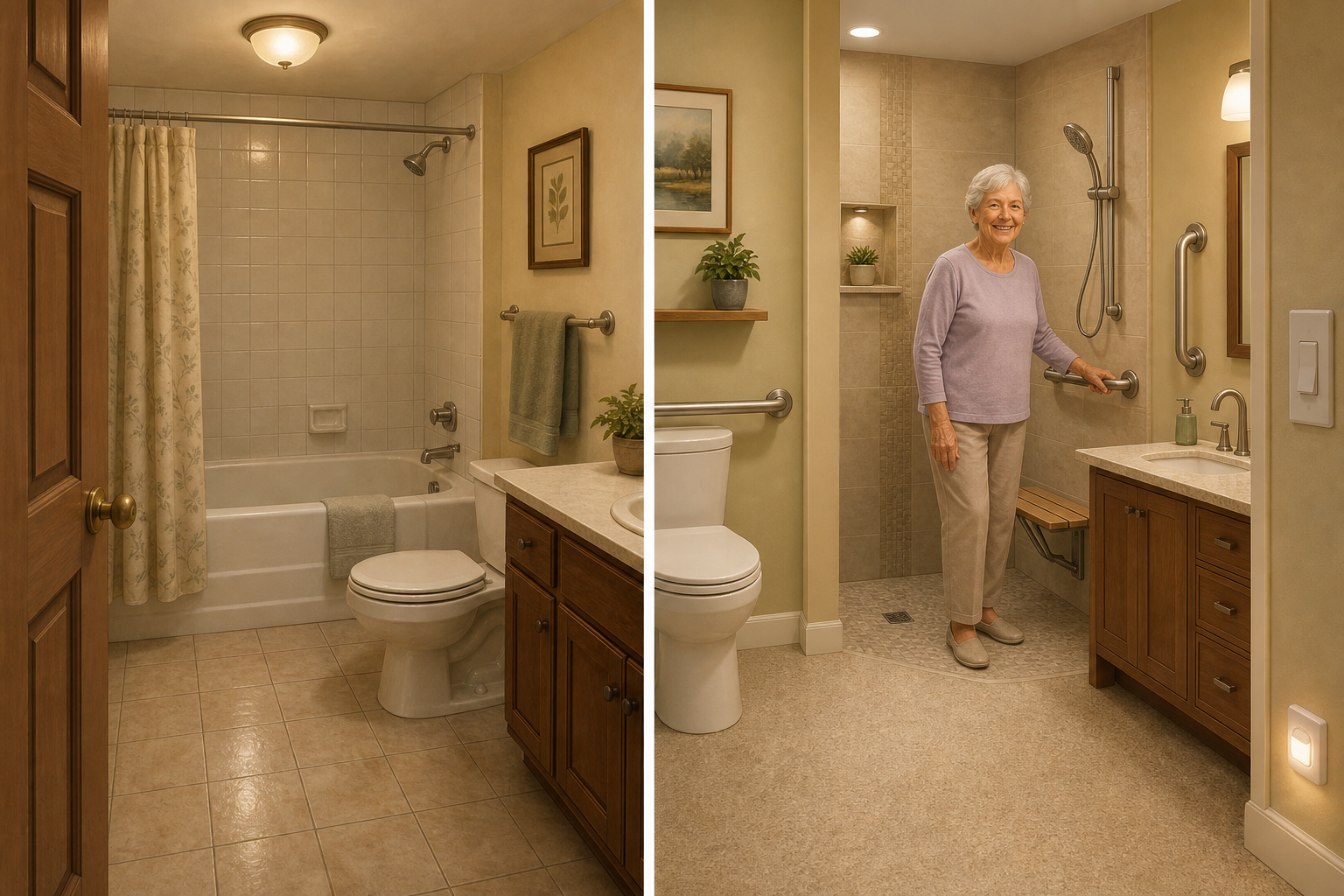
Aging in Place Home Modifications Cost Guide: Room-by-Room Budget Tiers for Families
A practical, evidence-based guide for adult children helping aging parents plan home modifications. Learn how to budget across three cost tiers — from under $50 to over $50,000 — with room-by-room price ranges, a prioritization framework, and financial assistance options.
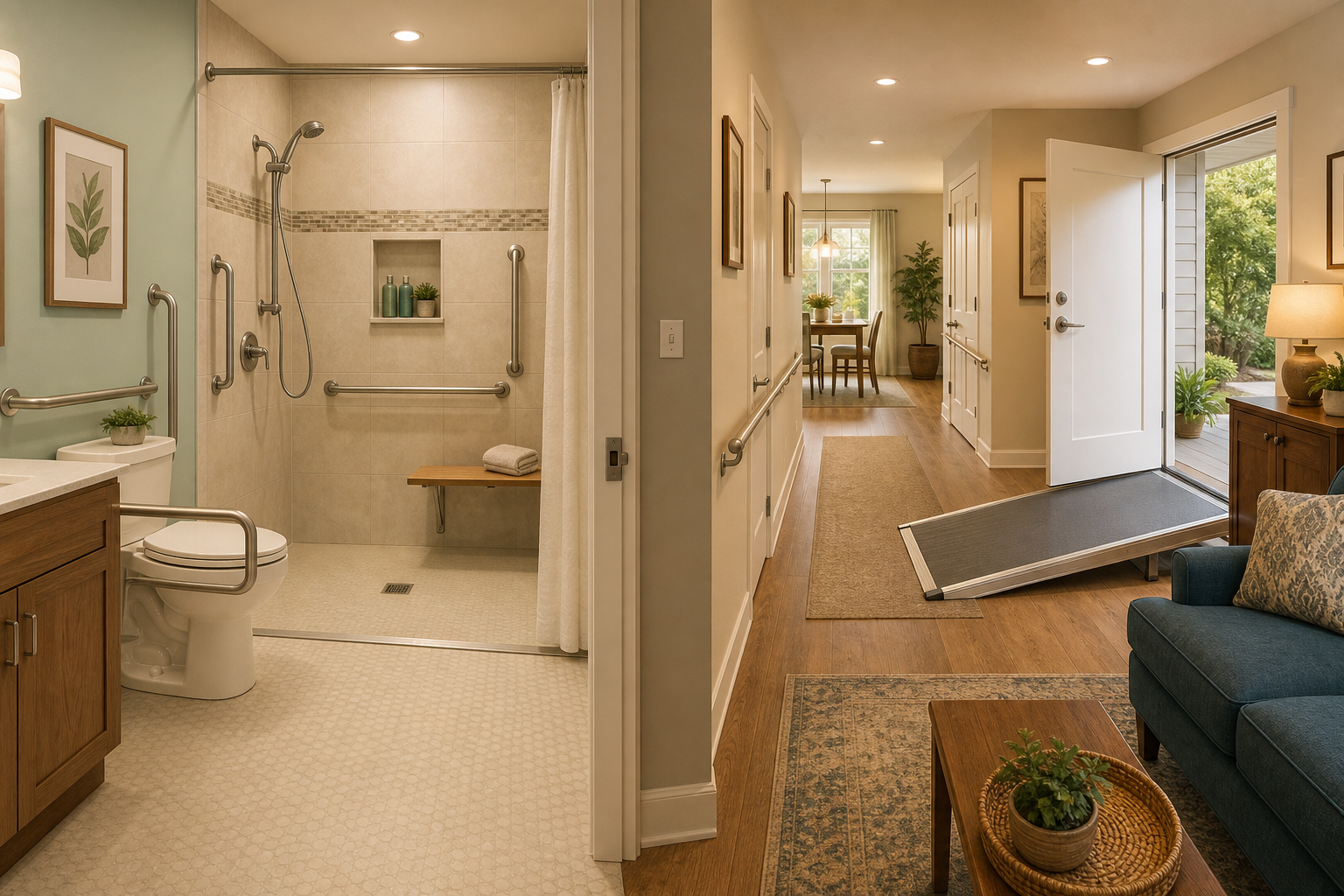
Aging in Place Home Modifications: When to DIY vs. Hire a CAPS Professional
A practical decision guide for adult children helping aging parents modify their home. Learn which simple upgrades you can safely do yourself and which structural changes require a licensed CAPS-certified specialist to avoid costly mistakes and safety hazards.
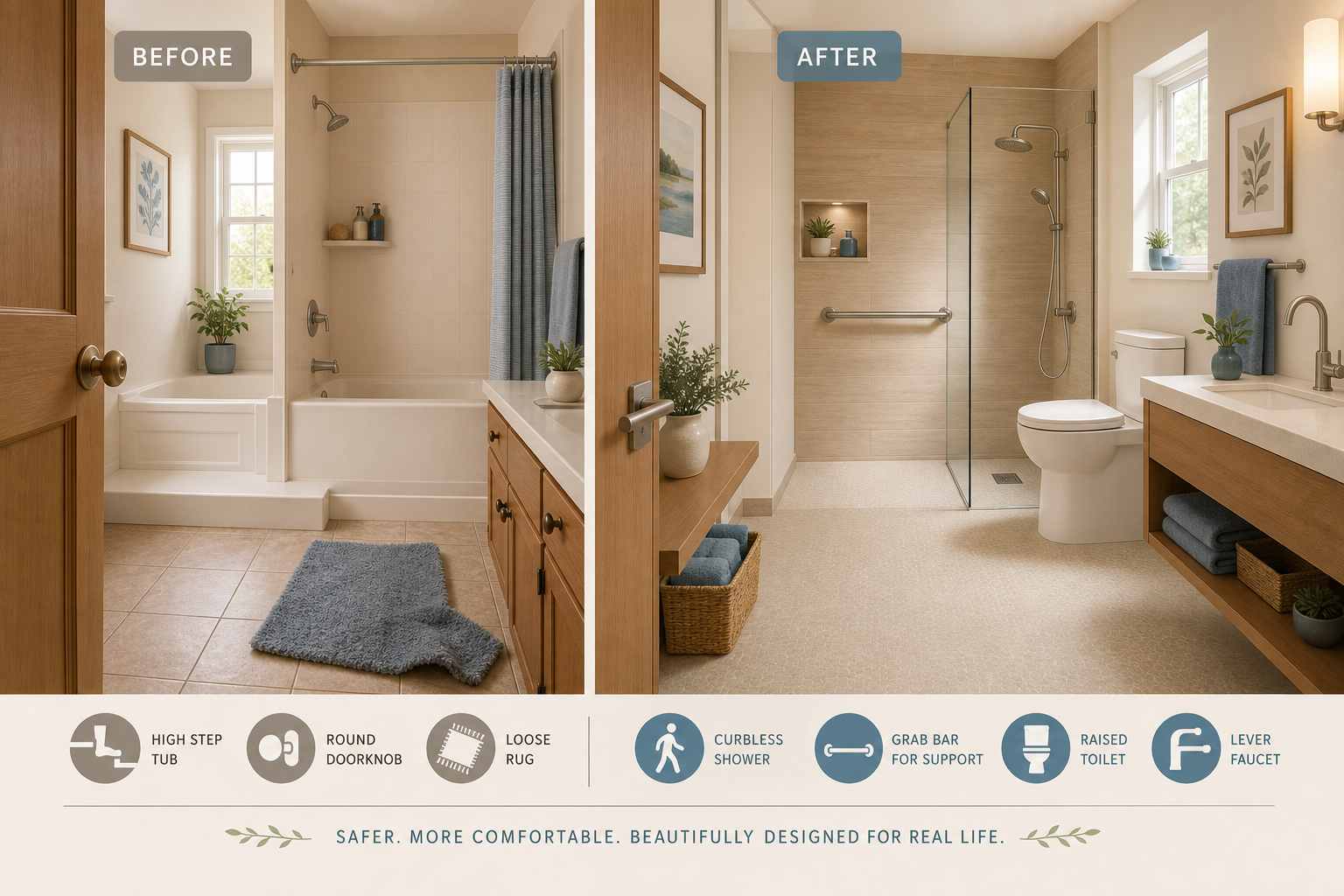
The Evidence for Aging-in-Place Remodels: 39% Fewer Falls, 42% Fewer Care Hours, and How to Make the Case
This article arms adult children and spousal caregivers with hard data from peer-reviewed studies to make the case for aging-in-place home modifications to a reluctant parent or to justify the investment. It translates key research into a practical persuasion framework, including a cost-comparison calculator and a conversation script.
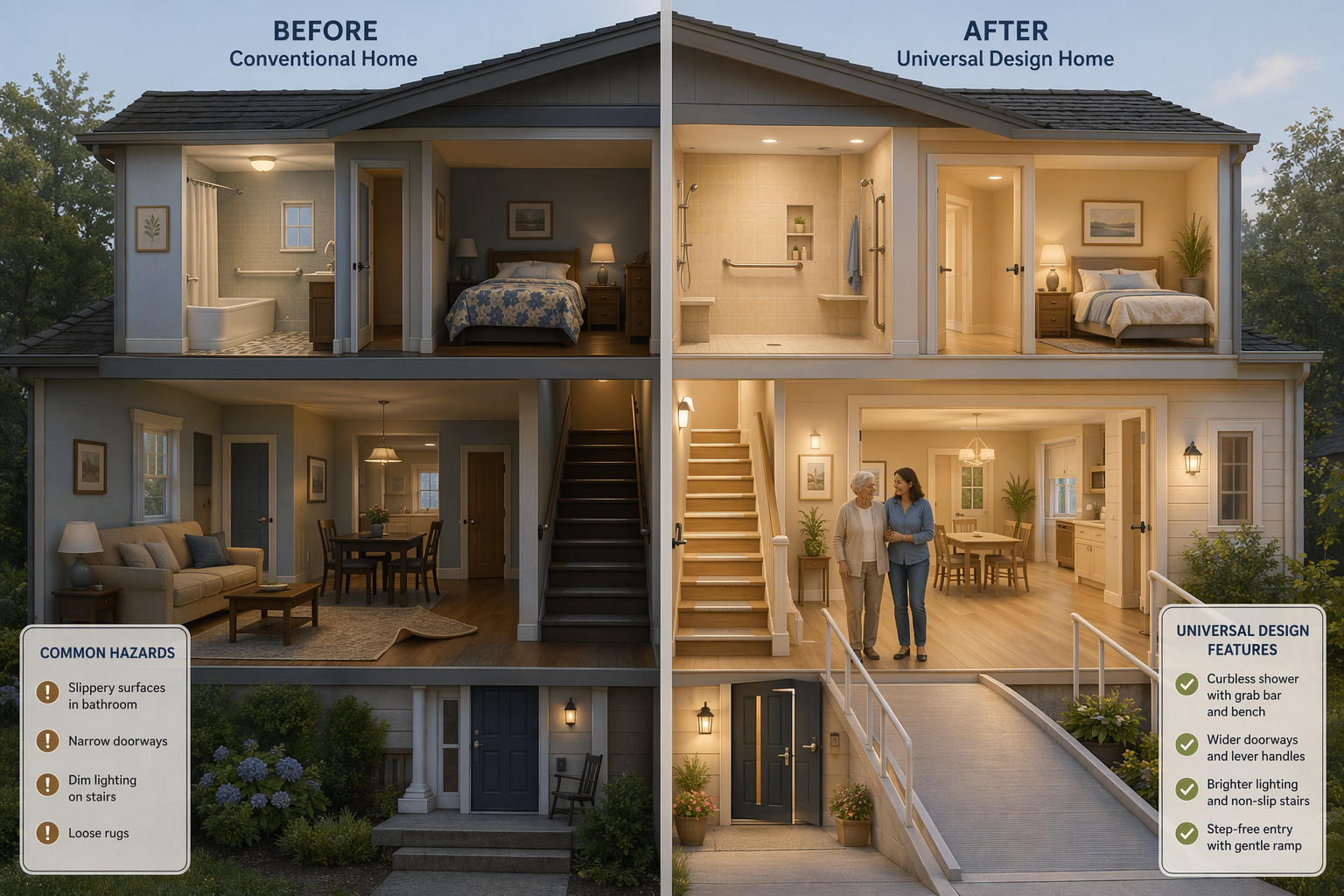
When an Aging-in-Place Remodel Makes Financial Sense vs. Moving: A Caregiver's Decision Framework
A balanced decision framework for adult children weighing whether to invest in modifying a parent's home or move them to assisted living. Includes cost comparisons, hidden caregiver costs, and a decision matrix to help families make an informed, budget-realistic choice.
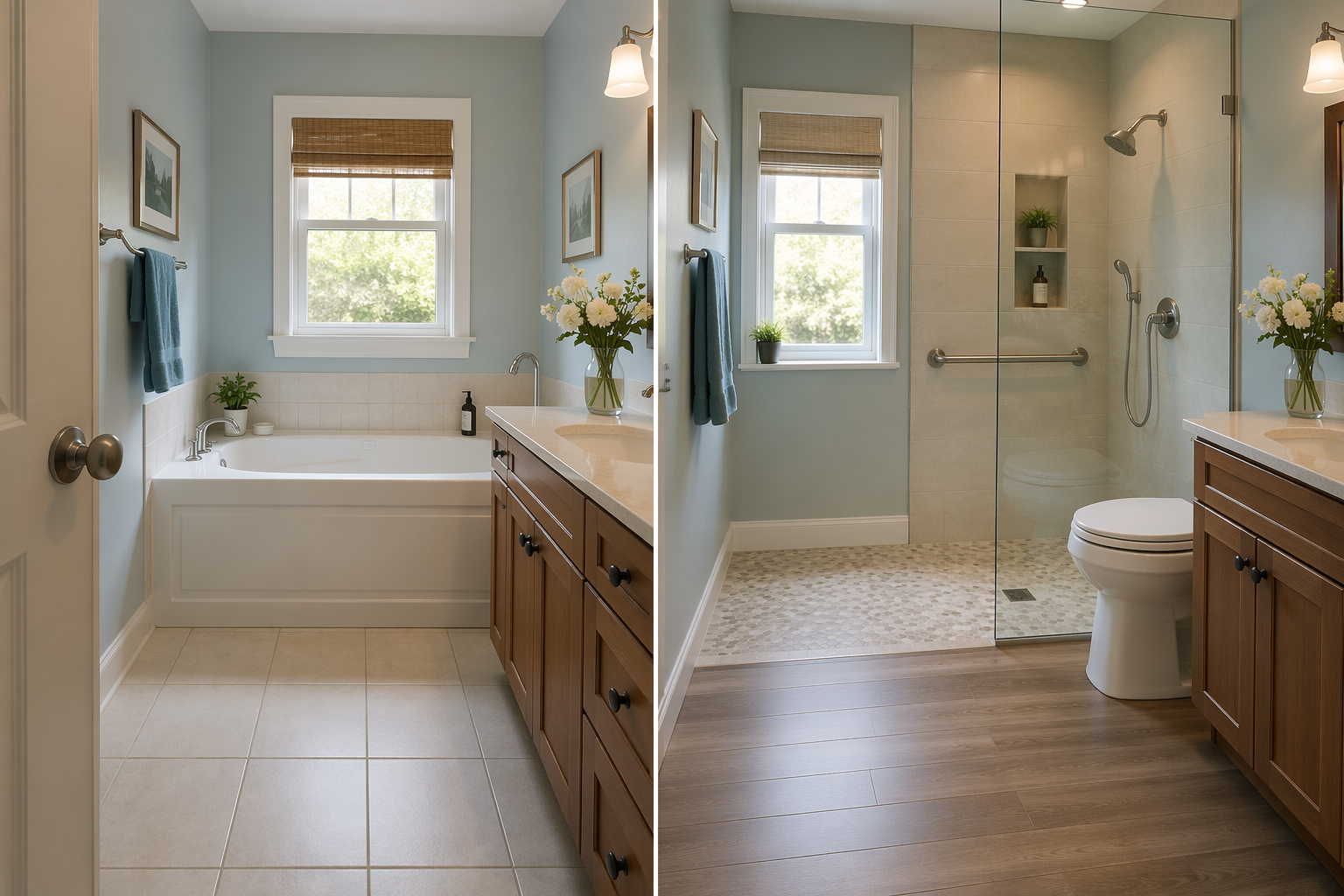
Aging in Place Remodel: What to Prioritize and What to Defer — A Staged Roadmap
Most families can't afford a complete $50,000 retrofit all at once. This guide provides a four-tier, dollar-bounded staging framework that shows you exactly which high-impact, low-cost modifications to tackle first — and which structural projects to defer — so you can address 80% of fall risk for under $2,000 while planning bigger work.
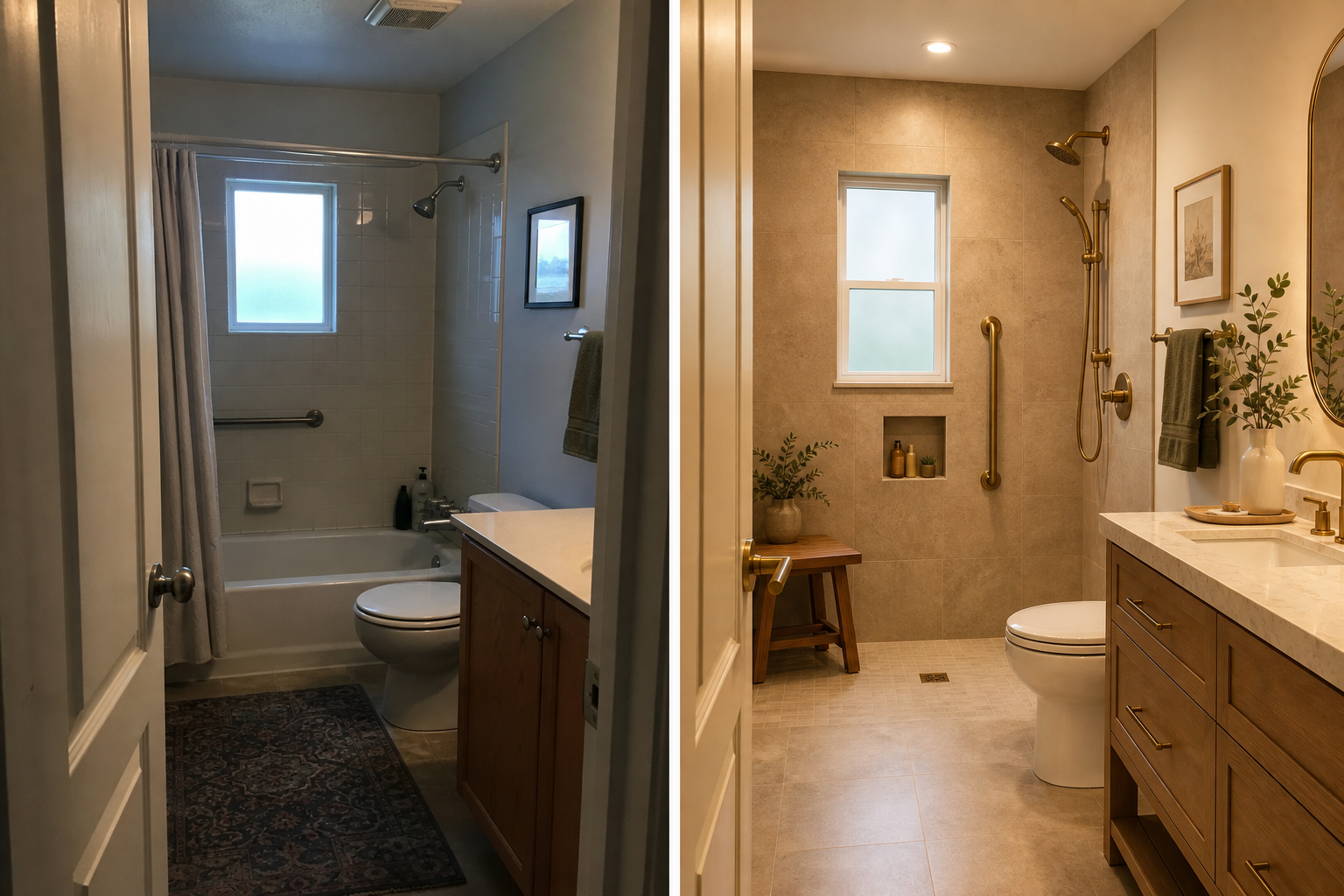
Aging in Place Remodel: What the Evidence Actually Says Works for Fall Prevention and Independence
A 2025 systematic review of 20 studies confirms that home modifications reduce falls by up to 79%, cut caregiving hours by 42%, and improve quality of life — but only when personalized and correctly installed. This evidence synthesis helps family caregivers understand which modifications have the strongest research backing and which are still emerging.
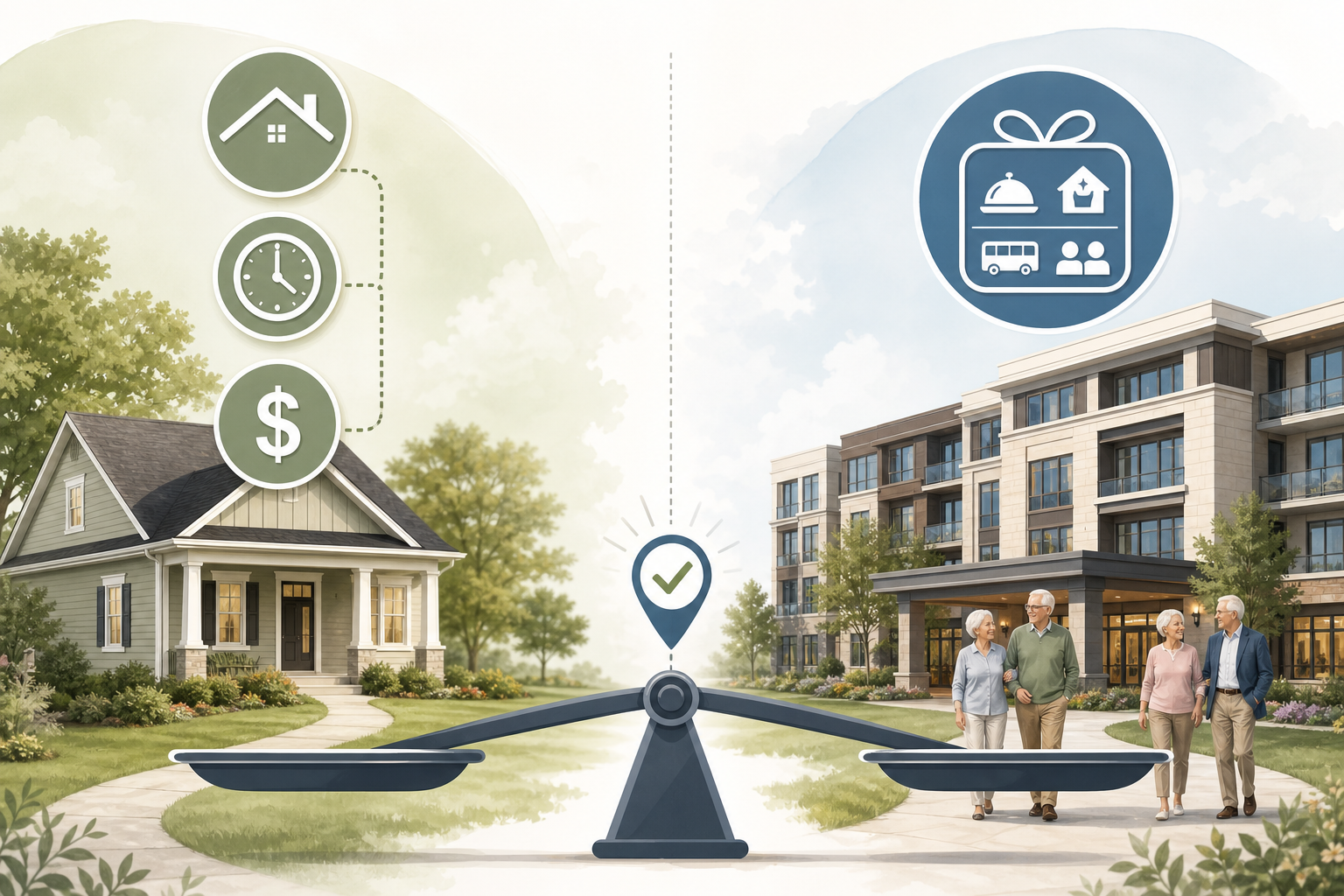
When Staying Home Costs More: The Breakeven Point for Aging in Place vs. Assisted Living
Many families assume aging in place is the cheaper option, but there is a specific calculable point — typically when in-home care reaches 20-40 hours per week — where the total monthly cost of staying home exceeds assisted living. This guide provides the breakeven framework, real cost data, and a decision matrix to help adult children make a financially informed choice.
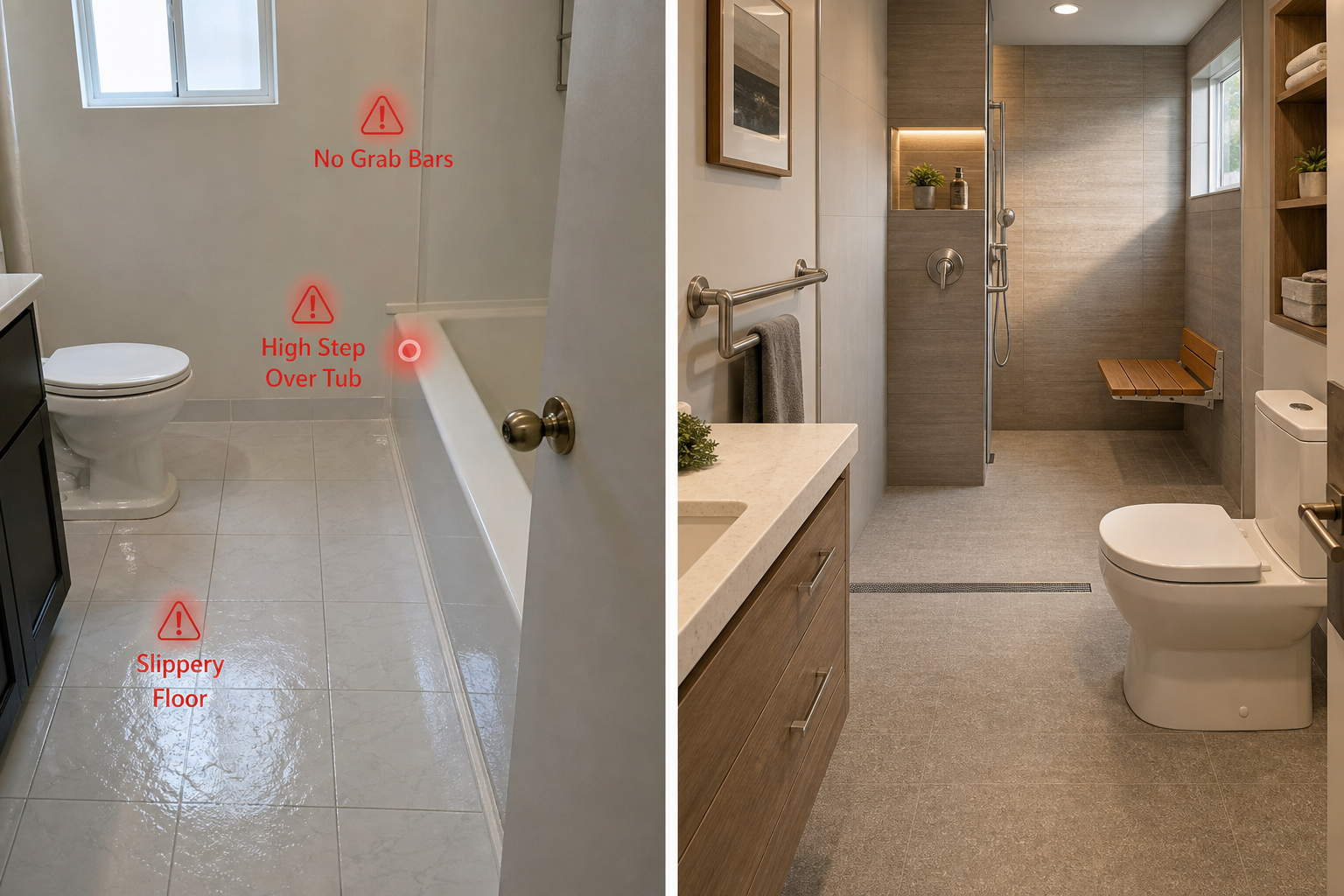
Why 40% of Repeat Fallers Still Have No Bathroom Modifications — and What to Do About It
Nearly 40% of Medicare beneficiaries who have fallen repeatedly still have no bathroom safety modifications. This article examines the research behind the adoption gap, the evidence for effective modifications, and the psychological and practical barriers that keep families from acting after a first fall.
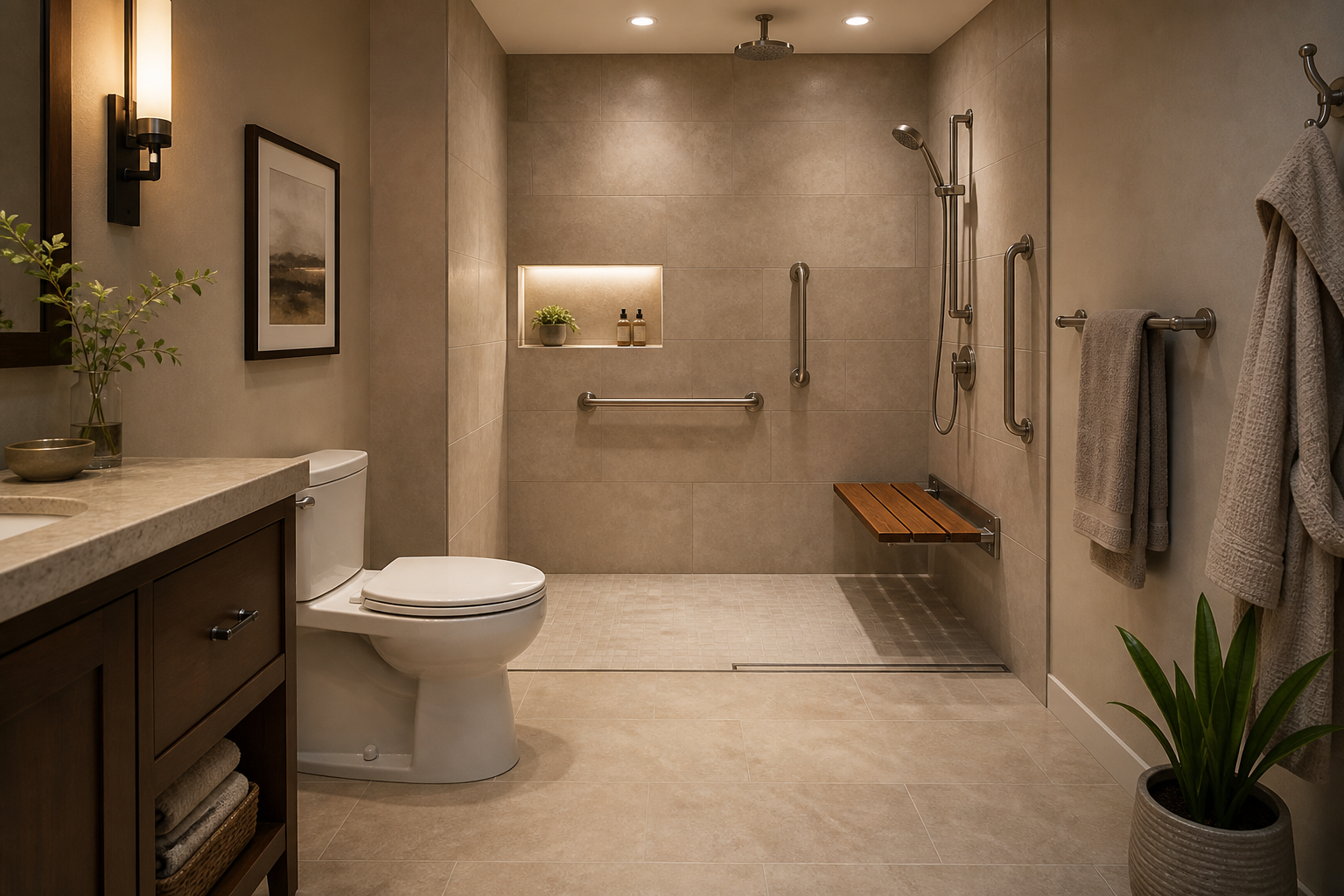
Bathroom Modifications for Aging in Place: What the Research Actually Shows About Fall Reduction and Independence
This article examines the peer-reviewed evidence behind bathroom modifications for older adults, covering fall reduction rates, improvements in functional independence, caregiver burden, quality of life, and disparities in access — helping evidence-oriented caregivers make informed decisions.
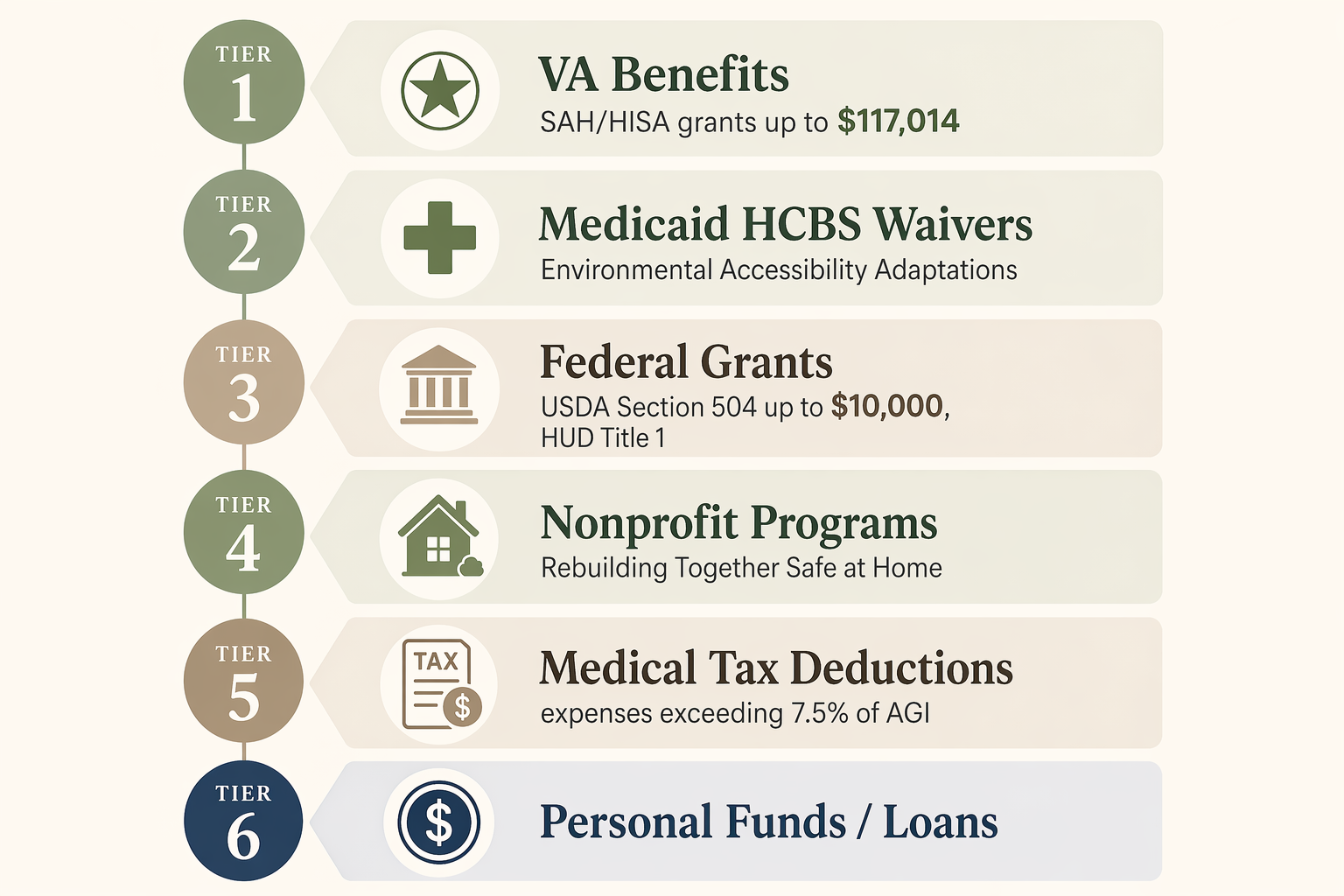
How to Fund a Senior Bathroom Remodel: A Step-by-Step Hierarchy of Grants, VA Benefits, and Tax Breaks
Many families assume Medicare pays for bathroom modifications, but it generally does not. This guide provides a clear, prioritized path through VA grants, Medicaid waivers, federal programs, nonprofit assistance, and tax deductions to help you fund a safer bathroom.
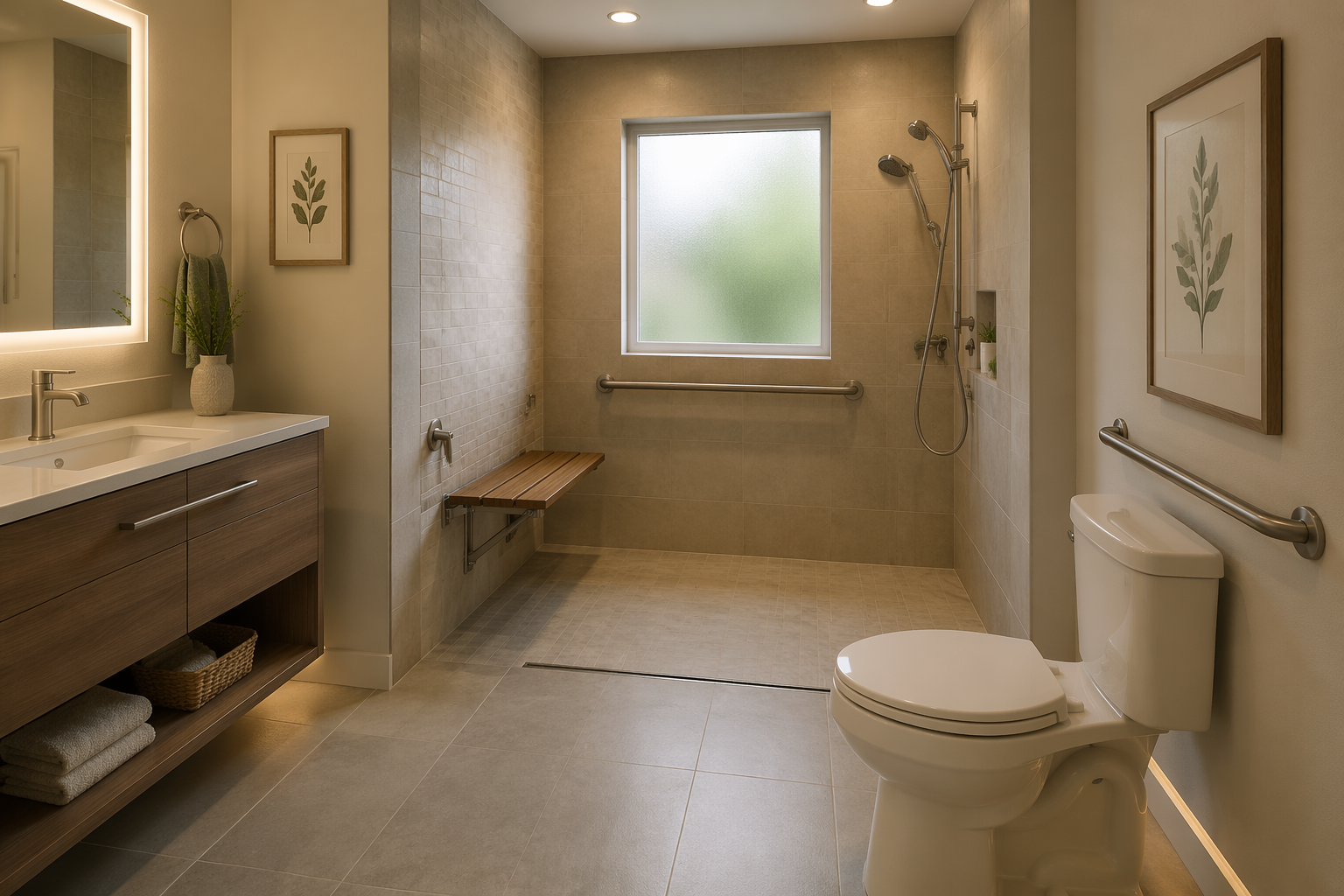
Bathroom Remodel for Elderly: The Complete Room-by-Room Modification Guide with Costs, Priorities, and Mistakes to Avoid
A comprehensive, evidence-based guide for family caregivers and older adults planning a bathroom renovation for aging in place. Covers every modification, its cost, priority level, and installation considerations — with a focus on technical specifications and universal design that avoids an institutional look.
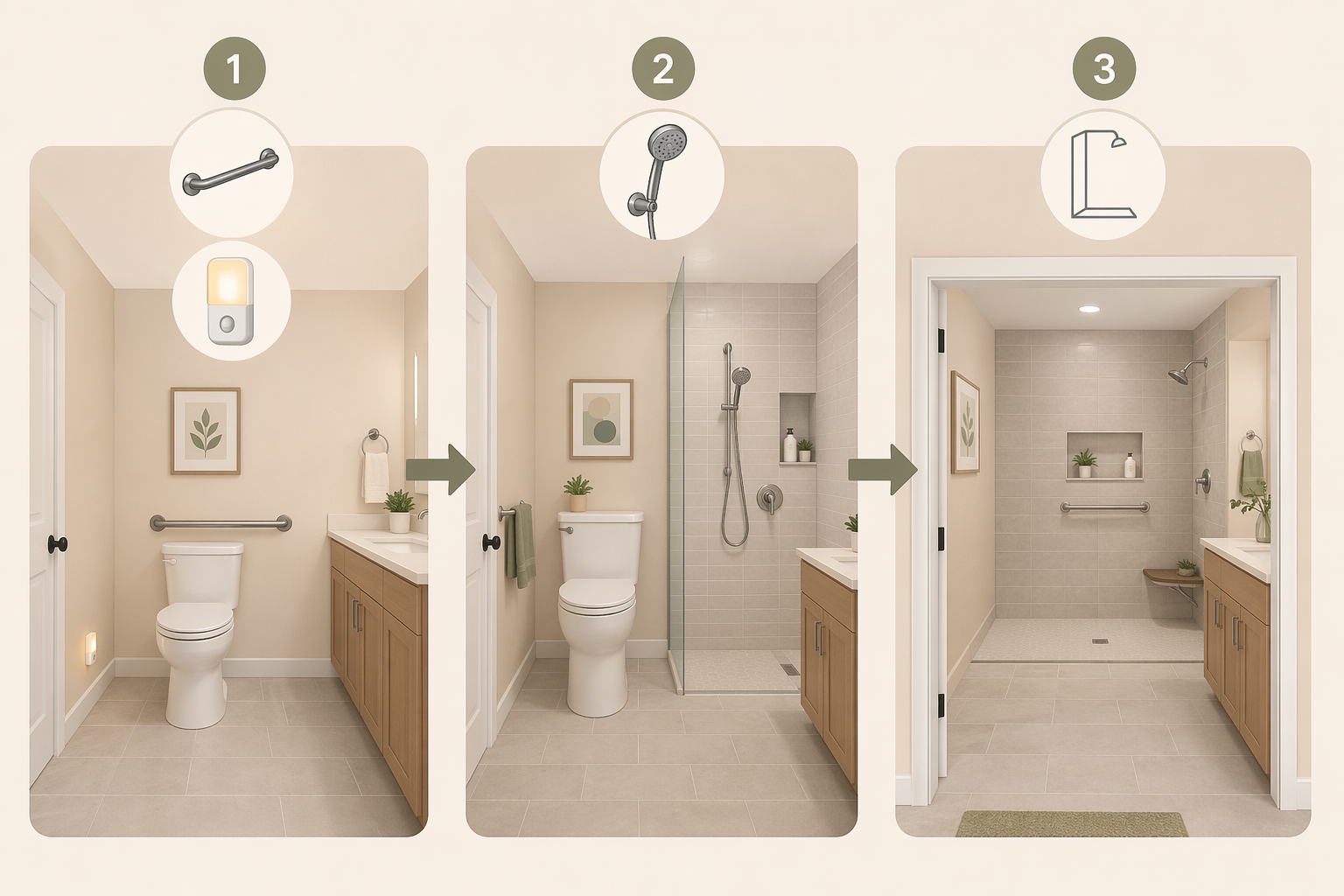
Bathroom Remodel for Elderly Parents: A Phased Decision Framework for Adult Children
A practical, staged approach to remodeling a parent's bathroom — starting with immediate fall-hazard fixes under $500, then mid-range upgrades, and deferring structural changes until needed. Built on evidence that 40% of older adults with repeated falls still have no bathroom modifications.