
Clinical term
Aging in Place: Definition, Data, and the Readiness Gap
Aging in place means “the ability to live in one’s own home and community safely, independently, and comfortably, regardless of age, income, or ability level,” a definition used by the National Institute on Aging and rooted in CDC public health language.[1] The important words are not only “own home.” They are “home and community,” because the arrangement depends on more than a familiar bedroom or a paid aide coming through the door.
In practical eldercare planning, aging in place is the broad goal. Home care is one possible service used to support it. Home modifications are physical changes that may make the home safer. Assisted living, memory care, nursing homes, and other facility-based settings are alternatives when the home can no longer meet the person’s needs safely. For a shorter definition, see What Does “Aging in Place” Mean?; this entry looks more closely at the data behind the phrase.
What the Current Data Shows
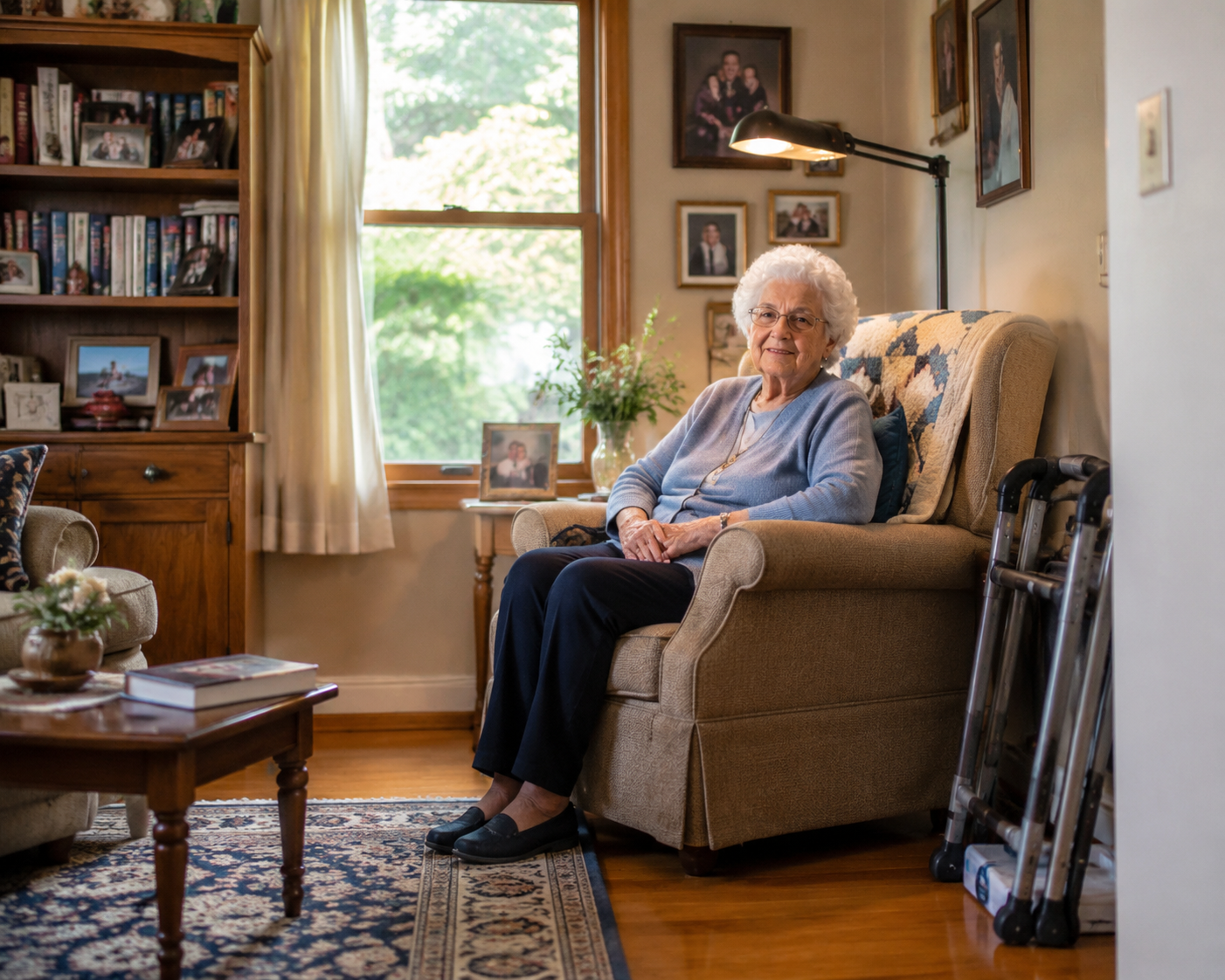
Aging in place is not a fringe preference. In a Pew Research Center survey conducted September 2-8, 2025, among 2,582 U.S. adults age 65 and older, 93% said they live in their own homes.[2] If they could no longer live independently, 60% said they would prefer to stay at home with care rather than move to assisted living.[2]
The same survey shows why families should treat the preference as a planning problem, not a settled outcome. Among older adults who wanted to stay home with care, only 37% said that outcome was extremely or very likely.[2] Only 21% of adults 65 and older reported having long-term care insurance.[2]
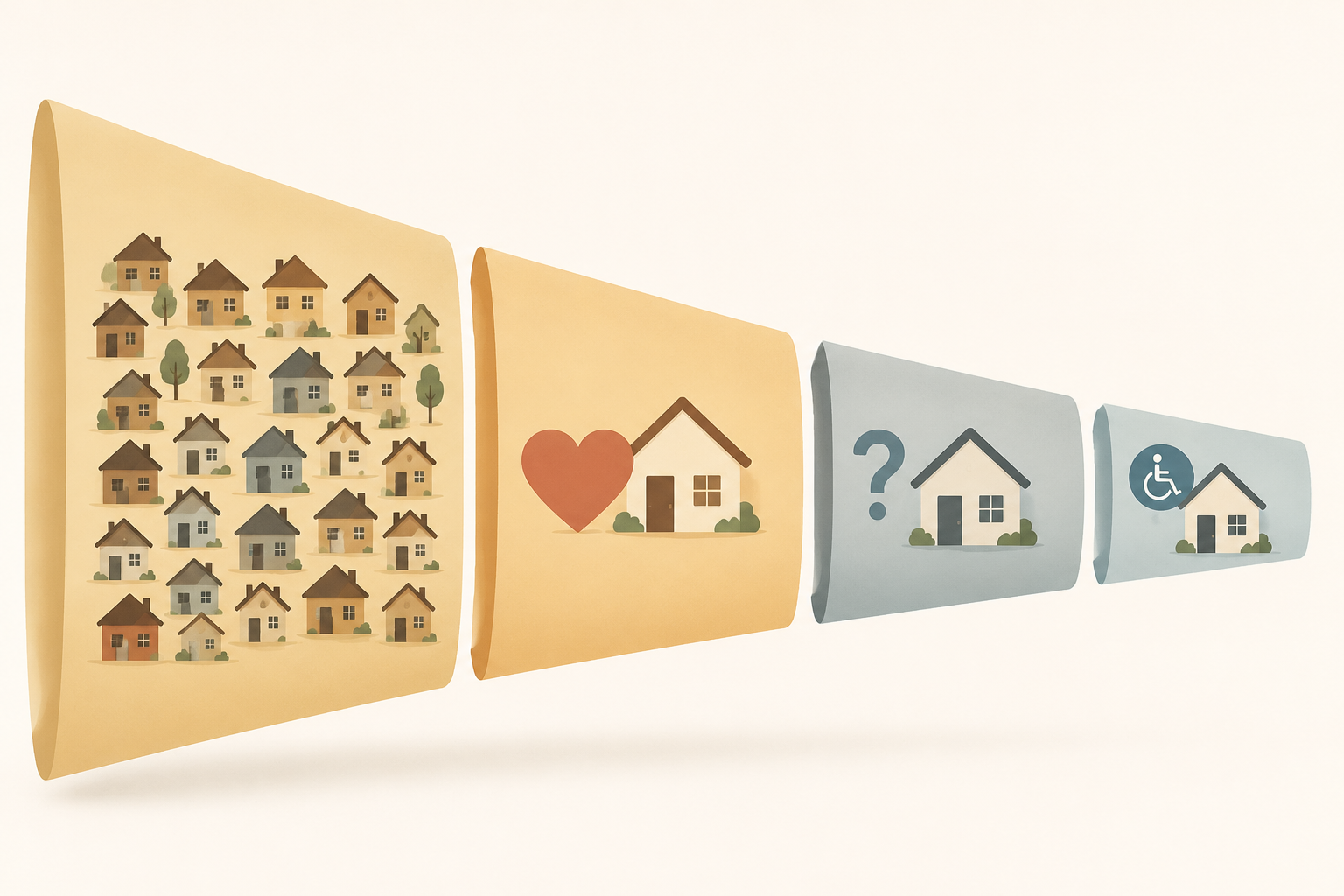
The physical housing gap is even starker. A 2020 U.S. Census Bureau population report found that only about 10% of U.S. homes met three basic accessibility criteria: a step-free entry, a bedroom and full bathroom on the first floor, and at least one bathroom accessibility feature.[3] That is the part of the aging-in-place conversation that often gets skipped. A parent may be clear about wanting to stay home, and the family may agree, while the front steps, upstairs shower, narrow doorway, and low toilet quietly make the plan fragile.
Other national data point in the same direction, though from a broader and older age range. The National Council on Aging cites a University of Michigan National Poll on Healthy Aging finding that 88% of adults ages 50-80 said remaining in their homes as long as possible was important, while 43% were not confident they could afford long-term care or in-home support.[4] The pattern is consistent: the wish to remain at home is widespread, but confidence, housing readiness, and financing lag behind it.
The Four Readiness Questions
A workable aging-in-place plan has to answer four questions before the family starts relying on it: Is the home physically safe? Who will provide help, and when? How will care and modifications be paid for? Does the surrounding community still support daily life?
| Readiness domain | What families are testing |
|---|---|
| Home safety and modifications | Whether the person can enter, bathe, sleep, cook, toilet, and move around without preventable hazards |
| Support systems and caregiving | Whether help is available at the times care is actually needed, including nights, weekends, emergencies, and post-hospital periods |
| Financial resources | Whether the household can pay for paid care, home changes, transportation, supplies, and uncovered services |
| Community access | Whether healthcare, groceries, transportation, social contact, and local services remain reachable |
Home Safety Starts With the Rooms People Actually Use
The first test is not whether the house is beloved. It is whether the person can live in it on a bad day: tired, dizzy, using a walker, recovering from an infection, or rushing to the bathroom at night. A room-by-room review usually starts with entries, stairs, bathrooms, bedrooms, kitchens, hallways, lighting, flooring, and places where the person transfers from sitting to standing.
Falls are the safety risk families tend to underestimate until after the first serious one. The National Council on Aging reports that 1 in 4 Americans age 65 and older falls each year, and that falls are the leading cause of fatal and nonfatal injuries among older adults.[5] NCOA also cites 2020 data published in 2024 estimating $80 billion in annual healthcare costs from nonfatal falls.[5] Those figures do not mean every fall is preventable, but they do make clear why loose rugs, poor lighting, slick tubs, cluttered pathways, and missing handholds deserve attention before a crisis.
Minor changes can matter: brighter task lighting, night lights, removed trip hazards, handrails on both sides of stairs, lever-style handles, reachable storage, and grab bars installed into proper backing. Larger changes may include a ramp or step-free entry, widened doorways, a first-floor bedroom setup, stair lift, walk-in tub, or curbless shower. The right choice depends on the person’s balance, strength, cognition, bathroom layout, caregiver help, and budget.
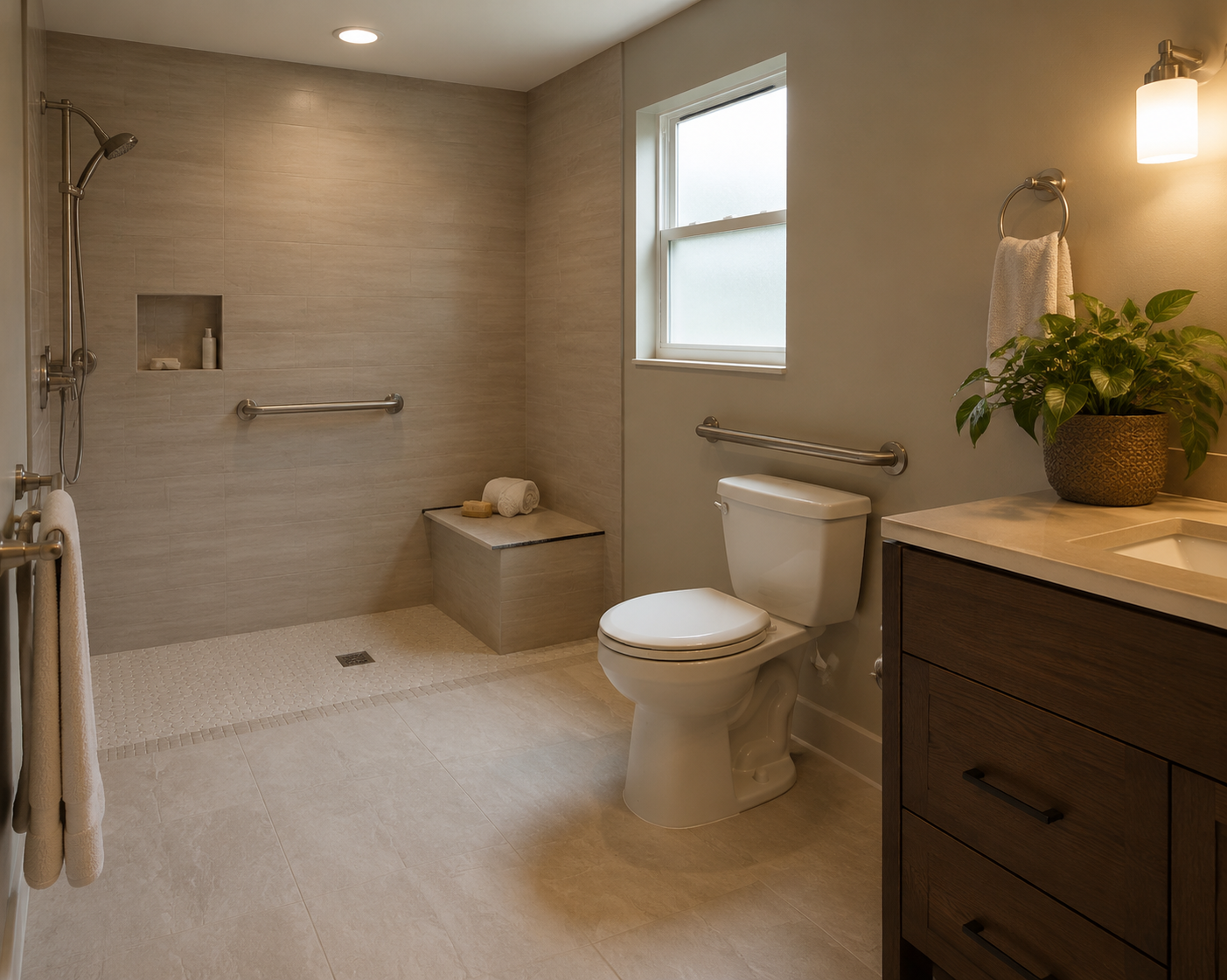
Bathrooms deserve their own look because they combine water, hard surfaces, transfers, urgency, privacy, and often small footprints. A family comparing a tub conversion, shower chair, grab-bar placement, or a curbless design can use Bathroom Modifications for Aging in Place and Walk-In Tub vs. Curbless Shower as next-step guides. For a broader safety review, start with a room-by-room fall prevention checklist or a CDC STEADI-based fall prevention action plan.
Caregiving Is a Schedule, Not a Vague Promise
Aging in place often rests on a sentence that sounds simple at the kitchen table: “We’ll help.” The useful follow-up is more specific. Who is there at 7 a.m. for bathing? Who handles medications after a dosage change? Who drives to the appointment after a work meeting runs late? Who notices that groceries are untouched, mail is piling up, or the stove was left on?
Family help can be generous and still insufficient. A daughter may be able to manage bills and appointments but not overnight wandering. A spouse may be present all day and still unable to lift safely after surgery. A neighbor may check in, but not manage incontinence, insulin, wound care, or escalating confusion. Paid home care may fill some gaps, but the plan still needs coverage for sick days, agency staffing changes, weather, holidays, hospital discharges, and emergencies.
This is where monitoring technology can help, as long as it is not treated as a substitute for care. Medication reminders, fall detection, door sensors, stove shutoff devices, and activity monitoring can surface problems earlier. They still need a person assigned to receive alerts, decide what matters, and respond. Families comparing options can start with Types of Elderly Monitoring Systems.
After a fall, hospitalization, new dementia diagnosis, or sudden decline, the first few days are usually when families discover the missing pieces. A written contact list, medication list, care schedule, transportation plan, fall-risk notes, and backup caregiver list can prevent a scramble. The 72-Hour Caregiver Checklist is built for that immediate window. If the plan depends heavily on one person who is already exhausted, caregiver burnout is not a side issue; it is a safety issue.
The Money Question Is Usually More Complicated Than “Home Is Cheaper”
Aging in place can cost less than facility-based care in some situations, especially when the person needs limited help and the home requires only modest changes. It can also become expensive quickly when paid care hours increase, when the home needs major remodeling, or when one family caregiver reduces work hours to cover care.
NCOA’s discussion of affordability cites Genworth’s 2021 Cost of Care Survey showing a median home health aide cost of $5,148 per month, compared with $5,350 per month for assisted living.[6] NCOA also gives an estimate of about $6,365 per month for full-time home care at 44 hours per week.[6] These are cost anchors, not quotes for any one family. Region, care hours, dementia-related supervision, agency minimums, home repairs, and local labor markets can change the math.
Medicare is often misunderstood here. It may cover qualifying skilled home health services after medical need is established, but it does not operate as a general long-term custodial care benefit for help with bathing, dressing, meals, supervision, or household tasks. Medicaid home- and community-based services, Veterans Affairs benefits, state programs, local aging services, home equity, and private long-term care insurance may help in some cases, but eligibility and coverage vary. Pew’s finding that only 21% of adults 65 and older have long-term care insurance is one reason families should not assume an insurance policy will appear when daily care becomes necessary.[2]
For dementia care, the financial picture can change again as supervision needs rise. Families facing that situation may need a more specific review of the full financial picture of dementia care rather than a general aging-in-place estimate.
Community Access Is Part of the Definition
A safe house in an isolating location may still fail the aging-in-place test. The person needs a way to reach medical care, prescriptions, groceries, banking, faith communities, friends, exercise, and basic services. When driving stops, the question becomes concrete: who drives, what transportation exists, how far away is the clinic, and what happens when the usual ride is unavailable?
Community access also affects the caregiver. A nearby adult day program, senior center, meal program, volunteer transportation service, or Area Agency on Aging can make the difference between a plan that holds and one that depends entirely on one relative’s calendar. In rural areas, long distances, limited providers, fewer transportation options, and weaker broadband can narrow the available choices even when the family is committed.
When Aging in Place May Not Be Safe
Some warning signs should prompt a broader care-setting discussion instead of another small patch to the home plan. These include wandering, repeated unsafe stove or medication incidents, frequent falls, unmanaged aggression or fear, inability to summon help, needs that require awake supervision day and night, or a caregiver who is no longer sleeping, recovering, working, or functioning safely.
Those signs do not automatically mean one setting is right for every family. They do mean the comparison should become more formal. Start with How to Compare Senior Care Options or Senior Care Options in 2026. For more specific turning points, see When to Consider Senior Citizen Homes and Home Care vs. Memory Care.
Aging in place is a legitimate and often deeply preferred goal. It becomes safer when families treat it as a working plan across home design, daily care, money, and community support, rather than as a promise made by the house itself.
References
- Aging in Place: Growing Older at Home, National Institute on Aging.
- Most older adults who live at home want to age in place, but they aren’t entirely confident they’ll get to, Pew Research Center, February 26, 2026.
- Old Housing, New Needs: Are U.S. Homes Ready for an Aging Population?, U.S. Census Bureau, 2020.
- Aging in Place: Resources to Living at Home, National Council on Aging.
- Get the Facts on Falls Prevention, National Council on Aging.
- Can You Afford to Age in Place?, National Council on Aging.
Browse more in the Glossary.